• Research
  • About
  • Experts
Carnegie India logoCarnegie lettermark logo
AI
{
  "authors": [
    "Hans Timmer",
    "Uri Dadush"
  ],
  "type": "other",
  "centerAffiliationAll": "",
  "centers": [
    "Carnegie Endowment for International Peace"
  ],
  "collections": [],
  "englishNewsletterAll": "",
  "nonEnglishNewsletterAll": "",
  "primaryCenter": "Carnegie Endowment for International Peace",
  "programAffiliation": "",
  "programs": [],
  "projects": [],
  "regions": [
    "Western Europe",
    "North America"
  ],
  "topics": [
    "Economy"
  ]
}

Source: Getty

Other

Lessons for Policymakers

Policymakers must realize that the world has changed with the deep crisis in the advanced countries and everyone has to adapt to that.

Link Copied
By Hans Timmer and Uri Dadush
Published on Dec 15, 2011
What lessons can policymakers take from the crisis?
Hans Timmer
One lesson is the realization that the world has changed with the deep crisis in the advanced countries and everyone has to adapt to that. These are the kind of crises that really reshape the world—the global economy will never be the same again. The economic relationships have changed. That was a gradual process, but the crisis really brings the point home and accelerates the transformation.

This change has consequences. Businesses and policymakers will need some time to adjust to this. In the coming years, the main question for leading companies in high-income countries will be how to compete with globalizing companies from emerging markets.

Read more

Emerging countries will need to find their voice and play a more assertive role. They have always been in the position to react to proposals, but they will increasingly need to come up with global solutions themselves.

There is still a reluctance to fully accept the fact that the world is bigger now and there are more seats needed at the table of global governance. It is healthy that emerging markets have increasing influence and global governing bodies should change to reflect this.

The second lesson is that there are enormous vulnerabilities in the integrated financial system and the world lacks the governing system to keep this under control. Ultimately this is an example where institutions are running far behind the actual economy. They need to catch up. We need better global governance and Europe is the perfect example.

Instead of pulling back and thinking that governments need to leave it to the markets, the solution is to fix the governance issues.

And finally, high-income countries are in envy of the success of emerging markets and they try to understand what makes them so successful. Part of that success is just that developing countries are catching up, but part of it is also that there is better focus on long-term strategies in emerging economies. This is something that is missing in high-income countries today.
 
Uri Dadush
We have confirmed that fiscal stimulus and monetary stimulus are needed in times of crisis. By acting promptly and avoiding protectionism stimulus helped the world to avoid a depression a few years ago. But we have also learned that once you have the fiscal stimulus, withdrawing the fiscal stimulus is very hard.

Fiscal stimulus is meant to be timely, temporary, and targeted. This means it’s easier to have automatic stabilizers or enough safety nets built into the system. When the economy slows this kind of spending increases automatically, and when economic growth accelerates again there is a gradual withdrawal. Unfortunately, this is not the case in the United States—all of the decisions are held hostage to the politics of the day.

Finally, in my view the crisis has confirmed the importance of flexible exchange rates. The European crisis has shown that if countries are going to fix their exchange rates they need to do many other things to support the system.  MORE►

————————
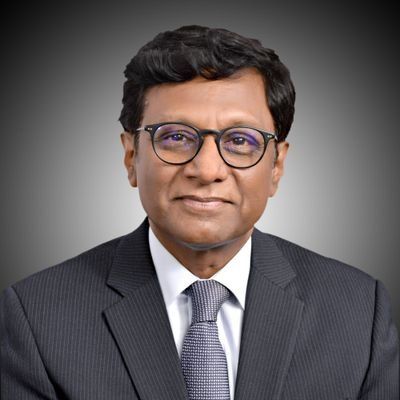
Hans Timmer is the director of the World Bank's development prospects group.

About the Authors

Hans Timmer

Uri Dadush

Former Senior Associate, International Economics Program

Dadush was a senior associate at the Carnegie Endowment for International Peace. He focuses on trends in the global economy and is currently tracking developments in the eurozone crisis.

Authors

Hans Timmer
Uri Dadush
Former Senior Associate, International Economics Program
Uri Dadush
EconomyWestern EuropeNorth America

Carnegie India does not take institutional positions on public policy issues; the views represented herein are those of the author(s) and do not necessarily reflect the views of Carnegie, its staff, or its trustees.

More Work from Carnegie India

  • Commentary
    The Impact of U.S. Sanctions and Tariffs on India’s Russian Oil Imports

    This piece examines India’s response to U.S. sanctions and tariffs, specifically assessing the immediate market consequences, such as alterations in import costs, and the broader strategic implications for India’s energy security and foreign policy orientation.

      Vrinda Sahai

  • Paper
    India-China Economic Ties: Determinants and Possibilities

    This paper examines the evolution of India-China economic ties from 2005 to 2025. It explores the impact of global events, bilateral political ties, and domestic policies on distinct spheres of the economic relationship.

      Santosh Pai

  • Commentary
    TRUST and Tariffs

    The India-U.S. relationship currently appears buffeted between three “Ts”—TRUST, Tariffs, and Trump.

      Arun K. Singh

  • Article
    Can Geopolitical Alignment Seal the India-EU FTA?

    This article argues that the geopolitical circumstances have never been more conducive, not merely for the early conclusion of the free trade agreement (FTA) between India and the EU, but also for crafting a substantive and comprehensive strategic partnership.

      Mohan Kumar

  • Source: iStock
    Commentary
    What’s Next for U.S. AI Policy?

    This commentary explores the likely actions of the Trump administration and driving forces on issues of deregulation, the United States’ leadership in AI, national security, and global engagements on AI safety.

      Shatakratu Sahu, Amlan Mohanty

Get more news and analysis from
Carnegie India
Carnegie India logo, white
Unit C-4, 5, 6, EdenparkShaheed Jeet Singh MargNew Delhi – 110016, IndiaPhone: 011-40078687
  • Research
  • About
  • Experts
  • Projects
  • Events
  • Contact
  • Careers
  • Privacy
  • For Media
Get more news and analysis from
Carnegie India
© 2026 Carnegie Endowment for International Peace. All rights reserved.