

Commentary
Maria Lipman
{
  "authors": [
    "Maria Lipman"
  ],
  "type": "legacyinthemedia",
  "centerAffiliationAll": "",
  "centers": [
    "Carnegie Endowment for International Peace",
    "Carnegie Russia Eurasia Center"
  ],
  "collections": [],
  "englishNewsletterAll": "",
  "nonEnglishNewsletterAll": "",
  "primaryCenter": "Carnegie Russia Eurasia Center",
  "programAffiliation": "",
  "programs": [],
  "projects": [],
  "regions": [],
  "topics": []
}
Source: Getty
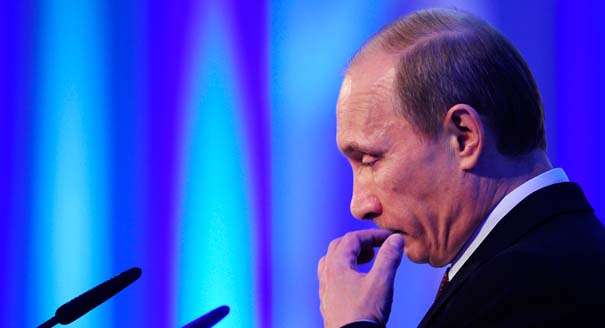
Vladimir Putin faces the question of whether to crack down on the still-evolving protest movement or to make concessions to a group who may never trust him.
Source: Bloomberg Television's First Look
Speaking with Caroline Hyde on Bloomberg Television's First Look about Vladimir Putin's victory in a presidential election that his opponents say was marred by fraud, Carnegie Moscow Center’s Maria Lipman noted that Putin will face a dilemma of whether to crack down on the still-evolving protest movement or make concessions with a group who may never trust him.
While Putin faced no real challengers during the election campaign, Lipman suggested that new faces are arising, and they will have the next six years of Putin’s presidency to turn their civic movement into a political one and gain the popularity necessary to compete on a national level. But for now, Putin will have to work with a weakened Dmitry Medvedev to carry out his agenda—even though, as Lipman stated, such a political figure will not be helpful at a time when Russia needs to take serious policy decisions.
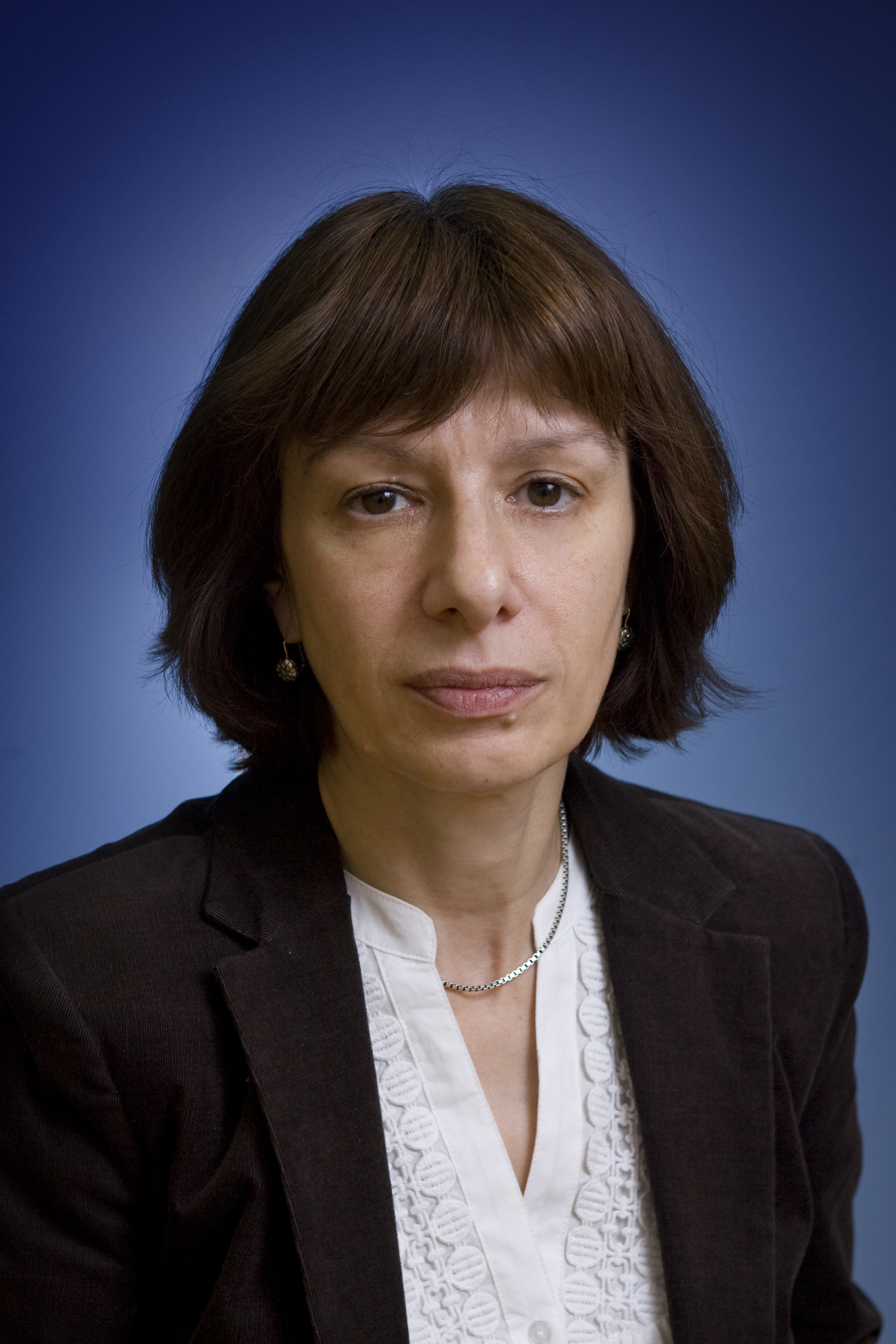
Former Scholar in Residence, Society and Regions Program, Editor in Chief, Pro et Contra, Moscow Center
Lipman was the editor in chief of the Pro et Contra journal, published by the Carnegie Moscow Center. She was also the expert of the Carnegie Moscow Center’s Society and Regions Program.
Recent Work
Maria Lipman
Maria Lipman
Carnegie India does not take institutional positions on public policy issues; the views represented herein are those of the author(s) and do not necessarily reflect the views of Carnegie, its staff, or its trustees.