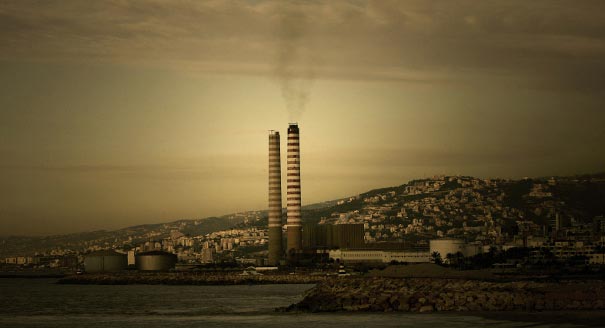
In January 2012, China’s National Development and Reform Commission announced that pilot carbon cap and trade programs will start next year in five cities—Beijing, Tianjin, Shanghai, Shenzhen, and Chongqing—as well as two provinces—Guangdong and Hubei. Shenzhen and Shanghai are particularly advanced in the preparation stage, and even if all seven schemes do not meet the 2013 launch date, their collective gravity will still be enough to dwarf other emerging carbon markets. Only Europe, with its foundational emission trading scheme launched in 2005, offers a precedent of comparable size.
Yet Europe’s trading scheme has followed anything but a smooth flight path. Politically-motivated overallocation of allowances led to a collapse in carbon prices in late 2007, while 2011 saw the scheme suffer both tax and cyber-fraud scandals. Further compounding these failures are the unintended consequences of actions in other areas. The impact of aggressive energy efficiency measures and the impending auction of 300 million allowances to fund carbon capture and storage may further depress the carbon price, and analysts have stated that they do not expect the market to recover from its oversupply and function as intended until 2025. An impotent emission trading system risks becoming an arena for financial speculation instead of a meaningful price signal for high-emitting industries.
While European policymakers toil to remedy the ills of the emission trading scheme and re-assert its place in the continent’s climate policy, China would be wise to heed the lessons of Europe and avoid both poles of excessive ambition or apathy in deploying the carbon market pilot projects.
First and foremost, China must focus on the methodological architecture upon which these carbon markets will be built. Transparent approaches to monitoring, reporting, and verifying emissions data are crucial to ensure statistical reliability and can lay the groundwork for future linkages among the pilot projects. Otherwise, statistical manipulation that was once rampant at local government levels in the late 1990s and early 2000s could easily destroy the credibility of the pilot schemes.
Second, a shared architecture will allow for common but differentiated responsibilities across regions. In developed cities and provinces, a hard emissions cap could be put in place, while an emissions intensity target may be more appropriate in developing or transitional cities and provinces. China should recognize that the European Investment Bank and other European institutions have at times been accused of opaque auction practices. This can be avoided by engaging with academics, industry, and civil society to ensure that allowances are allocated in a transparent manner, and that timely market disclosure follows any subsequent government intervention in the market.
Third is the question of regulation and standards. Before any credits generated under the Kyoto Protocol’s mechanisms are used to satisfy Chinese carbon caps, they should be subject to validation by an internal regulatory board so that questionable credits can be screened out. Equally important is the regulation of the financial markets that will trade carbon allowances. Officials must make timely decisions regarding the number, size, and location of exchanges and determine the appropriate level of participation for financial institutions so that liquidity and stability are kept in balance.
Fourth, China should also consider a “safety valve” mechanism to address the prospect of runaway or plunging prices that undermine the credibility of the emissions reduction schemes. A number of designs, both extant and theoretical, could be tested for such a mechanism.
One idea, similar to Alberta’s emission reduction program, would create a “clean technology” fund in which companies could buy shares for a specified price. These shares would be fungible with carbon allowances, and thus would act as a de-facto price ceiling since companies would prefer to buy shares whenever the price of carbon allowances exceeds the specified price of fund shares.
Another option would create a “carbon central bank,” which could adjust the supply of allowances depending on macroeconomic conditions and could allocate to each covered sector on custom-made timescales due to regional and business cycle disparities. This would be a flexible system without needing to alter the long-term, cumulative emission caps.
Finally, China should actively collaborate with other international actors. The Chinese carbon markets could become a source of future financial flows for efforts to reduce emissions from deforestation and degradation, commonly referred to as REDD. Given China’s proximity to another major forest nation with an acute interest in attracting REDD investment—Indonesia—a bilateral agreement could be established to allow the issuance of offset credits for projects that benefit Indonesian forest protection. Such a partnership could prove especially fruitful under China’s expanding South-to-South initiatives on climate change. This must be a long-term consideration, however, as emphasis is first placed on ensuring a set of well-functioning domestic Chinese markets.
China’s fledgling carbon markets must focus on their forebears to avoid unnecessary turbulence. The Chinese government has demonstrated its commitment to seeing these pilot projects take flight first in the cities and provinces, and with equal measures of prudence and patience, they may eventually succeed at the national level.
Carnegie India does not take institutional positions on public policy issues; the views represented herein are those of the author(s) and do not necessarily reflect the views of Carnegie, its staff, or its trustees.
After the chill in ties between 2020 and 2024 that brought India–China relations to their lowest point in several decades, the two countries have engaged each other afresh. This paper argues that there are predominantly four imperatives guiding India’s approach to China, and they exist in an order of priority.
This piece argues that India’s central challenge is not managing a single flashpoint but resolving the underlying tension between expansion and institutional coherency of the BRICS grouping.
On March 10, 2026, India’s Union Cabinet approved amendments to Press Note 3, a regulation that mandated government approval on all foreign direct investment (FDI) from countries sharing a land border with India. This amendment raises questions primarily about whether its stated benefits will materialize and if the risks have been adequately weighed. This piece will address the same.
This piece examines India’s response to U.S. sanctions and tariffs, specifically assessing the immediate market consequences, such as alterations in import costs, and the broader strategic implications for India’s energy security and foreign policy orientation.
This paper examines the evolution of India-China economic ties from 2005 to 2025. It explores the impact of global events, bilateral political ties, and domestic policies on distinct spheres of the economic relationship.