

Commentary
Judy Dempsey
{
  "authors": [
    "Judy Dempsey"
  ],
  "type": "legacyinthemedia",
  "centerAffiliationAll": "",
  "centers": [
    "Carnegie Endowment for International Peace",
    "Carnegie Europe"
  ],
  "collections": [],
  "englishNewsletterAll": "",
  "nonEnglishNewsletterAll": "",
  "primaryCenter": "Carnegie Europe",
  "programAffiliation": "",
  "programs": [],
  "projects": [],
  "regions": [
    "Europe"
  ],
  "topics": [
    "Foreign Policy"
  ]
}
Source: Getty
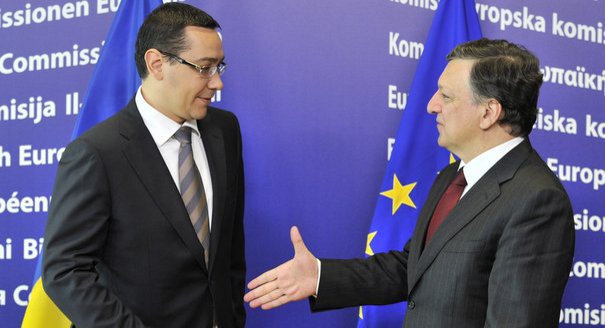
What can realistically be done to persuade the governments of Romania and Bulgaria to embrace long-term commitments to establishing the rule of law and fighting corruption?
Source: New York Times

But what can realistically be done to persuade the two governments to embrace long-term commitments to establishing the rule of law and fighting corruption?
As I explain in my latest Page Two column, Bulgaria and Romania were allowed to join the Union in 2007, though these problems were evident then — and reported by the E.U. — because of the belief that joining the Union would encourage the reformers while exclusion would hurt efforts to modernize the countries.But now the European Commission has a responsibility to act. It can do several things. It might withhold the special structural and development funds that amount to several hundred million euros. It has already delayed both countries’ access to the Schengen accord that would allow their citizens to cross most European Union borders without passports.
The ultimate sanction would be to suspend the voting rights of Bulgaria and Romania. In practice it would mean that neither country would be able to vote along with the other E.U. member states on issues that affect them.
It would, however, be extremely difficult for the member states to reach agreement on suspending voting rights.
But if the E.U. is true to its word about upholding democracy, the rule of law and human rights, then the option to suspend voting rights should be taken seriously.
Doing so would also send a signal to countries applying to join the bloc, such as Serbia, that the E.U. is not going to allow its strategy of enlargement to be tainted by corruption.
Indeed, if anything, say analysts, the unfinished transitions in Bulgaria and Romania point to the difficulties the E.U. will encounter when dealing with other Balkan candidate countries.

Nonresident Senior Fellow, Carnegie Europe
Judy Dempsey is a nonresident senior fellow at Carnegie Europe
Recent Work
Judy Dempsey
Judy Dempsey
Carnegie India does not take institutional positions on public policy issues; the views represented herein are those of the author(s) and do not necessarily reflect the views of Carnegie, its staff, or its trustees.

After the chill in ties between 2020 and 2024 that brought India–China relations to their lowest point in several decades, the two countries have engaged each other afresh. This paper argues that there are predominantly four imperatives guiding India’s approach to China, and they exist in an order of priority.

Saheb Singh Chadha

This piece argues that India’s central challenge is not managing a single flashpoint but resolving the underlying tension between expansion and institutional coherency of the BRICS grouping.

Vrinda Sahai
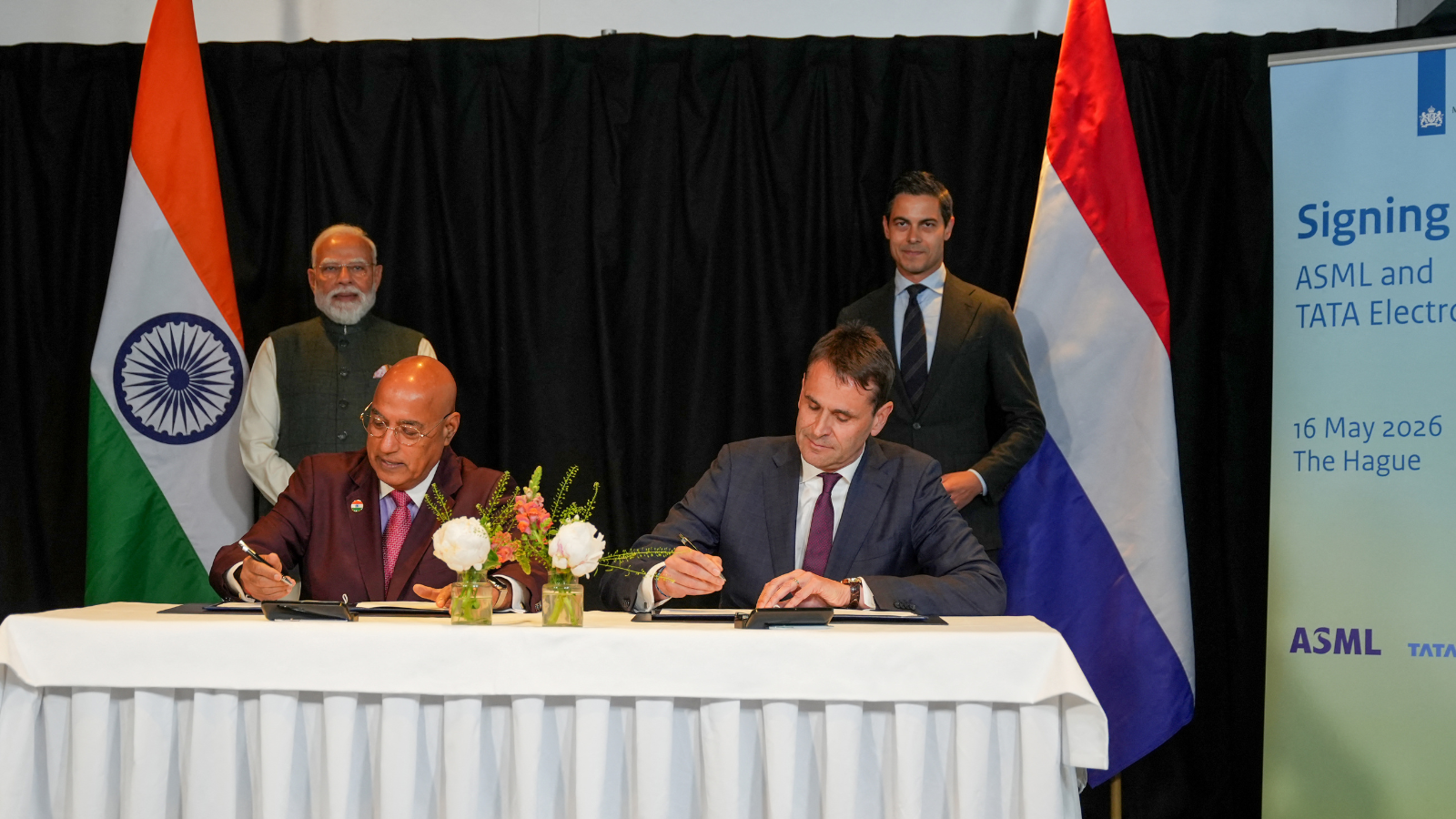
The ASML MoU with Tata Electronics is an indicator of how far the Indian semiconductor ecosystem has come. This ecosystem has been years in the making and represents real commercial logic.

Konark Bhandari

A partnership between India, a country of subcontinental size, and Africa, a continent of fifty-four countries, may seem asymmetric until one notes that both are home to nearly the same number of people—1.4 billion. This essay spells out the existing challenges to the partnership, its optimal potential, and the possible pathways to realize it over the next quarter-century.

Rajiv Bhatia

The India–EU Free Trade Agreement (FTA) is shaping up to be one of the most consequential trade negotiations, both economically and strategically. But, what’s in the agreement, what’s missing, and what will determine its success in the years ahead
Vrinda Sahai, Nicolas Köhler-Suzuki