

Commentary
Judy Dempsey
{
  "authors": [
    "Judy Dempsey"
  ],
  "type": "commentary",
  "blog": "Strategic Europe",
  "centerAffiliationAll": "",
  "centers": [
    "Carnegie Endowment for International Peace",
    "Carnegie Europe"
  ],
  "englishNewsletterAll": "",
  "nonEnglishNewsletterAll": "",
  "primaryCenter": "Carnegie Europe",
  "programAffiliation": "",
  "programs": [],
  "projects": [],
  "regions": [
    "Russia",
    "Central Europe",
    "Eastern Europe"
  ],
  "topics": [
    "Domestic Politics",
    "Democracy",
    "EU"
  ]
}
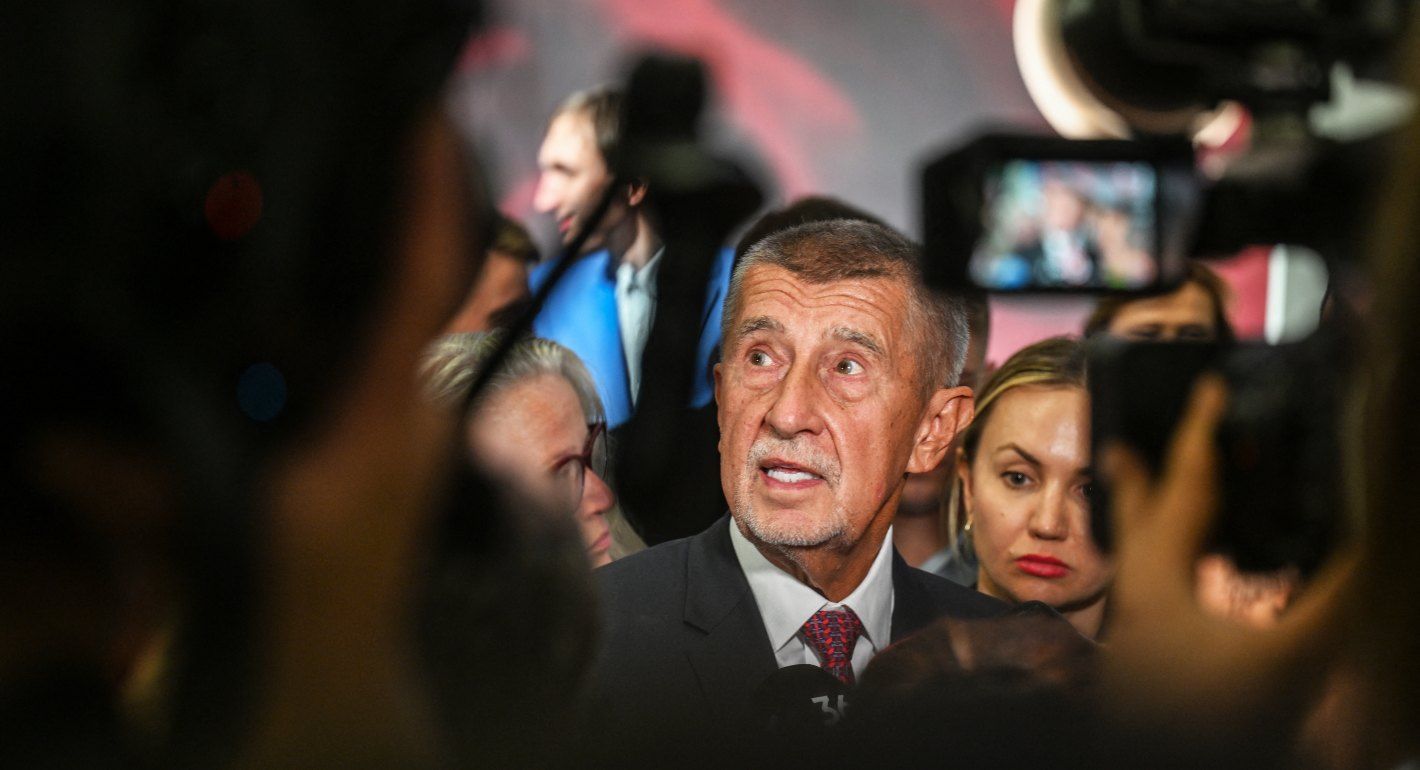
Source: Getty
A populist movement has taken power in Czechia, reinforcing the steady rise of far-right parties across Central Europe. While united by the idea of regaining sovereignty, these forces remain divided on vital issues such as their stance toward Russia.
Andrej Babiš’s populist ANO party swept back into power in Czechia on October 3–4, giving him a second chance to reshape Czech politics since his first stint as prime minister from 2017–2021.
Interestingly, even though he is a political old hand, his initial preference for forming a minority government relying on the tacit support of two smaller right-wing populist parties fell through. His premiership would not have survived for long.
Instead, Babiš will now form a coalition with two nationalist populist parties: the Freedom and Direct Democracy (SPD) and the Motorists. The SPD belongs to French far-right leader Marine Le Pen’s group in the European Parliament and wants referenda on major issues, including EU and NATO membership, which Babiš has ruled out. The Motorists are, like ANO, in the Euroskeptic Patriots group in the European Parliament that was launched by Hungarian Prime Minister Viktor Orbán.
It might be tempting to conclude that Babiš’s victory will boost the populist parties in Central and Eastern Europe (CEE) in ways that will give them greater leverage in the EU. But it’s not as clear cut as that.
Strikingly, the links between these parties are more ad hoc and they are not as cohesive on policy as they appear. And counterintuitively, these political forces have shied away from forming what would amount to an influential consolidated caucus within the EU to attempt to shape its direction.
The populist movements in Czechia, Hungary, Poland, and Slovakia don’t collectively promote a clear idea about the EU’s role as a foreign policy player or the bloc’s internal functioning. They are divided on a vital foreign and strategic issue: Russia. And Babiš has stood out from his lot in the way he has implemented his Euroskepticism.
The nationalist populists in Poland and Czechia are anti-Russia and pro-Ukraine. Under the conservative Law and Justice (PiS) party led by Jarosław Kaczyński, Poland provided a vital logistical hub for military support to Ukraine in the face of Russia’s full-scale invasion. And Babiš’s party has not hindered Czechia’s provision of specialist military equipment to Kyiv. In contrast, the Slovak and Hungarian far-right populist leaderships are pro-Russia and anti-Ukraine.
But it is on illiberalism and Euroskepticism that Babiš has most sharply diverged, so far, from his CEE counterparts.
When it was in power in Poland, PiS’s Euroskeptic outlook and its assault on the independence of the judiciary weakened its hand in EU. That trend wasn’t fully reversed when the Civic Coalition (KO) won the parliamentary elections in 2023. The PiS-backed president, Karol Nawrocki has, for example, hindered KO’s ability to overturn the illiberal measures PiS introduced into the judiciary.
In Hungary, Viktor Orbán’s Fidesz party, in power since 2010, is stridently ideologically Euroskeptic. Orbán successfully based his power on clientelism by taking over the media, installing Fidesz judges, and redrawing the electoral constituencies. His party is overtly pro-Russia, anti-Ukraine, and pro-China.
As for Slovakia, the pro-Russian and anti-Ukrainian views of Robert Fico, the four-time prime minister who last year survived an assassination attempt, are well known. So is his determination to quash the independent media, control the judiciary, and reduce the parliamentary accountability of the interior ministry and security forces.
“Slovakia faces a much faster democratic backsliding than what was happening in Hungary and Poland,” Verfassungsblog on Matters Constitutional wrote recently. “Although this dramatic development is facing a strong reaction from civil society organizations and the public, the Fico IV administration does not allow any space for public discussion concerning these legislative changes.”
But Babiš is different. He is more of a transactional politician, akin to U.S. President Donald Trump. He has little tolerance for an independent judiciary or the public broadcasting media, but he is not an ideological Euroskeptic. He takes the EU for what it can offer.
However, he does share something fundamental with populist leaders Nawrocki, Orbán, and Fico about the EU: sovereignty. These leaders do not support further EU integration even though the political, security, and defense circumstances demand it.
This antipathy toward integration is linked to the communist past. Soviet occupation destroyed the sovereignty of countries under the USSR. Somehow the overarching reach of the EU is reawakening the idea of sovereignty, even though the very idea of having joined the union intrinsically meant ceding certain powers to the European institutions.
This idea of sovereignty is not unique to Central and Eastern Europe. The idea of “taking back control” was the slogan that led Britain to vote for leaving the EU. Other Euroskeptic countries are not advocating such a radical option. But their increasing defense of sovereignty has implications for the cohesion of the bloc. It prevents the EU from moving toward further political and economic integration. Both are necessary more than ever given Trump’s economic policies on tariffs, his lukewarm support for NATO, and Europe’s inability to defend itself. Ultimately integration should lead to a sovereign Europe. Something not welcomed by populists.

Nonresident Senior Fellow, Carnegie Europe
Judy Dempsey is a nonresident senior fellow at Carnegie Europe
Recent Work
Judy Dempsey
Judy Dempsey
Carnegie does not take institutional positions on public policy issues; the views represented herein are those of the author(s) and do not necessarily reflect the views of Carnegie, its staff, or its trustees.

With its public finances in shambles, the far right polling at 35 percent ahead of the 2027 presidential election, and a growing protest movement, is France’s crisis a threat to the EU’s geopolitical awakening?

Rym Momtaz, ed.

Ahead of a tough winter for Ukraine, Donald Trump’s swing back toward Russia bodes ill. But instead of panicking, Kyiv’s European allies are focusing on action.
Rym Momtaz

While the EU and European governments are embracing the much-lauded middle-power moment, this entails three difficult conundrums.

Richard Youngs

Much has been said of the changes Brussels is trying to make to the EU enlargement process. Here’s why gradual integration might—or might not—be the answer.

Dimitar Bechev

The European Commissioner for Trade is headed to China. But after President Xi’s bridge-building visit to Washington, can a more isolated EU overcome Beijing’s stranglehold on critical raw materials? Who will blink first?
Rym Momtaz, ed.