

In The Media
David Rothkopf
{
  "authors": [
    "David Rothkopf"
  ],
  "type": "legacyinthemedia",
  "centerAffiliationAll": "",
  "centers": [
    "Carnegie Endowment for International Peace"
  ],
  "collections": [],
  "englishNewsletterAll": "",
  "nonEnglishNewsletterAll": "",
  "primaryCenter": "Carnegie Endowment for International Peace",
  "programAffiliation": "",
  "programs": [],
  "projects": [],
  "regions": [
    "North America",
    "United States"
  ],
  "topics": [
    "Political Reform"
  ]
}
Source: Getty
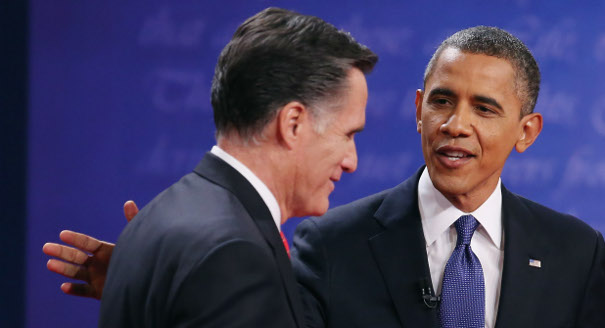
It is tempting but dangerous to read too much into the first presidential debate, but the debate was just the sort of twist this campaign needed.
Source: CNN

They had prohibited senior officials from within the administration to go on national television without White House approval because they felt that the benefits normally associated with multiple high-level messengers supporting a president's campaign were outweighed by the risks that somebody might offer up a gaffe. Leave those to Romney, they thought. He will beat himself.
Until 9 p.m. ET on Wednesday, that approach seemed to be working. But within minutes of the beginning of the debate, it was clear that the president was facing an energized, well-prepared challenger—one who had been surrounded by people willing to criticize him and offer suggestions for how to do better. Meanwhile, the country’s chief executive found him suffering from one of the risks of incumbency: the side effects of living in a bubble of sycophants in the White House.
It is a not very well-kept secret in Washington that the president is a supremely self-confident man surrounded by a handful of equally self-satisfied handlers. Inside that bubble, the atmosphere is equal parts rarified air and arrogance. As a consequence, the president did not prepare as well as he should have for the debate, and no one dared to push him harder.
After Wednesday’s drubbing, however, the president—who is also an earnest, exceptionally intelligent and hard-working man—will not make the same mistake twice. Consequently, we have two other winners to cite.
One is the president himself. He got a wake-up call at the best possible time—while he had a good lead and early enough that he can use future debates to reassert his leadership and his reputation for being a great communicator.
A more important winner, however, is the typical voter. Not only did they finally get relief from the incessant geyser of shallow, mean-spirited campaign propaganda from their televisions, but they got a chance to see the candidates for more than a few soundbites in a message that they approved.
Once again, despite the prevarications and the semi-truths, the zingers and the stumbles, listening to two intelligent, committed candidates for 90 minutes offered more illumination than the preceding two years of this campaign added up. But better, because the challenger did so well, they are likely to see both candidates upping their game in the coming weeks. They are likely to tune in to the next debates. They are likely to have a clearer view of the momentous choice they are being asked to make.
This elevation of the next phase of the campaign—and Romney’s credibility—is also a big win for the media. It's no longer the runaway race it looked like before Wednesday night. It's a story again. Were they wrong about Romney? If it sells newspapers and draws eyeballs, they hope so. Being wrong is nowhere near as bad as being ignored.
(I say this having a little skin in the game. I wrote a column Monday for Foreign Policy saying the race was over. I still think Obama will win; the gender gap is too big—even though Obama failed to make more of the woeful GOP record on women's issues during last night's domestic policy debate. And significant gaps have emerged in key swing states. But I'll admit it, I’m nervous about my prediction. Two more performances like last night, and Obama could snatch defeat from the jaws of victory.)
Romney’s team and his debate prep opponent Rob Portman are also winners. As skillful and confident as Romney was, his strength was that he was very, very well-prepped. He had studied hard, seemed to have facts or reasonable facsimiles of them at his fingertips and fluidly moved from key point to key point.
Also, thanks to this performance, the GOP money machine and party establishment are going to lean into a little thing you might call “the audacity of hope.” Had Romney faltered, they might have ditched him and refocused on congressional races. Now, the big bucks will continue to flow.
Almost certainly, Michelle Obama was also a loser. Her 20th anniversary celebration after the debate couldn’t have been too much fun. Similarly, the people who had been hoping to meet with the president and vice president before their next debates and whose appointments will be canceled to make time for more debate prep are could consider themselves victims of Mitt's big night.
Jim Lehrer can’t be too happy with the prevailing view that as a moderator, he ended up as road kill. And it was win-lose for the Twitterverse. The event was the most tweeted political event in the (short) history of Twitter. And it also brought out the very worst in the snark-saturated medium.
But in the end, for all the winners and losers who are celebrating or sobbing in the wake of Wednesday’s exchanges, it is important to remember that this was just one debate and that over the next four weeks, there will be three more, plus hundreds of campaign appearances, gaffes and unexpected developments at home and overseas that will likely overshadow this one set piece.
In other words, it is tempting but dangerous to read too much into this debate—but fair and, yes, exciting to note this was just the sort of twist this tedious, small-ball campaign needed.

Former Visiting Scholar
David Rothkopf was a visiting scholar at the Carnegie Endowment as well as the former CEO and editor in chief of the FP Group.
Recent Work
David Rothkopf
David Rothkopf
Carnegie India does not take institutional positions on public policy issues; the views represented herein are those of the author(s) and do not necessarily reflect the views of Carnegie, its staff, or its trustees.

The U.S.–India semiconductor cooperation story is well-stocked with top-level strategic intent. What remains unresolved, however, are some underlying challenges that will determine whether the cooperation actually functions. Three such friction points stand out.

Shruti Mittal

India and the United States are close to concluding a Reciprocal Defense Procurement Agreement (RDPA) that will allow firms from the two countries to sell to each other’s defense establishments more easily. While this may not remedy the specific grievances both sides may have regarding larger bilateral issues, an RDPA could restore some momentum, following the trade deal announcement.

Konark Bhandari

On the last day of the India AI Impact Summit, India signed Pax Silica, a U.S.-led declaration seemingly focused on semiconductors. While India’s accession to the same was not entirely unforeseen, becoming a signatory nation this quickly was not on the cards either.
Konark Bhandari

This piece examines India’s response to U.S. sanctions and tariffs, specifically assessing the immediate market consequences, such as alterations in import costs, and the broader strategic implications for India’s energy security and foreign policy orientation.

Vrinda Sahai
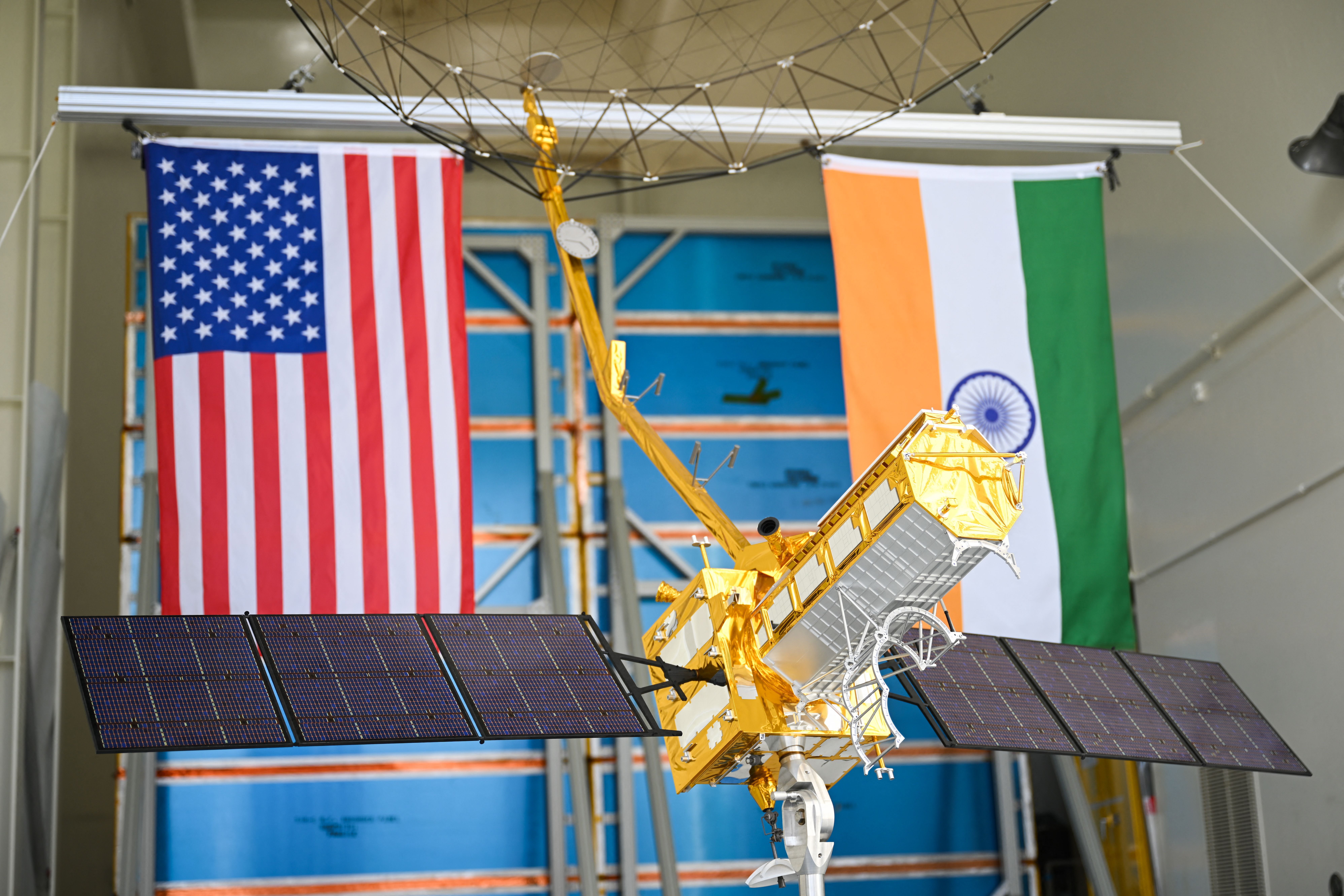
On July 30, 2025, the United States announced 25 percent tariffs on Indian goods. While diplomatic tensions simmered on the trade front, a cosmic calm prevailed at the Sriharikota launch range. Officials from NASA and ISRO were preparing to launch an engineering marvel into space—the NASA-ISRO Synthetic Aperture Radar (NISAR), marking a significant milestone in the India-U.S. bilateral partnership.

Tejas Bharadwaj