

{
  "authors": [
    "Lilia Shevtsova",
    "David J. Kramer"
  ],
  "type": "legacyinthemedia",
  "centerAffiliationAll": "",
  "centers": [
    "Carnegie Endowment for International Peace",
    "Carnegie Russia Eurasia Center"
  ],
  "collections": [],
  "englishNewsletterAll": "",
  "nonEnglishNewsletterAll": "",
  "primaryCenter": "Carnegie Russia Eurasia Center",
  "programAffiliation": "",
  "programs": [],
  "projects": [],
  "regions": [],
  "topics": []
}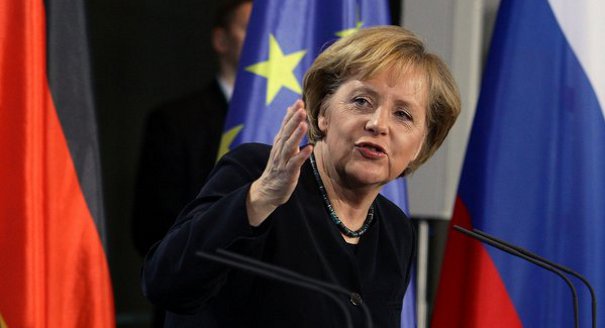
Source: Getty
Germany and Russia: The End of Ostpolitik?
Until recently, German-Russian relations were viewed as a model bilateral relationship. However, public opinion in Germany has grown increasingly critical of Vladimir Putin’s regime, and the German leadership can’t ignore this.
Source: American Interest

But things have started to change in Berlin. This summer the German special envoy for Russia on behalf of the ruling coalition, Andreas Schockenhoff, prepared a critical motion on Russia (“The Civil Society and Rule of Law in Russia”), which sought to clarify Germany’s position before the high level Russian-German government consultations and annual meeting of the St. Petersburg dialogue in November. According to Sueddeutsche Zeitung, however, the German Foreign Affairs ministry, headed by the Christian Democrats’ partner Free Democrats and its leader, Guido Westerwelle, substantially edited the motion. In fact, the ministry rewrote the key points, significantly altering the main message of the motion. See for yourself. Schockenhoff’s motion started with the following:
The German Bundestag seriously worries that Russia will be facing stagnation instead of progress on its path toward building an open and modern society due to the deficit of rule of law, investments and innovation
The German Ministry of Foreign Affairs changed that to say that Russia is “the key and essential partner of Germany and Europe . . . the largest state in the world that stretches through two continents . . . and is the crucial energy supplier in Europe.” One might almost think this was rewritten by the Russian Ministry of Foreign Affairs, not the German one. But there’s more: German diplomats added a line stating that global problems could be solved only with Russia’s participation. The Foreign Ministry also took out the seemingly innocuous phrase that Germany and Russia are “interested in a politically and economically modernized and democratic Russia.” Apparently, the ministry did not like the Parliament’s mention of civic activism in Russia. They also took out the phrase, “After years of managed democracy and apathy a lot of Russians are ready for greater activism in their country,” and erased another assertion that the Russian “authorities view politically active citizens not as partners, but enemies,” broadening the gap between the authorities and the society. While tweaking a Parliamentary motion is not unheard of in German legislative history, in this case the German Ministry of Foreign Affairs turned the intent of the motion completely upside-down. This provoked a mini-scandal in a country where the political elite tries to avoid scandals at any price. ...
About the Authors
Former Senior Associate, Russian Domestic Politics and Political Institutions Program, Moscow Center
Shevtsova chaired the Russian Domestic Politics and Political Institutions Program at the Carnegie Moscow Center, dividing her time between Carnegie’s offices in Washington, DC, and Moscow. She had been with Carnegie since 1995.
David J. Kramer
David J. Kramer served as assistant aecretary of state for democracy, human rights and labor in the George W. Bush administration and is director of European & Eurasian Studies at Florida International University’s Steven J. Green School of International and Public Affairs.
Carnegie India does not take institutional positions on public policy issues; the views represented herein are those of the author(s) and do not necessarily reflect the views of Carnegie, its staff, or its trustees.