

Commentary
Judy Dempsey
{
  "authors": [
    "Judy Dempsey"
  ],
  "type": "legacyinthemedia",
  "centerAffiliationAll": "",
  "centers": [
    "Carnegie Endowment for International Peace",
    "Carnegie Europe",
    "Carnegie Russia Eurasia Center"
  ],
  "collections": [],
  "englishNewsletterAll": "",
  "nonEnglishNewsletterAll": "",
  "primaryCenter": "Carnegie Europe",
  "programAffiliation": "",
  "programs": [],
  "projects": [],
  "regions": [
    "Russia",
    "Europe"
  ],
  "topics": [
    "Foreign Policy",
    "Economy"
  ]
}
Source: Getty
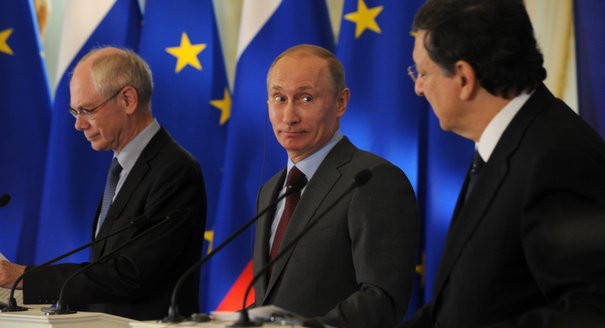
As Gazprom and a European Union commission go head to head over the Russian gas giant's aggressive moves in Eastern Europe, Russia may miss an opportunity to help itself.
Source: New York Times

The Commission and Russia’s Gazprom are now at loggerheads, as I explain in my latest Letter from Europe. At issue is how Gazprom, Russia’s state-owned energy company, allegedly abused its powerful position in Eastern and Central Europe by blocking competition.
The decision by DG Competition, as the Directorate General for Competition is known, to go after Gazprom is important for what is says about the Commission and what it means for Russia.The Competition Commission is fiercely committed to fair competition. Remember how it challenged Microsoft. It also challenged Europe’s most powerful energy companies, especially in France and Germany over how they had sewn up the energy sector.
At one stage, say energy experts, DG Competition had such damning evidence of the big German energy companies abusing their market position that it proposed to make the reports public unless the companies changed their ways. The threat worked. Germany now has a competitive and open energy sector.
Gazprom is one of the last remaining energy companies on DG Competition’s list. While the company held a tight grip over the energy sector throughout most of Eastern Europe, in Western Europe, where it has subsidiaries, Gazprom has had to play by the rules in an increasingly competitive sector.
What these antitrust proceedings against Gazprom mean for Russia is another matter. Mr. Putin, so far, is standing firm.
But if — and this is a big if — Russia is serious about modernization, surely the Commission’s proceedings are a push in the right direction. After all, say analysts, modernization is not just about upgrading the country’s infrastructure. It is also about the rule of law, transparency and competition.
“It’s just so hard to tell if this case could be a tool for modernization,” said Szymon Kardas, a Russian expert at the Center for Eastern Studies in Warsaw. “There is already a debate amongst the Russia elites about how modernization would affect the Kremlin’s control over strategic sectors, such as energy.”
All the more reason to keep track of DG Competition’s proceedings against Gazprom.

Nonresident Senior Fellow, Carnegie Europe
Judy Dempsey is a nonresident senior fellow at Carnegie Europe
Recent Work
Judy Dempsey
Judy Dempsey
Carnegie India does not take institutional positions on public policy issues; the views represented herein are those of the author(s) and do not necessarily reflect the views of Carnegie, its staff, or its trustees.

After the chill in ties between 2020 and 2024 that brought India–China relations to their lowest point in several decades, the two countries have engaged each other afresh. This paper argues that there are predominantly four imperatives guiding India’s approach to China, and they exist in an order of priority.

Saheb Singh Chadha

This piece argues that India’s central challenge is not managing a single flashpoint but resolving the underlying tension between expansion and institutional coherency of the BRICS grouping.

Vrinda Sahai
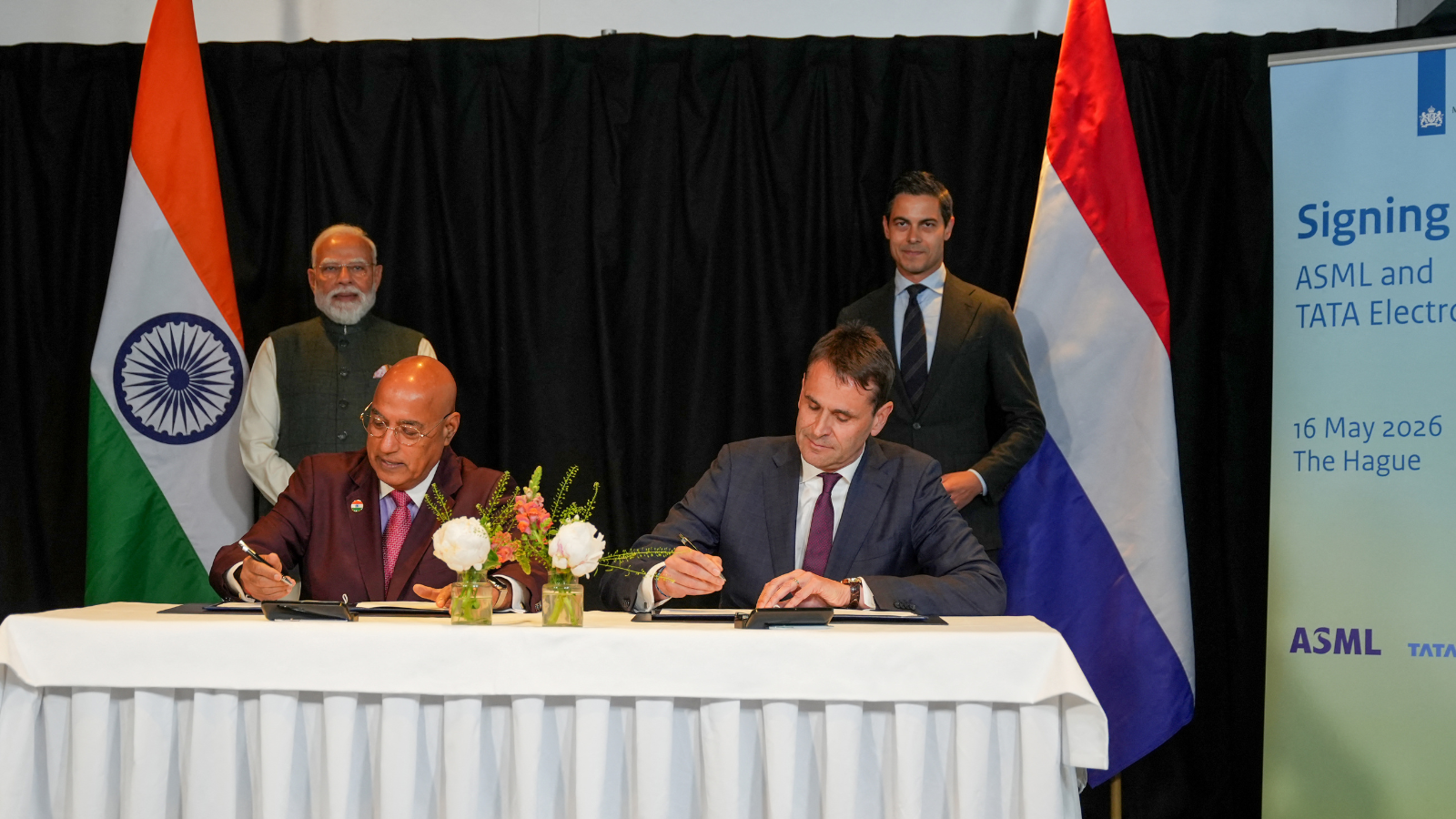
The ASML MoU with Tata Electronics is an indicator of how far the Indian semiconductor ecosystem has come. This ecosystem has been years in the making and represents real commercial logic.

Konark Bhandari

A partnership between India, a country of subcontinental size, and Africa, a continent of fifty-four countries, may seem asymmetric until one notes that both are home to nearly the same number of people—1.4 billion. This essay spells out the existing challenges to the partnership, its optimal potential, and the possible pathways to realize it over the next quarter-century.

Rajiv Bhatia

The India–EU Free Trade Agreement (FTA) is shaping up to be one of the most consequential trade negotiations, both economically and strategically. But, what’s in the agreement, what’s missing, and what will determine its success in the years ahead
Vrinda Sahai, Nicolas Köhler-Suzuki