

Commentary
Yukon Huang, Isaac B. Kardon, Matt Sheehan
{
  "authors": [
    "Yukon Huang"
  ],
  "type": "legacyinthemedia",
  "centerAffiliationAll": "dc",
  "centers": [
    "Carnegie Endowment for International Peace"
  ],
  "collections": [],
  "englishNewsletterAll": "asia",
  "nonEnglishNewsletterAll": "",
  "primaryCenter": "Carnegie Endowment for International Peace",
  "programAffiliation": "AP",
  "programs": [
    "Asia"
  ],
  "projects": [],
  "regions": [
    "East Asia",
    "China"
  ],
  "topics": [
    "Economy"
  ]
}
Source: Getty
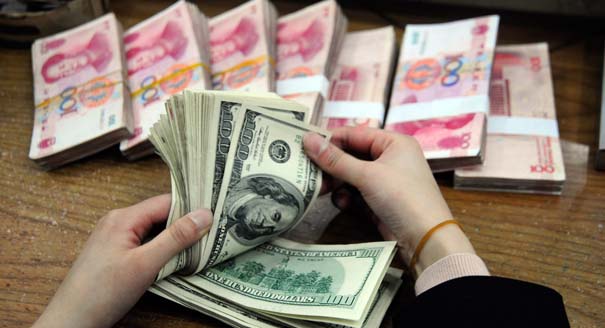
Even as the currency war between China and the United States recedes, the battle over foreign investment and technology transfer policies will continue to escalate in the coming months.
Source: Council on Foreign Relations

Over the past year, markets were fixated on China's economic slowdown given the unrealistic hope that continued double-digit growth might compensate for the problems afflicting the OECD economies. But slower growth will be good for China if it represents a more sustainable path. As a maturing economy, quality rather than quantity of growth is what now matters.
With slackened import demand in the United States and Europe, China's already much reduced trade surplus will continue to decline. The renminbi is no longer significantly out of line, although the United States will probably be the last to acknowledge the new reality.
Currency wars will recede as the source of tension for the two countries, but circumstances will push them to battle over foreign investment and technology transfer policies. This is evident in the recent outcries over security risks as Chinese firms seek greater access to the U.S. market and U.S. firms are pressured to share valuable technologies as the price for accessing China's market.
China is the center of an Asian production sharing network that brings in components from other countries for assembly with export of the final product to the West. But these are low paying assembly jobs, and the priority now is to develop more sophisticated product lines that can generate the better paying positions needed to sustain rapid growth.
Beijing believes that this needs to come through development of "indigenous" technology, as was the case with South Korea and Taiwan. This involves securing the technological expertise either from abroad or developing it locally with or without the involvement of foreign partners. Thus tensions over technology transfer and respect for intellectual property rights will likely dominate discussions between the United States and China this coming year even as the rhetoric over exchange rates moderates.
This piece was originally published by the Council on Foreign Relations.

Senior Fellow, Asia Program
Huang is a senior fellow in the Carnegie Asia Program where his research focuses on China’s economy and its regional and global impact.
Recent Work


Yukon Huang, Isaac B. Kardon, Matt Sheehan
Yukon Huang, Genevieve Slosberg

After the chill in ties between 2020 and 2024 that brought India–China relations to their lowest point in several decades, the two countries have engaged each other afresh. This paper argues that there are predominantly four imperatives guiding India’s approach to China, and they exist in an order of priority.

Saheb Singh Chadha

This piece argues that India’s central challenge is not managing a single flashpoint but resolving the underlying tension between expansion and institutional coherency of the BRICS grouping.

Vrinda Sahai

On March 10, 2026, India’s Union Cabinet approved amendments to Press Note 3, a regulation that mandated government approval on all foreign direct investment (FDI) from countries sharing a land border with India. This amendment raises questions primarily about whether its stated benefits will materialize and if the risks have been adequately weighed. This piece will address the same.

Konark Bhandari

This piece examines India’s response to U.S. sanctions and tariffs, specifically assessing the immediate market consequences, such as alterations in import costs, and the broader strategic implications for India’s energy security and foreign policy orientation.
Vrinda Sahai

This paper examines the evolution of India-China economic ties from 2005 to 2025. It explores the impact of global events, bilateral political ties, and domestic policies on distinct spheres of the economic relationship.

Santosh Pai