

Paper
Matthew Rojansky
{
  "authors": [
    "Matthew Rojansky"
  ],
  "type": "legacyinthemedia",
  "centerAffiliationAll": "dc",
  "centers": [
    "Carnegie Endowment for International Peace"
  ],
  "collections": [],
  "englishNewsletterAll": "ctw",
  "nonEnglishNewsletterAll": "",
  "primaryCenter": "Carnegie Endowment for International Peace",
  "programAffiliation": "russia",
  "programs": [
    "Russia and Eurasia"
  ],
  "projects": [],
  "regions": [
    "North America",
    "United States",
    "Russia"
  ],
  "topics": [
    "Foreign Policy"
  ]
}
Source: Getty
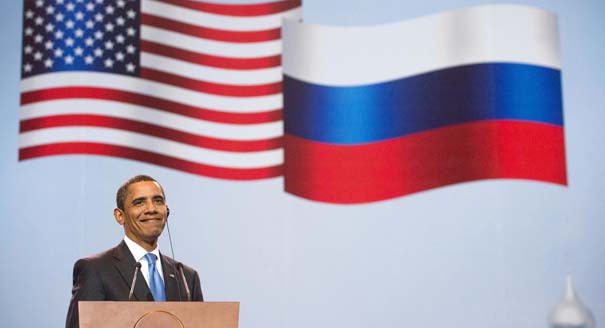
The Obama administration opted for a smaller than expected 'Magnitsky List' due to concerns that such a move would derail the prospects for further cooperation between Moscow and Washington.
Source: National Interest
On Friday, the State Department released the so-called Magnitsky List. The list, which State has described as the first tranche of what will be an ongoing investigation, came as something of an anticlimax. The United States did not launch a broad new human-rights crusade against the Russian leadership, and so the Kremlin reacted with only mildly ruffled feathers. The eighteen Russian citizens named are mostly those thought to have been directly involved in the Magnitsky case, plus a couple of security officials linked to rights abuses in Chechnya.
While the State Department could certainly have named more Russian citizens with some connection to human-rights abuses, the list released on Friday was consistent with the administration’s position from the outset. During a debate over normalizing U.S.-Russian trade relations that began with Russia’s accession to the WTO last year, proponents of the Magnitsky legislation pressed hard for a process for “naming and shaming” human-rights abusers, plus bans on travel to the United States and asset freezes. When Congress eventually made the Magnitsky Act an inseparable appendage of legislation granting Russia permanent normal trading relations, the administration had little choice but to accept what it realized would be a poison pill for ties with Moscow.Yet the White House and the State Department emphasized that rather than creating a new legal mandate, the Magnitsky Act simply underscored existing executive authority to deny visas or freeze assets of any foreign national for whom appropriate justification could be shown. Certainly no legislation was needed to enable Congress, the White House or the State Department to “name and shame” any foreign national, for any reason. Whether and when to do so, all sides understood, was a question of political judgment and policy effectiveness.
If what Congress wanted was to compel the administration to adopt its judgment on when and how to exercise such preexisting executive authorities, the legislative branch probably overplayed its hand. Concerns about Constitutional separation of powers aside, demands by Magnitsky Act co-sponsors that the administration include more Russians accused of rights abuses on the list are both unrealistic and unwise. At a time of acute sensitivity in U.S.-Russian relations, and with preparations underway for two upcoming summit meetings between Presidents Obama and Putin, the administration is not likely to fire another broadside against Russian officialdom.
Moreover, Congress would be unwise to substitute its own judgment about precisely which names should be on the list for that of the executive branch, and it is on especially thin ice doing so based on “recommendations” solicited from the NGO and activist community. The danger of abdicating critical foreign-policy decision making to human-rights activists should be obvious. In another context, this cozy relationship between Congress and single-issue advocates might be described as lobbying run amok.
After the Magnitsky Act passed last December, the Russian government moved quickly to ban U.S. adoptions and accelerated a crackdown on foreign-funded NGOs, with special scrutiny on American-linked groups. This response was asymmetric, as the Russians themselves acknowledged, but nonetheless quite effective in derailing relations and damaging the President’s “reset” agenda politically. It makes sense that the White House sought to avoid provoking a new round of Russian retaliation at the very same time that National Security Advisor Tom Donilon was dispatched to Moscow for consultations with Putin and other top officials, in preparation for Obama-Putin summits planned for the margins of the June G8 and September G20 meetings.
While these consultations yielded no breakthroughs, both sides confirmed their “productive” tone, which has laid the groundwork for bilateral relations to pivot from Magnitsky to another kind of list: the long list of shared U.S. and Russian interests, from nuclear security and arms control to enhanced economic ties and implementation of a new visa liberalization agreement, all of which have been on hold thanks to 2012’s election-year politics and the fallout from Magnitsky. After more than a year of escalating tension and declining trust, consensus on tough issues like ending the conflict in Syria or managing the situation in and around Afghanistan post-2014 will remain elusive. Yet a robust record of U.S.-Russia cooperation on talks with Iran and North Korea, as well as joint efforts on counterterrorism and nonproliferation, suggest that progress is possible.
Russian foreign minister Sergey Lavrov channeled decades of Soviet and Russian sentiment when he said on Monday that Russia was open to cooperation with the United States, but “such cooperation must be equitable, based on consideration of mutual interests and non-interference in domestic matters.” This attitude may irritate members of Congress who understandably think of human rights and democracy in universal terms, and not as matters of mere “domestic politics.” But after the recent Magnitsky List dustup, one lesson should be crystal clear: righteous indignation and finger-wagging, even if morally justified, will only drive a deep wedge between Washington and Moscow that will make practical cooperation benefitting both sides all but impossible.

Former Deputy Director, Russia and Eurasia Program
Rojansky, formerly executive director of the Partnership for a Secure America, is an expert on U.S. and Russian national security and nuclear-weapon policies.
Recent Work
Matthew Rojansky
Matthew Rojansky
Carnegie India does not take institutional positions on public policy issues; the views represented herein are those of the author(s) and do not necessarily reflect the views of Carnegie, its staff, or its trustees.

How is AI reshaping space security, creating governance challenges, and where does international diplomacy stand today?


Tejas Bharadwaj, Almudena Azcárate Ortega

After the chill in ties between 2020 and 2024 that brought India–China relations to their lowest point in several decades, the two countries have engaged each other afresh. This paper argues that there are predominantly four imperatives guiding India’s approach to China, and they exist in an order of priority.

Saheb Singh Chadha

This piece argues that India’s central challenge is not managing a single flashpoint but resolving the underlying tension between expansion and institutional coherency of the BRICS grouping.

Vrinda Sahai

A partnership between India, a country of subcontinental size, and Africa, a continent of fifty-four countries, may seem asymmetric until one notes that both are home to nearly the same number of people—1.4 billion. This essay spells out the existing challenges to the partnership, its optimal potential, and the possible pathways to realize it over the next quarter-century.

Rajiv Bhatia

The U.S.–India semiconductor cooperation story is well-stocked with top-level strategic intent. What remains unresolved, however, are some underlying challenges that will determine whether the cooperation actually functions. Three such friction points stand out.

Shruti Mittal