

Article
Deborah Gordon, Stephen D. Ziman
{
  "authors": [
    "Deborah Gordon"
  ],
  "type": "legacyinthemedia",
  "centerAffiliationAll": "dc",
  "centers": [
    "Carnegie Endowment for International Peace"
  ],
  "collections": [],
  "englishNewsletterAll": "ctw",
  "nonEnglishNewsletterAll": "",
  "primaryCenter": "Carnegie Endowment for International Peace",
  "programAffiliation": "SCP",
  "programs": [
    "Sustainability, Climate, and Geopolitics"
  ],
  "projects": [
    "Carnegie Oil Initiative"
  ],
  "regions": [
    "North America"
  ],
  "topics": [
    "Climate Change"
  ]
}
Source: Getty
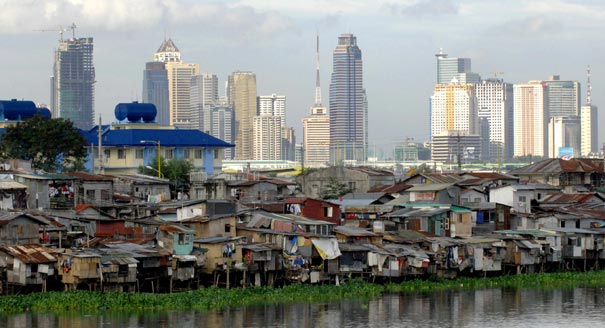
With the U.N. forecasting that 70 percent of the world's population will reside in urban areas by 2050, smart cities and strategic oil decisions are critical to ensuring a path to a politically stable and secure energy and climate future.
Source: CNBC
A proposed increase in public transit fares recently incited riots in Brazil's megacities of Sao Paulo and Rio de Janeiro. The 7 percent price hike that was subsequently shelved sparked widespread discontent about the poor state of public services and the failure to take proper advantage of increasing oil revenues. This is just one recent example of the challenges posed by increasing urbanization, which, if mismanaged, will continue to be a common theme that creates growing pains in Brazil and worldwide.
Over the next two decades, Brazil, India, China, the Middle East, Southeast Asia, Africa and Eurasia are each projected to increase their oil demands by 1 to 6 million barrels a day. Rio and Sao Paulo, both with populations over 10 million, are two of today's 26 megacities that the U.N. predicts will expand to 37 by 2025. Without sound development and investment practices, accelerating urbanization will drive increased car ownership and use, resulting in a larger appetite for oil.
One takeaway from Brazil's current strife is that public services will be central to not only meeting the demands of the country's rapidly urbanizing population but also to maintaining national security and ensuring the country doesn't become overly oil dependent. Like other countries with burgeoning oil reserves, it will be important for Brazil to strike the right balance between production, conservation, domestic use and export of their resources.
Increased fuel consumption is likely to be supplied by the world's new cache of unconventional oil. The paradigm shift occurring in North America with the increasingly heterogeneous collection of oils—from light tight oil to extra-heavy bitumen oil sands to kerogen oil shales—could easily spread to Latin America, China, Russia and elsewhere as new types of oils are economically recoverable at world oil prices around $100 per barrel.
Joaquim Levy, former secretary of the treasury and CEO of Bradesco Asset, talked about the Brazilian economy, saying that despite some concerns, strong fundamentals remain. Urbanization and unconventional oil development are megatrends that are likely to move in tandem. While they may seem like unlikely allies, private and public investments made in both of these sectors will serve to either escalate or abate oil use, climate change and social tensions. A traffic-snarled, gridlocked city is hostile and uninviting—economic activity cannot thrive if it takes hours to traverse.
Moreover, a car-centered urbanization pattern multiplied over millions of unnecessary trips drives oil development. The likely result is exploitation of all available oil resources, making it hard to pick and choose so that the new oils with the most damaging climate and local impacts remain in the ground.
The current record number of people moving to cities internationally increases needs and demands for travel within and beyond them. On its current course, urbanization is leading to greater oil consumption. But there is an alternative if the expansion of cities is built out in ways that reduce dependence on cars, thereby significantly avoiding the outcome where urbanization drives oil development.
This requires thoroughfares that offer safe, comfortable walking spaces, separating bicycles from cars, and providing easy access to mass transit that can all reduce demand for car travel. Compact neighborhoods have lower energy consumption than sprawling ones. Minimizing the valuable space devoted to parking can reduce oil use while at the same time making room for increased commercial development that generates tax revenues.
Smart urbanization dovetails perfectly with prudent oil development. This is perhaps especially true in Brazil today. In the face of urban unrest, Brazilian President Dilma Rousseff is hatching a plan to improve public transport, with royalties from the country's oil resources invested in urban mobility along with education and health care.
These oil revenues will be significant given the nation's hundreds of billions of barrels of as yet unexploited reserves. But development of these unconventional ultradeep pre-salt oil and oil shale resources will be challenging. Investments can be tied up due to resource nationalism—such as when Petrobras (Brazil's semipublic oil giant) prohibited other companies control by claiming sole operator status.
Politicians also disagree about how to divide oil royalties between states with different resource holdings. Social contracts that keep petrol prices low to fight inflation work at odds with efforts to check car ownership and effectively build out public transportation.
Economic and environmental concerns are also a factor. Developing these unconventional oil deposits—whether in ultradeep waters, buried under rocks and a thick layer of salt or trapped as immature oil in dense source rocks—will require oceans of cash. They also raise ecological concerns.
Where does Brazil fit in the global energy picture? American tight oil and shale gas have, at least for the time being, displaced Brazil and others as the world's most attractive energy plays. The economic viability of ancient oils tied up in bitumen and immature oils tied up in kerogen mean that internationally there are enough hydrocarbons to fuel the world for centuries.
This clearly indicates that private and public decisions are no longer being driven over fears of oil shortages as they were beginning in the 1970s. But new choices must be confronted about the plethora of oils available in Brazil, the U.S., Canada and elsewhere.
Urbanization and unconventional oils are demanding massive investments that can fundamentally change lives. Infrastructure that is commissioned and built today to accommodate these two megatrends will lock in resource utilization and climate patterns for generations to come.
The design of new and expanding metropolises will determine how people move around, their oil demands and their carbon footprints.
With the U.N. forecasting that 70 percent of the world's population will reside in urban areas by 2050, smart cities and strategic oil decisions are critical to ensuring a path to a politically stable and secure energy and climate future.

Former Director and Senior Fellow, Energy and Climate Program
Gordon was director of Carnegie’s Energy and Climate Program, where her research focuses on oil and climate change issues in North America and globally.
Recent Work
Deborah Gordon, Stephen D. Ziman
Deborah Gordon, Smriti Kumble, David Livingston
Carnegie India does not take institutional positions on public policy issues; the views represented herein are those of the author(s) and do not necessarily reflect the views of Carnegie, its staff, or its trustees.

This commentary explores the likely actions of the Trump administration and driving forces on issues of deregulation, the United States’ leadership in AI, national security, and global engagements on AI safety.

Shatakratu Sahu, Amlan Mohanty
Since its launch nearly a year ago, the INDUS-X has marked many milestones in the India-U.S. relationship. Much has been achieved, but there is room to further enhance defense cooperation between the two countries in the coming years.

Ajay Kumar, Tejas Bharadwaj
This article explicates what iCET is and what it should not be mistaken for. The initiative is not designed to deliver a single deal. Instead, it involves multiple streams for cooperation and collaboration between the United States and India on critical and emerging technologies.

Rudra Chaudhuri

Based on preliminary research and stakeholder discussions, this article features four areas of biosafety and biosecurity that could potentially become concrete agenda items for collaboration between the United States and India under the iCET.

Shruti Sharma
The article highlights critical takeaways from the unofficial discussions led by Carnegie India on the iCET with officials from both the countries, industry leaders, technologists, fund managers, entrepreneurs, and academics.

Rudra Chaudhuri, Konark Bhandari, Ashima Singh