• Research
  • About
  • Experts
Carnegie India logoCarnegie lettermark logo
{
  "authors": [
    "Akio Kawato"
  ],
  "type": "commentary",
  "centerAffiliationAll": "",
  "centers": [
    "Carnegie Endowment for International Peace",
    "Carnegie Russia Eurasia Center"
  ],
  "collections": [],
  "englishNewsletterAll": "",
  "nonEnglishNewsletterAll": "",
  "primaryCenter": "Carnegie Russia Eurasia Center",
  "programAffiliation": "",
  "programs": [],
  "projects": [],
  "regions": [
    "Russia",
    "Eastern Europe",
    "Western Europe"
  ],
  "topics": [
    "Foreign Policy"
  ]
}

Source: Getty

Commentary
Carnegie Russia Eurasia Center

To Overcome the Need to Choose “Either the Eurasian Union or the EU”―They Can Be Made Compatible

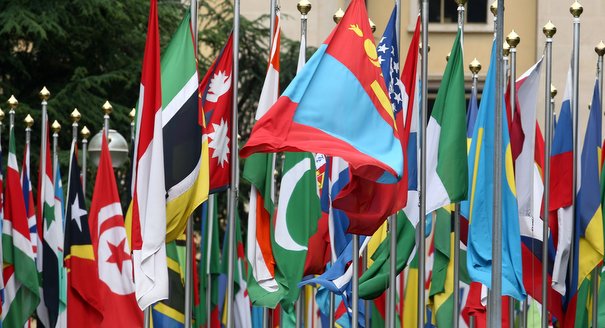
A special arrangement may be devised for the Eastern Partnership countries so that they can associate with both Russia and the EU. It would effectively serve to form a loose economic alliance between the EU and the Eurasian Union tied together by the common denominator: the Eastern Partnership nations.

Link Copied
By Akio Kawato
Published on Oct 2, 2013

Out of the blue in early September, Armenia’s President Serzh Sargsyan announced his intention to have Armenia accede to the Eurasian Union, a Russian project to keep hold on the CIS as its sphere of interest. Sargsyan might prefer the association pact with the EU, but he could not resist Russia’s woo, as the latter had made moves to strengthen its ties with Azerbaijan, the arch-enemy of Armenia. Thus, a tug-of-war between Russia and the EU have been intensifying in the run-up to the summit meeting of the EU Eastern Partnership nations scheduled in late November in Vilnius. There the EU is poised to sign association agreements with the neighboring countries (Belarus, Ukraine, Moldova, Armenia, Azerbaijan, and Georgia).

Now huge economic blocs are emerging in the world: the EU-U.S. Free Trade Agreement, the Trans-Pacific Partnership Agreement (TPP, effectively an economic union between Japan, the United States, the ASEAN, and the Oceania), and possibly the Eurasian Union. The odds are in favor of the first two, as the total economic size (GDP-wise) of the Eurasian Union is no more than one tenth of that of the EU, U.S./FTA, or the TPP. This strongly reminds us of the situation in 1989, when the political and economic strength of the newly integrated EU lured Eastern Europe away from the Soviet camp.

In a longer historical perspective this is a matter of a new demarcation of the spheres of influence after the collapse of an empire, as the association agreements between the “eastern partners” and the EU may well lead to the accession of the former to the NATO. It is understandable that Russia is eager to prevent this.

Thus the three parties—Russia, the Eastern Partnership countries, and the EU—find themselves in a standoff. In the eyes of the Eastern Partnership nations, Russia can only offer discount prices for oil and gas as well as employment for these countries’ redundant work force. Russia does not have the capacity to provide the former Soviet republics with investment, technology, and management, which they badly need for their autonomous development. But if the Eastern Partnership countries opt for the partnership with the EU, they will have to pay far more for the Russian oil and gas.

This barren stalemate should be broken. A special arrangement may be devised for the Eastern Partnership countries so that they can associate with both Russia and the EU. It would effectively serve to form a loose economic alliance between the EU and the Eurasian Union tied together by the common denominator: the Eastern Partnership nations.

Such an arrangement has pros and cons for Russia and the EU alike. Negative repercussions should be preempted. For example, visa requirements for Russians’ entry into the EU may be softened, but not to a degree of total freedom. Products of the EU and Russia will be accorded a better access to each other’s market, but not a totally free one. And the discount on oil and gas prices will be gradually reduced to avoid an unfairly large burden for Russia.

A break-up of an empire always entails pain—material and spiritual. But for the former Soviet Union we had better contrive a more civilized and painless process, in which Russia would be able to maintain its political and economic stakes in the former Soviet republics. Probably the Commonwealth of Nations (former British Commonwealth) may serve as a useful example for Russia. The only snag, however, is that Russia does not have a queen as symbol of unity.

About the Author

Akio Kawato

Writer

Akio Kawato is a former Japanese diplomat and blogger.

Akio Kawato
Writer
Foreign PolicyRussiaEastern EuropeWestern Europe

Carnegie India does not take institutional positions on public policy issues; the views represented herein are those of the author(s) and do not necessarily reflect the views of Carnegie, its staff, or its trustees.

More Work from Carnegie India

  • Commentary
    The Impact of U.S. Sanctions and Tariffs on India’s Russian Oil Imports

    This piece examines India’s response to U.S. sanctions and tariffs, specifically assessing the immediate market consequences, such as alterations in import costs, and the broader strategic implications for India’s energy security and foreign policy orientation.

      Vrinda Sahai

  • Commentary
    NISAR Soars While India-U.S. Tariff Tensions Simmer

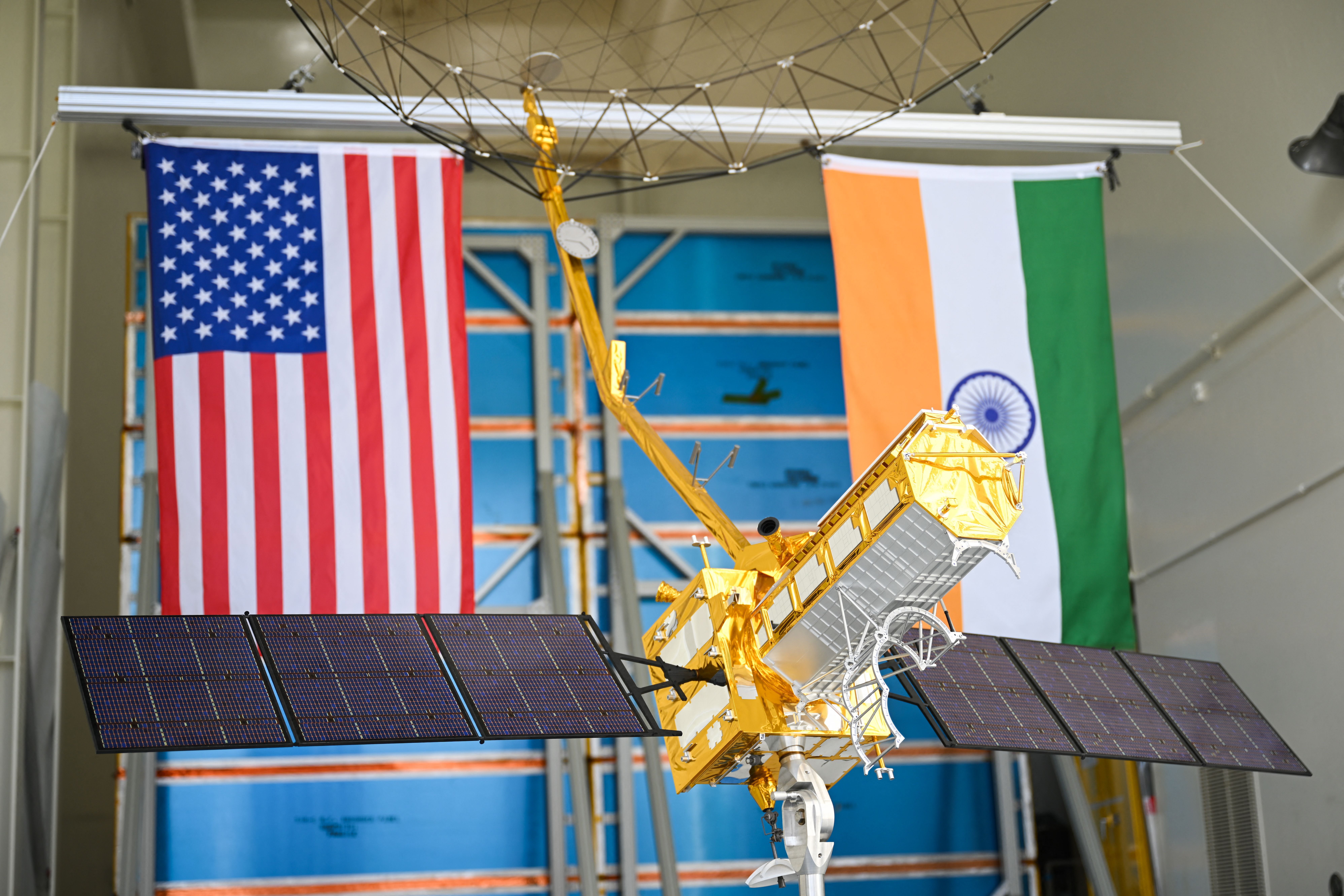
    On July 30, 2025, the United States announced 25 percent tariffs on Indian goods. While diplomatic tensions simmered on the trade front, a cosmic calm prevailed at the Sriharikota launch range. Officials from NASA and ISRO were preparing to launch an engineering marvel into space—the NASA-ISRO Synthetic Aperture Radar (NISAR), marking a significant milestone in the India-U.S. bilateral partnership.

      Tejas Bharadwaj

  • Commentary
    Indian Airstrikes in Pakistan: May 7, 2025

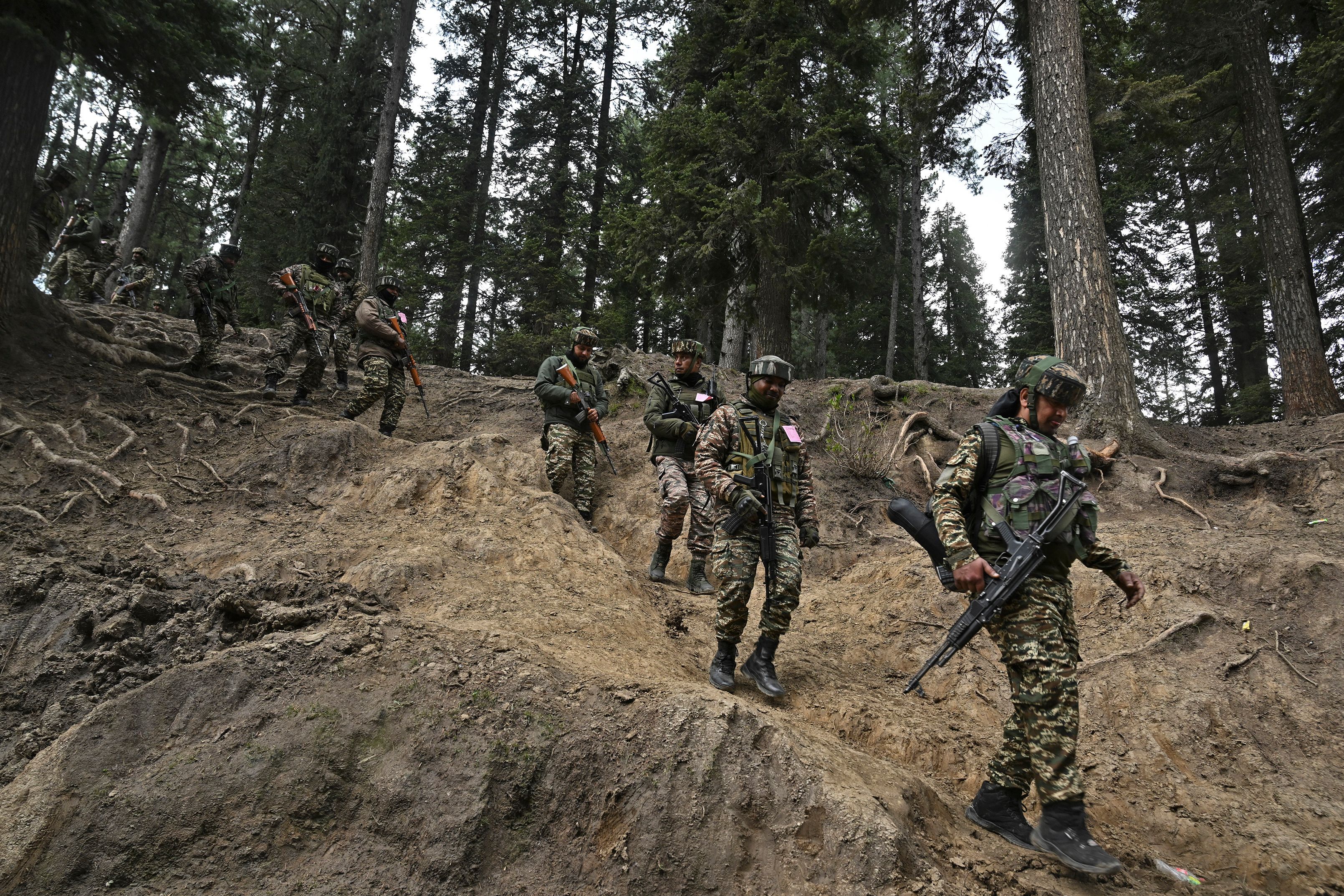
    On May 7, 2025, between 1:05 and 1:30 a.m. (IST), airstrikes carried out by the Indian Air Force hit nine locations inside Pakistan and Pakistan occupied Kashmir (PoK). It was codenamed Operation Sindoor.

      Rudra Chaudhuri

  • Research
    Views From Taipei: Essays by Young Indian Scholars on China

    This compendium brings together three essays by scholars who participated in Carnegie India's Security Studies Dialogue in 2024, each examining a different aspect of China’s policies. Drawing on their expertise and research, the authors offer fresh perspectives on key geopolitical challenges.

      • +1

      Vijay Gokhale, Suyash Desai, Amit Kumar, …

  • Commentary
    The India-U.S. TRUST Initiative: Advancing Semiconductor Supply Chain Cooperation

    As part of the TRUST initiative, leaders of the two countries committed to building trusted and resilient supply chains, including for semiconductors and critical minerals. India and the United States have made steady progress in this area over the years. This essay explores the takeaways from discussions on semiconductor supply chains that took place at Carnegie India’s 9th Global Technology Summit.

      Konark Bhandari

Get more news and analysis from
Carnegie India
Carnegie India logo, white
Unit C-4, 5, 6, EdenparkShaheed Jeet Singh MargNew Delhi – 110016, IndiaPhone: 011-40078687
  • Research
  • About
  • Experts
  • Projects
  • Events
  • Contact
  • Careers
  • Privacy
  • For Media
Get more news and analysis from
Carnegie India
© 2026 Carnegie Endowment for International Peace. All rights reserved.