

Commentary
Nathalie Tocci, Jan Techau
{
  "authors": [
    "Jan Techau"
  ],
  "type": "legacyinthemedia",
  "centerAffiliationAll": "dc",
  "centers": [
    "Carnegie Endowment for International Peace",
    "Carnegie Europe"
  ],
  "collections": [],
  "englishNewsletterAll": "ctw",
  "nonEnglishNewsletterAll": "",
  "primaryCenter": "Carnegie Europe",
  "programAffiliation": "EP",
  "programs": [
    "Europe"
  ],
  "projects": [],
  "regions": [
    "Europe",
    "Western Europe",
    "Iran"
  ],
  "topics": [
    "EU"
  ]
}
Source: Getty
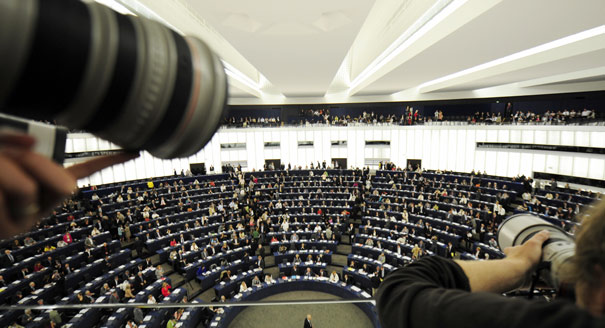
2014 will be a decisive year for Europe’s future. What the EU needs is a revolutionary political reform that can bring European citizens back on board.
Source: Euronews
There was a convivial atmosphere as European dignitaries gathered in Athens to formally kick off the Greek presidency of the European Union. But 2014 looks set to be far from harmonious as the EU braces itself for some crucial battles that will determine its future direction.
Many voters are likely to use the elections for the European Parliament in May to deliver verdicts on the EU itself. Anti-establishment parties look strong in the polls. Europe’s leaders need to find answers to charges that they are out-of-touch and unaccountable and inspire confidence in the model that many outside the EU – in Ukraine and elsewhere – believe in.
The top jobs in the EU’s main institutions are up for grabs and bitter struggles lie ahead, not least over the prime post of European Commission president. Yet exactly how the winning candidate will be chosen is uncertain.All this looms amid warnings that the ongoing economic crisis may bring more social unrest, as many people see little sign of a recovery struggling to take hold.
Euronews turned to Jan Techau, Director of the European think-tank Carnegie Europe for some insight.
Rudolf Herbert, euronews: “Greece has taken over the six-month EU presidency. What will happen now? Do we all need to save money or should we go into debt, as Athens did?”
Jan Techau, Director of Carnegie Europe: “We all badly need to make savings in Europe anyway, because over the last three or four decades we have quite massively, systematically lived beyond our means and now this is coming home to roost, that’s quite clear. The euro crisis is partly, but not only, a debt crisis and the question now is: How can we make savings without also totally stifling the economy and at the same time still have the political will to carry out reforms to make our country more competitive and to create jobs again.”
euronews: “The German Chancellor Angela Merkel wants agreements on reforms in order to make Europe more competitive…”
Jan Techau: “This is a typically German idea. It’s the belief that if you codify something, if you’re regulating something contractually or legally, then there will automatically be a political effect. The EU member states have very often committed themselves to political and economic reforms, and often they haven’t complied with these obligations.”
euronews: “How can we make the eurozone more dynamic?”
Jan Techau: “In the end it’s all about being aware that everybody has more to lose in the euro crisis if they don’t cooperate together. It’s a kind of learning through pain. The question is whether there is enough pain in the system, to perform these difficult reforms, or whether Europe – now that it looks a bit better – is going to loosen the reins.”
euronews: “May will see elections in Europe and it is already clear that populist and anti-European parties will make big gains. How can you make Europe more palatable again for the continent’s citizens?”
Jan Techau: “There are always two ways to get citizens on board: first, by creating added value for them, you create a political system which has good things for people. I think that in this sense the EU has done quite a lot. The other option is to enable citizens to participate in the political system, to get them into the system by means of genuine political competition. European citizens feel that they’re not part of this European system, that they have no say in the decision-making process, that they don’t sit at the table where decisions are made.”
euronews: “How should this happen?”
Jan Techau: “Basically through a larger, perhaps even revolutionary political reform in Europe, which should allow for elections on a pan-European level in such a way that we get pan-European, genuine elections. These elections should be Europe’s political aim.”
euronews: “The European Commission will get a new President, also this year we will have a new President of the European Council, there will be a new President of the Parliament and last but not least there will be a new foreign policy chief. Will all this change Europe’s direction?”
Jan Techau: “There will not only be personnel changes, the whole Commission will change, there are entire programmes which are going to be changed. New people will have new priorities. In selecting their candidates member states have specific agendas. That means that we’ll have not only changes in personnel but basically in 2014, in many ways Europe has a chance to reconsider and pick up new ideas – from fiscal and economic policy to foreign affairs. This is basically a complete renewal process, and we can hope that at the end of this process, by the end of 2014, an impressive team will be in place that stands for something new and interesting, a new start. That will be urgently needed, even as a signal to citizens who want to see that Europe has of course changed and responded to the escalation of these crises.”
Director, Europe Team, Eurasia Group
Techau is director with Eurasia Group's Europe team, covering Germany and European security from Berlin. Previously, he was director of Carnegie Europe.
Recent Work
Nathalie Tocci, Jan Techau
Jan Techau
Carnegie India does not take institutional positions on public policy issues; the views represented herein are those of the author(s) and do not necessarily reflect the views of Carnegie, its staff, or its trustees.

The ASML MoU with Tata Electronics is an indicator of how far the Indian semiconductor ecosystem has come. This ecosystem has been years in the making and represents real commercial logic.

Konark Bhandari

The India–EU Free Trade Agreement (FTA) is shaping up to be one of the most consequential trade negotiations, both economically and strategically. But, what’s in the agreement, what’s missing, and what will determine its success in the years ahead

Vrinda Sahai, Nicolas Köhler-Suzuki
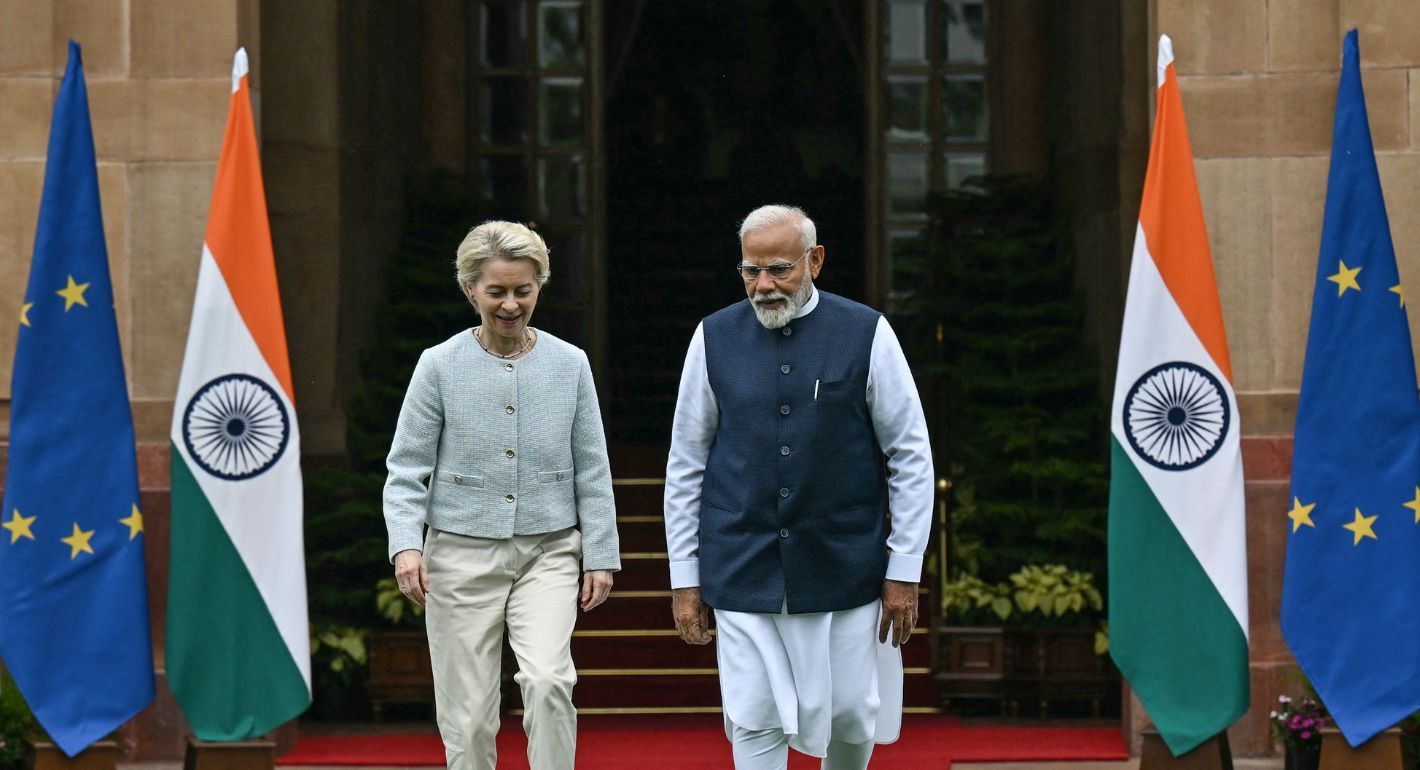
This article argues that the geopolitical circumstances have never been more conducive, not merely for the early conclusion of the free trade agreement (FTA) between India and the EU, but also for crafting a substantive and comprehensive strategic partnership.
Mohan Kumar
With monkeypox being declared a global health emergency, the WHO approach is an innovative and effective way to curb outbreaks of zoonotic diseases.

Shruti Sharma
In India, biotechnology has played an important role in helping stakeholders in academia, industry, and government develop new pandemic-related technology, from test kits to respiratory devices. But these biotechnology advancements can go further to strengthen India’s public health capacity.
Shruti Sharma