

Article
Deborah Gordon, Stephen D. Ziman
{
  "authors": [
    "Deborah Gordon"
  ],
  "type": "legacyinthemedia",
  "centerAffiliationAll": "dc",
  "centers": [
    "Carnegie Endowment for International Peace"
  ],
  "collections": [],
  "englishNewsletterAll": "ctw",
  "nonEnglishNewsletterAll": "",
  "primaryCenter": "Carnegie Endowment for International Peace",
  "programAffiliation": "SCP",
  "programs": [
    "Sustainability, Climate, and Geopolitics"
  ],
  "projects": [
    "Carnegie Oil Initiative"
  ],
  "regions": [
    "North America"
  ],
  "topics": [
    "Climate Change"
  ]
}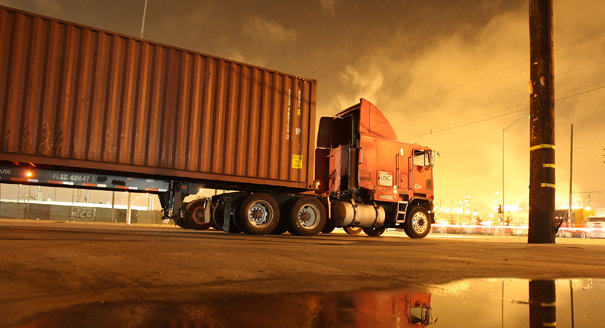
Source: Getty
Transport is widely expected to be the last sector to wean itself off oil. But as oils get more difficult, dangerous and damaging, the world must be compelled not to repeat the same mistakes.
Source: Ensia
Yesterday’s transportation revolution never got off the ground. The 1950s were a launchpad for travel by nuclear jetpacks and personal solar helicopters. In the 1960s, George Jetson was commuting in a fab flying saucer. By the 1970s, however, transportation came crashing back to Earth in the context of concerns about finite oil supplies and ongoing skirmishes to claim them.
Both visions — one fueled by post-war optimism and the other by geopolitics that seemed more suited to the pre-war era — appeared to lead to a way forward beyond oil. Reality, however, is shaping up differently than was ever imagined.
It turns out that hydrocarbons are abundant, diverse and buried just about everywhere. The higher the market price, the more rapid the technological breakthroughs and the more accessible resources will become. This in turn will lead to oil, gas and coal more readily being converted into transport fuels and other petroleum products. Envisioning 2050 transportation running on alternatives to oil — conventional wisdom just five years ago — is suddenly far from guaranteed. This is the case even with global transport demand expected to grow by 50 percent and the number of motor vehicles on the road to more than double.Oil 2.0 has arrived as if by secret drone. What this means for transportation is “business as usual,” unless radical policy shifts meet new market conditions head on.
It is the case, however, that volatile oil prices might just spur vehicle electrification in the future. Today’s cars increasingly resemble computers on wheels, making their transition from oil to electricity much more viable. This wholesale shift to electric vehicles could be transformational, bringing transport into the renewable realm. Quebec, for example, generating electricity with hydropower and without hydrocarbons, could lead the way to a new normal.
Transport is widely expected to be the last sector to wean itself off oil. But as oils get more difficult, dangerous and damaging, the world must be compelled not to repeat the same mistakes.
Circa 2050: It will be time for a real transport revolution.

Former Director and Senior Fellow, Energy and Climate Program
Gordon was director of Carnegie’s Energy and Climate Program, where her research focuses on oil and climate change issues in North America and globally.
Recent Work
Deborah Gordon, Stephen D. Ziman
Deborah Gordon, Smriti Kumble, David Livingston
Carnegie India does not take institutional positions on public policy issues; the views represented herein are those of the author(s) and do not necessarily reflect the views of Carnegie, its staff, or its trustees.

This commentary explores the likely actions of the Trump administration and driving forces on issues of deregulation, the United States’ leadership in AI, national security, and global engagements on AI safety.


Shatakratu Sahu, Amlan Mohanty

Since its launch nearly a year ago, the INDUS-X has marked many milestones in the India-U.S. relationship. Much has been achieved, but there is room to further enhance defense cooperation between the two countries in the coming years.


Ajay Kumar, Tejas Bharadwaj
This article explicates what iCET is and what it should not be mistaken for. The initiative is not designed to deliver a single deal. Instead, it involves multiple streams for cooperation and collaboration between the United States and India on critical and emerging technologies.

Rudra Chaudhuri
Based on preliminary research and stakeholder discussions, this article features four areas of biosafety and biosecurity that could potentially become concrete agenda items for collaboration between the United States and India under the iCET.

Shruti Sharma
The article highlights critical takeaways from the unofficial discussions led by Carnegie India on the iCET with officials from both the countries, industry leaders, technologists, fund managers, entrepreneurs, and academics.

Rudra Chaudhuri, Konark Bhandari, Ashima Singh