

Commentary
Bayram Balci
{
  "authors": [
    "Bayram Balci"
  ],
  "type": "legacyinthemedia",
  "centerAffiliationAll": "dc",
  "centers": [
    "Carnegie Endowment for International Peace",
    "Malcolm H. Kerr Carnegie Middle East Center"
  ],
  "collections": [],
  "englishNewsletterAll": "menaTransitions",
  "nonEnglishNewsletterAll": "",
  "primaryCenter": "Carnegie Endowment for International Peace",
  "programAffiliation": "MEP",
  "programs": [
    "Middle East"
  ],
  "projects": [],
  "regions": [
    "Middle East",
    "Türkiye"
  ],
  "topics": [
    "Security",
    "Economy"
  ]
}
Source: Getty
The hostage crisis is only the beginning of a larger crisis for Turkey.
Source: World Policy Blog
Shocking the Iraqi military, as well as the international community who suddenly discovered its formidable military prowess, the Islamic State of Iraq and Syria (ISIS), a Sunni jihadist offshoot of al Qaeda, seized the city of Mosul and other smaller towns and cities on June 10, 2014. Their swift and brutal coup took military control of these areas from a weak and collapsing Iraqi army. In what we have to call a rout, ISIS forces also seized the Turkish consulate, kidnapping 49 Turkish citizens. The day before, the same organization also kidnapped 31 Turkish truck drivers. This major political crisis is a hard blow to Turkish policy in the Middle East, and a headache for Prime Minister Recep Tayyip Erdoğan. Here are the main implications and possible consequences for Turkey.
In terms of foreign policy, there is a clear backlash for Turkey. Engulfed in the Syrian crisis, Turkey is now in a delicate position with regards to Iraq. Admittedly, Turkey has had very tense relations with Iraqi Prime Minister Nuri al Maliki. What has recently happened in Iraq gives credence to Turkish policy and shows that Ankara was right to minimize relations with Bagdad. But this situation appears positive only at first glance.
Iraqi forces also abandoned Kirkuk, a city claimed by Kurds, Arabs, and Turkmens. Following the Iraqi military disaster, the forces of the Kurdistan Regional Government (KRG) immediately took control of the city. Even if the KRG and Turkey have good relations, the emergence of the Kurdish KRG as a major actor in the region, if not close to becoming a completely independent state, is not necessarily what Ankara wants.
In addition, the emergence of the ISIS is, by definition, a worsening of sectarianism in the Middle East. This extremist Sunni group wants to destroy Shia holy places and has already allegedly executed 1,700 men because they were Shia. Taking note of the purely anti-Shia motivation of ISIS, the very prestigious and usually apolitical Shia leader Ali Sistani has called on the whole population to fight this jihadi group. In the event of extreme worsening of these sectarian divisions, Turkey could be seriously affected as it has an important Alevi minority, a branch of the Shia.
The economic impact of this crisis could also seriously hurt Turkey. Just after the kidnapping, the Turkish lira lost strength against the U.S. dollar and the euro. The Istanbul stock market suffered a relative downturn. But most importantly, if the crisis lasts, it will damage business and economic relations between Turkey and Iraq, and even with the KRG, as the insecurity could also affect this as yet untouched KRG.
There are more than 1,000 Turkish firms in Iraq—trade between with Iraq is important to Turkey’s economy. A possible deterioration of security in Iraq will inevitably damage the Turkish economy. The war in Syria damaged the once considerable trade that Turkey had with this country and its neighbors. Further blows to regional security could mean significant financial loss for Turkey.
The Iraqi crisis could also have a serious impact on domestic policy, especially for the Turkish prime minister. Although victorious in the last local elections, which had more the flavor of a national referendum, Recep Tayyip Erdoğan is nevertheless facing serious opposition less than two months before the upcoming presidential elections. His authority has been challenged again by the Gezi movement protests and his popularity remains in question after his mismanagement of a coal mine accident in Soma that killed more than 300 people. With military action to free the hostages out of the question, and as Turkey has potential intermediaries such as Sunni tribal leaders and others who are in contact with ISIS, a diplomatic move will be essential.
This process will take time and certainly have an effect on the elections. But the internal and domestic impact of the crisis is not only electoral. It seems that only the Kurdish peshmerga in Iraq are capable of seriously confronting the ISIS advances. Well-organized and determined to defend their lands, the Kurds, as mentioned earlier, were able to take Kirkuk after the Iraqi army abandoned it.
This Kurdish resistance to ISIS advance will contribute to the prestige of Kurds in the entire region, even in Turkey where the government is engaged in a peace process with the PKK, the main Kurdish actor in Turkey. This Kurdish resistance against ISIS in Iraq is part of the expansion of the Kurdish factor in the Middle East, which has become a major source in Syria and Iraq.
The spread of the Kurdish issue, and the fact that Kurds have become king-makers in Iraq and in Syria, will embolden the Kurdish camp in Turkey. The fragile peace with Kurds could come to an end if the Kurdish groups, encouraged by what is happening in Iraq, decide to increase their demands—demands that the Erdoğan government is unable to satisfy.
To sum up, the hostage crisis is only the beginning of a larger crisis that will not be resolved in a couple of days. It will have dramatic effects on Turkey, on its domestic policy, and, most importantly, on its Middle Eastern policy especially with regards to Syria.
The Turkish hostage issue is not purely a Turkish problem, it concerns all the countries in the region and even Turkey’s western allies. Turkey cannot resolve it alone and it needs an intense dialogue and cooperation with all the actors—Kurds in Iraq, the Maliki government, and Sunni tribal leaders—but also with its traditional western allies. In any case, a military action would be the worst choice. Fortunately, it seems that Turkey has understood that.
Former Nonresident Scholar, Russia and Eurasia Program
Balci was a nonresident scholar in Carnegie’s Russia and Eurasia Program, where his research focuses on Turkey and Turkish foreign policy in Central Asia and the Caucasus.
Recent Work
Bayram Balci
Bayram Balci, Daniyar Kosnazarov
Carnegie India does not take institutional positions on public policy issues; the views represented herein are those of the author(s) and do not necessarily reflect the views of Carnegie, its staff, or its trustees.

This piece examines India’s response to U.S. sanctions and tariffs, specifically assessing the immediate market consequences, such as alterations in import costs, and the broader strategic implications for India’s energy security and foreign policy orientation.
Vrinda Sahai
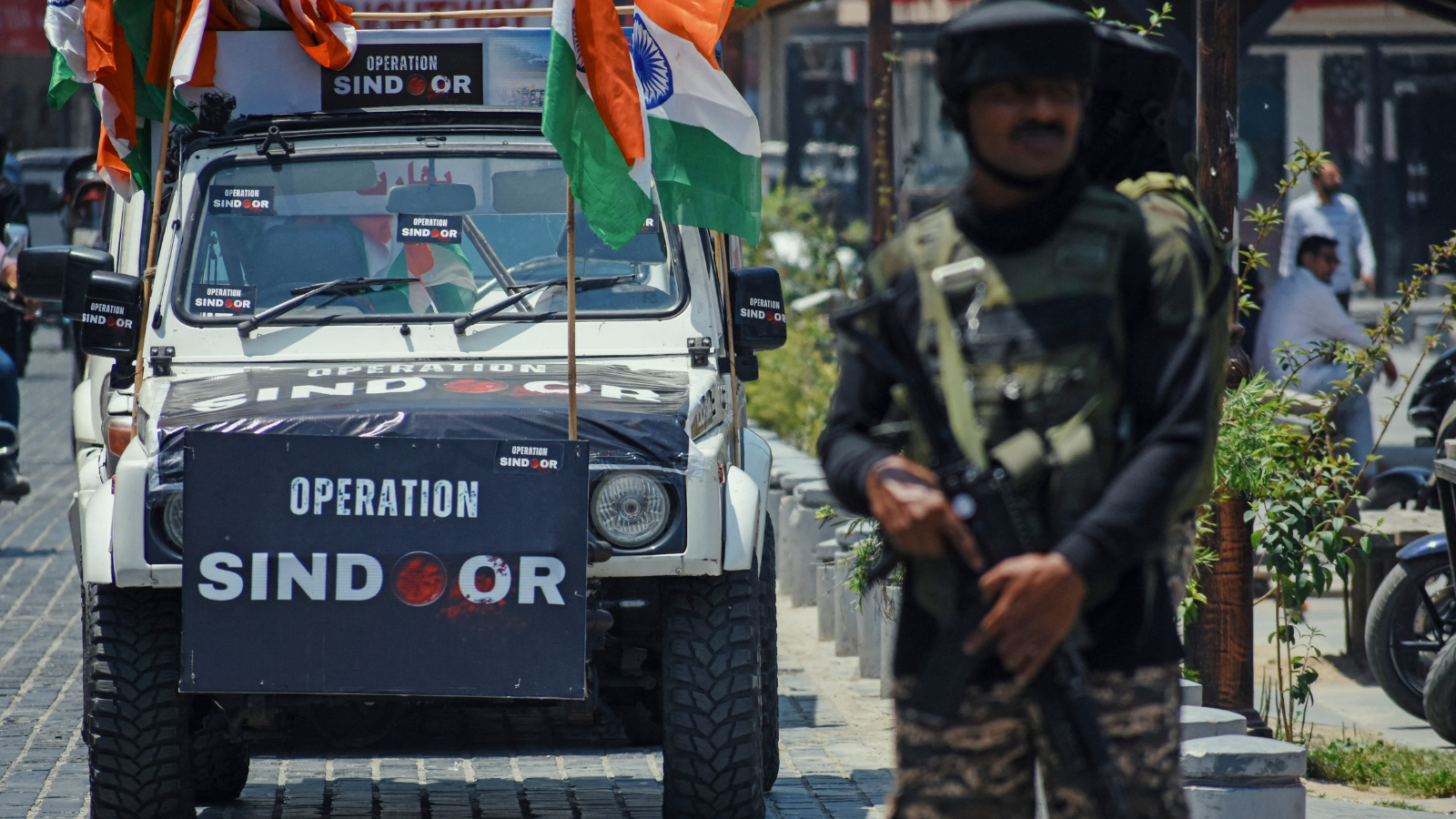
The India-Pakistan conflict that played out between May 6 and May 10, 2025, offers several military lessons. This article presents key takeaways from Operation Sindoor and breaks down how India’s preparations shaped the outcome and what more is needed to strengthen future readiness.

Dinakar Peri
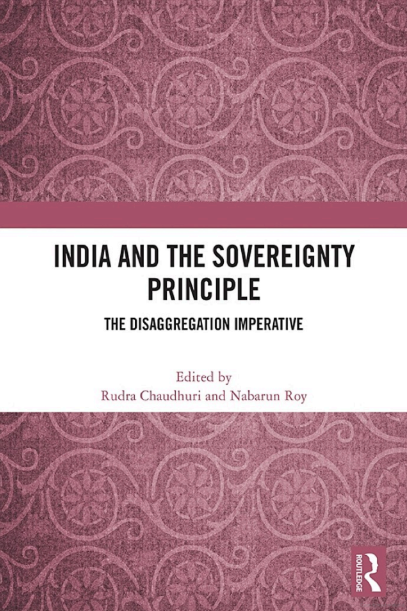
This book offers a comprehensive analysis of India's evolving relationship with sovereignty in a complex global order. Moving beyond conventional narratives, it examines how the sovereignty principle shapes India's behavior across four critical domains—from traditional military power to contemporary data governance.

Rudra Chaudhuri, Nabarun Roy

This paper examines the evolution of India-China economic ties from 2005 to 2025. It explores the impact of global events, bilateral political ties, and domestic policies on distinct spheres of the economic relationship.

Santosh Pai
This article examines the scale and impact of Chinese IUU fishing operations globally and identifies the nature of the challenge posed by IUU fishing in the Indian Ocean Region (IOR). It also investigates why existing maritime law and international frameworks have struggled to address this growing threat.


Ajay Kumar, Charukeshi Bhatt