

Commentary
Alexander Gabuev
{
  "authors": [
    "Alexander Gabuev"
  ],
  "type": "commentary",
  "centerAffiliationAll": "",
  "centers": [
    "Carnegie Endowment for International Peace",
    "Carnegie Russia Eurasia Center"
  ],
  "collections": [],
  "englishNewsletterAll": "",
  "nonEnglishNewsletterAll": "",
  "primaryCenter": "Carnegie Endowment for International Peace",
  "programAffiliation": "",
  "programs": [],
  "projects": [],
  "regions": [
    "East Asia",
    "China",
    "Russia"
  ],
  "topics": [
    "Economy",
    "Trade",
    "Foreign Policy",
    "Global Governance"
  ]
}
Source: Getty
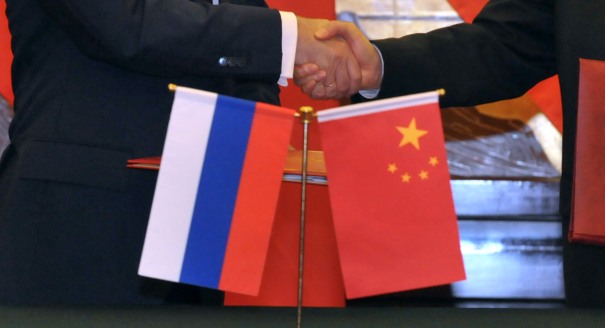
For Russia, the upcoming APEC Summit is seen primarily as an opportunity to attend important, bilateral meetings, not to talk about common issues in the Asia-Pacific.
Next week, Russia’s President, Vladimir Putin, will travel to Beijing to attend the annual summit of Asia-Pacific Economic Cooperation (APEC)—the most representative and inclusive multilateral organization in the region. This visit coincides with a new push from Moscow to establish a more comprehensive relationship with economic powerhouses in the East. The ongoing crisis in Ukraine, Western sanctions, and mounting economic problems at home are forcing the Russian leadership to seek new partnerships in the Asia-Pacific. Moscow needs new markets for its exports (mainly raw materials, with hydrocarbons at the top of the list), new sources of technology, and new capital markets for its cash-strapped companies and financial institutions.
In Russia, the discussion on Putin’s upcoming Asia tour is focused solely around bilateral issues. Will Putin and Xi Jinping sign a new gas agreement, giving the green light to build a new, 30 bcm a year pipeline from Western Siberia to the Xinjiang region? What will be the result of Russian-Japanese talks on the sidelines of the summit? Will Putin talk to Barack Obama? The Beijing gathering will provide both men a chance to talk in private not seen since their May meeting in Normandy. These are the questions that officials, business people, and experts are discussing in Moscow.
The ongoing crisis in Ukraine, Western sanctions, and mounting economic problems at home are forcing the Russian leadership to seek new partnerships in the Asia-PacificTweet This
The multilateral agenda topics, even the major rivalry between the U.S.-backed TPP and the China-Backed APEC Free Trade Zone, to name just one, are virtually not present in Russian discussions about APEC. The summit is seen primarily as an opportunity to attend important, bilateral meetings, not to talk about common issues in the Asia-Pacific. This may come as a surprise, considering the buzz of “Russia’s pivot to Asia” that Moscow is trying to spread through the media.
The reality shouldn’t come as news, however, for anyone observing Russia’s awkward moves in the Asia-Pacific in recent years. The only period of time when Moscow was genuinely interested in regional cooperation was the 2011 to 2012, when Russia was the host country for the APEC summit. Domestic discussion on APEC in Russia was still focused on a large development project in Vladivostok, which was chosen as host-city, and measuring the amount of corruption and inefficiency became a form of amusement for the elite. To surprise of many observers, Russia did deliver. Not only did it upgrade the city’s infrastructure and build a university complex on Russkiy Island (though one may argue that the commissioned projects were not worth the 20 billion dollars that Moscow spent on them), but Moscow developed an agenda for the summit and got to know the regional issues that other major Asian economies were involved in.
Some aspects of the Russian presidency were unexpected successes too. For example, the APEC Business Advisory Council (ABAC) was chaired by a young and ambitious oligarch, Ziyaudin Magomedov, who hired global consultants to develop an agenda thatnot only pitched Russian projects to the region, but also accommodated the interests of all major players—and it worked. Many ABAC members confessed in private that the Russian presidency in 2012 exceeded their low expectations.
Russia needs to develop habits of regarding regional organizations in the Asia-Pacific seriously.Tweet This
But then a typically Russian thing happened. After the summit was over and foreign guests left the Vladivostok party, Moscow lost interests in multilateral institutions in the Asia-Pacific. The central government had some other priorities, like the Sochi Olympics. First Deputy Prime Minister Igor Shuvalov, who was in charge of the APEC summit, now deals with FIFA’s 2018 World Cup. All the key members of the APEC task-force bureaucracy were transferred to different government roles. Magomedov was stripped of his ABAC membership in 2013, and the new Russian members of the council never showed up to any of ABAC’s four annual meetings (except summits with Putin).
The smart agenda that Moscow developed for ABAC was pushed by other members of the council, but not by the Russians. The most astonishing fact about Russia’s engagement with Asia-Pacific multilateral structures is that, since the country was accepted to the exclusive East Asia Summits mechanism in 2011, after six years of lobbying, its president never showed up to the meetings featuring U.S. and Chinese leaders, among others. This still provides a basis for many jokes in Asian diplomatic circles.
In the future, Russia needs to develop habits of regarding regional organizations in the Asia-Pacific seriously and of following complicated discussions; a lack of knowledge may hurt Russia’s interests in the future. And sometimes, in a way, Moscow does not even seem to know that.
Alexander Gabuev is deputy editor-in-chief of Kommersant Vlast

Director, Carnegie Russia Eurasia Center
Alexander Gabuev is director of the Carnegie Russia Eurasia Center. Gabuev’s research is focused on Russian foreign policy with particular focus on the impact of the war in Ukraine and the Sino-Russia relationship. Since joining Carnegie in 2015, Gabuev has contributed commentary and analysis to a wide range of publications, including the Financial Times, the New York Times, the Wall Street Journal, and the Economist.
Recent Work
Alexander Gabuev
Alexander Gabuev
Carnegie India does not take institutional positions on public policy issues; the views represented herein are those of the author(s) and do not necessarily reflect the views of Carnegie, its staff, or its trustees.

After the chill in ties between 2020 and 2024 that brought India–China relations to their lowest point in several decades, the two countries have engaged each other afresh. This paper argues that there are predominantly four imperatives guiding India’s approach to China, and they exist in an order of priority.

Saheb Singh Chadha

This piece argues that India’s central challenge is not managing a single flashpoint but resolving the underlying tension between expansion and institutional coherency of the BRICS grouping.

Vrinda Sahai

A partnership between India, a country of subcontinental size, and Africa, a continent of fifty-four countries, may seem asymmetric until one notes that both are home to nearly the same number of people—1.4 billion. This essay spells out the existing challenges to the partnership, its optimal potential, and the possible pathways to realize it over the next quarter-century.

Rajiv Bhatia

The India–EU Free Trade Agreement (FTA) is shaping up to be one of the most consequential trade negotiations, both economically and strategically. But, what’s in the agreement, what’s missing, and what will determine its success in the years ahead
Vrinda Sahai, Nicolas Köhler-Suzuki

On March 10, 2026, India’s Union Cabinet approved amendments to Press Note 3, a regulation that mandated government approval on all foreign direct investment (FDI) from countries sharing a land border with India. This amendment raises questions primarily about whether its stated benefits will materialize and if the risks have been adequately weighed. This piece will address the same.

Konark Bhandari