• Research
  • About
  • Experts
Carnegie India logoCarnegie lettermark logo
{
  "authors": [
    "Mikhail Krutikhin"
  ],
  "type": "commentary",
  "centerAffiliationAll": "",
  "centers": [
    "Carnegie Endowment for International Peace",
    "Carnegie Russia Eurasia Center"
  ],
  "collections": [],
  "englishNewsletterAll": "",
  "nonEnglishNewsletterAll": "",
  "primaryCenter": "Carnegie Russia Eurasia Center",
  "programAffiliation": "",
  "programs": [],
  "projects": [],
  "regions": [
    "Middle East",
    "Türkiye",
    "Russia"
  ],
  "topics": [
    "Economy",
    "Climate Change",
    "Foreign Policy"
  ]
}

Source: Getty

Commentary
Carnegie Russia Eurasia Center

Anxious in Ankara

Vladimir Putin’s trip to Turkey could help him recover from the cold-shouldering at the G20 summit in Brisbane, but it will not make Ankara abandon its great strategic goal to become an indispensable supplier of natural gas to Europe and a major competitor for Gazprom.

Link Copied
By Mikhail Krutikhin
Published on Dec 1, 2014

The current reputation of the Russian regime makes it eager to seek and cherish every opportunity of showing off on the international arena. The Russian president could not fail to feel humiliated by the derogatory attitude of the other G20 leaders and any demonstration of successful contact with a foreign leader helps him recover from the Brisbane cold-shouldering.

The trip to Turkey serves this purpose, and the status of this country as a NATO member and a candidate to G20 presidency enhances the effect. Turkey is not Serbia, which entertained the Russian guest with an unprecedented military parade that served as an ill-disguised attempt of Belgrade’s to pressure Brussels (“look, we’ve got an alternative ally if you do not accept us into the EU on our terms”). And it is not China, which Russian negotiators keep begging for cash to finance their super-costly politicized gas transportation projects ... and meet polite refusal.

Turkey is Russia’s second largest trade partner after Germany and it does have a few lucrative business niches to offer. For instance, Putin may try to negotiate “investor” status for its Rosatom monopoly, which is building the first nuclear power station in Turkey. The status would enable the contractor to enjoy a soft taxation regime. In exchange for this, the Turks are reportedly going to demand a large discount on the price of the natural gas they buy from Gazprom.

No discount, however, will make Ankara abandon its great strategic goal to become an indispensable supplier of natural gas to Europe and a major competitor for Gazprom.

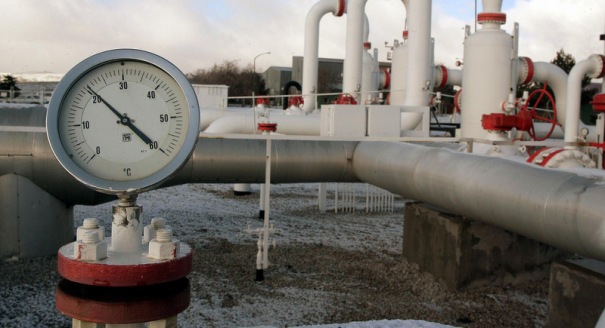
Turkey hosts a project called TANAP, the Trans-Anatolian Pipeline, which is to be commissioned in 2018. Its initial capacity will be 16 billion cubic meters a year: six billion for Turkish consumers and another ten billion for Europe. At a subsequent stage, the annual capacity will be increased to 31 billion cubic meters. At the supply end, the pipeline will receive natural gas from Azerbaijan and at the Greek border it will connect to the Trans-Adriatic Pipeline (TAP) to reach Albania and Italy.

Although the capacity of the new route is not enough to completely replace the gas flow from Russia to southern Europe, it will be the backbone for a larger infrastructure project in the future, dubbed “the Southern Gas Corridor” by the EU. In fact, it is a replacement for the Nabucco pipeline project.

Conveniently located at the crossroad of this Corridor’s potential feed lines, Turkey aspires to increase its importance to the EU by gathering gas from a variety of sources and delivering it to the Europeans. In early November, Turkish President Recep Tayyip Erdoğan assured his Turkmen counterpart Gurbanguly Berdimuhamedov that his country would do all it could to transport gas from Turkmenistan via TANAP. At the end of these talks, Turkmengaz and Turkey’s Atagaz signed a framework agreement on cooperation in the purchase and sale of natural gas.

This is exactly what Moscow has been trying to prevent for many years. Russia feared this sort of agreement between the two Caspian nations and their intention to build a pipeline across the sea, and at some moments even threatened Turkmenistan with a military attack unless the plans were dropped. (The threat was voiced by a political analyst associated with the Kremlin’s ideological headquarters.)

In addition, Turkey wants to increase gas supply to Europe by purchasing Iranian gas via an existing cross-border link which the Iranians are expanding and accepting the flow of gas from Iraqi Kurdistan. The Kurds estimate—and the government in Baghdad believes the estimate is correct— that they can annually export up to 30 billion cubic meters.

All these inflows combined constitute a real threat to the South Stream project of Gazprom, which targets the same markets in Europe and has already absorbed billions of dollars from the Russian gas monopoly’s budget (the construction of the pipeline within Russia was started well before the EU granted permission to extend it to Bulgaria and other European countries). “Friendly” contractors of Gazprom are reaping profits from South Stream, but the whole project makes no sense if in the final run it cannot deliver gas to Europe across the Black Sea.

It is safe to expect that the Turkish voyage of Vladimir Putin will have no effect on these strategic intentions of Ankara in the gas transportation business. If Gazprom’s Alexey Miller told the president otherwise, Putin is in for a bad surprise.

Mikhail Krutikhin is a partner at the independent RusEnergy consulting agency.

About the Author

Mikhail Krutikhin

Mikhail Krutikhin
EconomyClimate ChangeForeign PolicyMiddle EastTürkiyeRussia

Carnegie India does not take institutional positions on public policy issues; the views represented herein are those of the author(s) and do not necessarily reflect the views of Carnegie, its staff, or its trustees.

More Work from Carnegie India

  • Commentary
    The Impact of U.S. Sanctions and Tariffs on India’s Russian Oil Imports

    This piece examines India’s response to U.S. sanctions and tariffs, specifically assessing the immediate market consequences, such as alterations in import costs, and the broader strategic implications for India’s energy security and foreign policy orientation.

      Vrinda Sahai

  • Paper
    India-China Economic Ties: Determinants and Possibilities

    This paper examines the evolution of India-China economic ties from 2005 to 2025. It explores the impact of global events, bilateral political ties, and domestic policies on distinct spheres of the economic relationship.

      Santosh Pai

  • Commentary
    NISAR Soars While India-U.S. Tariff Tensions Simmer

    On July 30, 2025, the United States announced 25 percent tariffs on Indian goods. While diplomatic tensions simmered on the trade front, a cosmic calm prevailed at the Sriharikota launch range. Officials from NASA and ISRO were preparing to launch an engineering marvel into space—the NASA-ISRO Synthetic Aperture Radar (NISAR), marking a significant milestone in the India-U.S. bilateral partnership.

      Tejas Bharadwaj

  • Commentary
    TRUST and Tariffs

    The India-U.S. relationship currently appears buffeted between three “Ts”—TRUST, Tariffs, and Trump.

      Arun K. Singh

  • Commentary
    Indian Airstrikes in Pakistan: May 7, 2025

    On May 7, 2025, between 1:05 and 1:30 a.m. (IST), airstrikes carried out by the Indian Air Force hit nine locations inside Pakistan and Pakistan occupied Kashmir (PoK). It was codenamed Operation Sindoor.

      Rudra Chaudhuri

Get more news and analysis from
Carnegie India
Carnegie India logo, white
Unit C-4, 5, 6, EdenparkShaheed Jeet Singh MargNew Delhi – 110016, IndiaPhone: 011-40078687
  • Research
  • About
  • Experts
  • Projects
  • Events
  • Contact
  • Careers
  • Privacy
  • For Media
Get more news and analysis from
Carnegie India
© 2026 Carnegie Endowment for International Peace. All rights reserved.