

Commentary
Alexander Gabuev, Temur Umarov
{
  "authors": [
    "Alexander Gabuev"
  ],
  "type": "other",
  "centerAffiliationAll": "",
  "centers": [
    "Carnegie Endowment for International Peace",
    "Carnegie Russia Eurasia Center"
  ],
  "collections": [],
  "englishNewsletterAll": "",
  "nonEnglishNewsletterAll": "",
  "primaryCenter": "Carnegie Endowment for International Peace",
  "programAffiliation": "",
  "programs": [],
  "projects": [
    "Eurasia in Transition"
  ],
  "regions": [
    "East Asia",
    "China",
    "Central Asia",
    "Russia",
    "Western Europe"
  ],
  "topics": [
    "Economy",
    "Trade",
    "Climate Change",
    "Foreign Policy"
  ]
}
Source: Getty
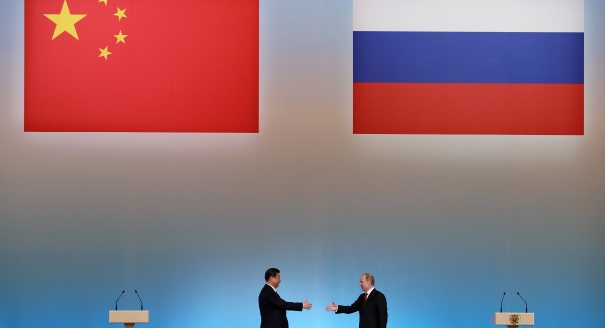
The danger for the EU in the rapprochement between Russia and China lies in the fortification of the Russian economy against sanctions and in an increased assertiveness for China.
Source: European Council on Foreign Relations
A $400 billion deal to export gas to China, a $24.5 billion currency swap agreement, opening up to Chinese participation in infrastructure projects: from an initially apprehensive reaction to China’s economic rise, Putin’s Russia has made a dramatic turn toward China after sanctions were imposed last year.
In “A ‘Soft Alliance’? Russia-China Relations After the Ukraine Crisis,” Alexander Gabuev discusses how Putin sees in its Asian pivot a way to strengthen the most vulnerable parts of its economy: dependence on the European energy market, dependence on Western capital markets, and dependence on technologies.Gabuev further explores the change in the relationship between the two powers. According to the brief, the danger for the EU in this Eastern rapprochement lies in the fortification of the Russian economy against sanctions and in an increased assertiveness for China.
Gabuev sees two possible options for an EU response:
Gabuev writes: “The longer Russia is forced to orient itself toward China, the more important the consequences will be. Some key elements such as arms deals and Chinese control over key resource deposits may become irreversible and have a lasting effect on Russia, European interests, and global security—even after Putin has left office.”
The full version of this publication is available at the European Council on Foreign Relations.

Director, Carnegie Russia Eurasia Center
Alexander Gabuev is director of the Carnegie Russia Eurasia Center. Gabuev’s research is focused on Russian foreign policy with particular focus on the impact of the war in Ukraine and the Sino-Russia relationship. Since joining Carnegie in 2015, Gabuev has contributed commentary and analysis to a wide range of publications, including the Financial Times, the New York Times, the Wall Street Journal, and the Economist.
Recent Work

Alexander Gabuev, Temur Umarov
Alexander Gabuev
Carnegie India does not take institutional positions on public policy issues; the views represented herein are those of the author(s) and do not necessarily reflect the views of Carnegie, its staff, or its trustees.

This piece examines India’s response to U.S. sanctions and tariffs, specifically assessing the immediate market consequences, such as alterations in import costs, and the broader strategic implications for India’s energy security and foreign policy orientation.
Vrinda Sahai

This paper examines the evolution of India-China economic ties from 2005 to 2025. It explores the impact of global events, bilateral political ties, and domestic policies on distinct spheres of the economic relationship.

Santosh Pai
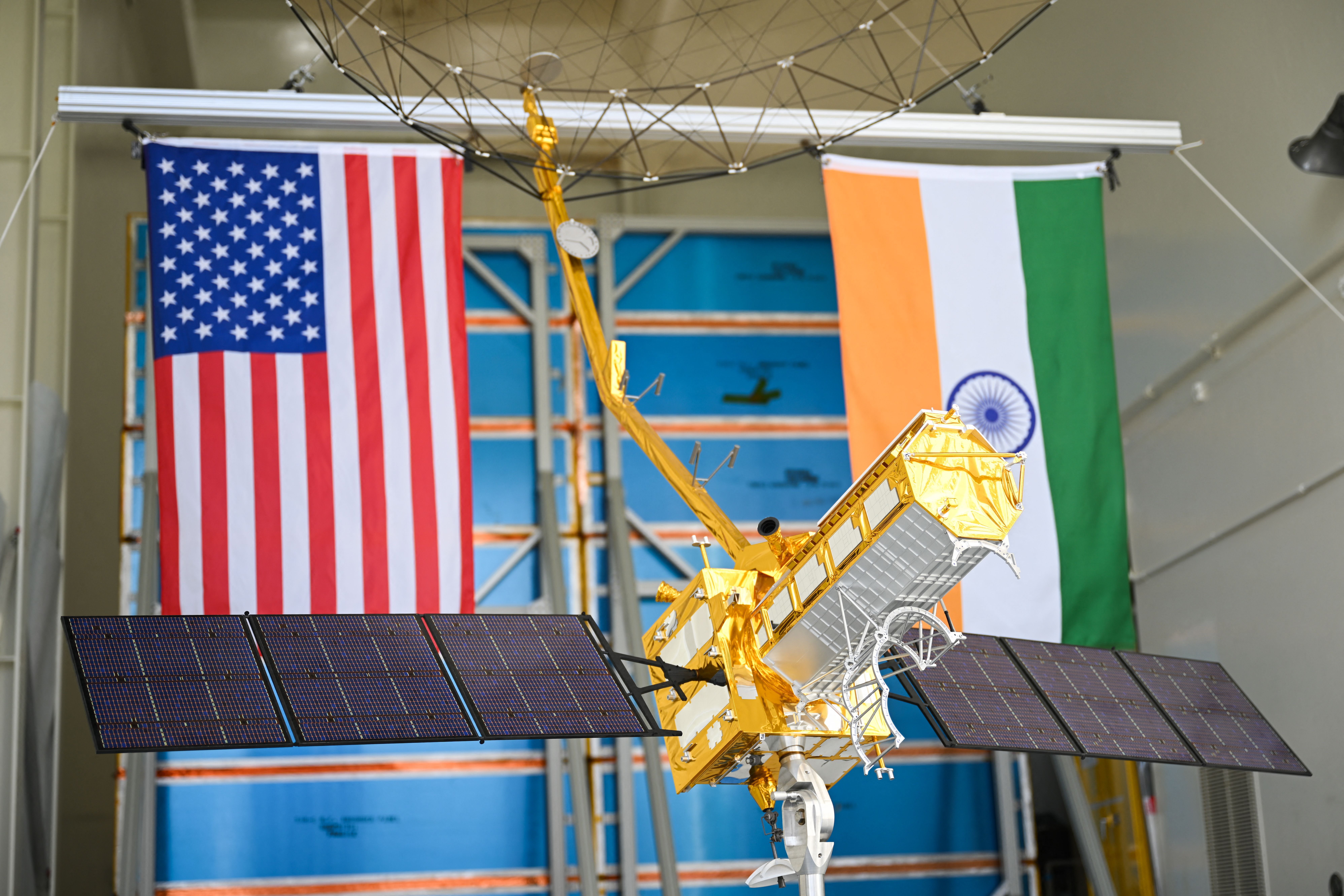
On July 30, 2025, the United States announced 25 percent tariffs on Indian goods. While diplomatic tensions simmered on the trade front, a cosmic calm prevailed at the Sriharikota launch range. Officials from NASA and ISRO were preparing to launch an engineering marvel into space—the NASA-ISRO Synthetic Aperture Radar (NISAR), marking a significant milestone in the India-U.S. bilateral partnership.

Tejas Bharadwaj
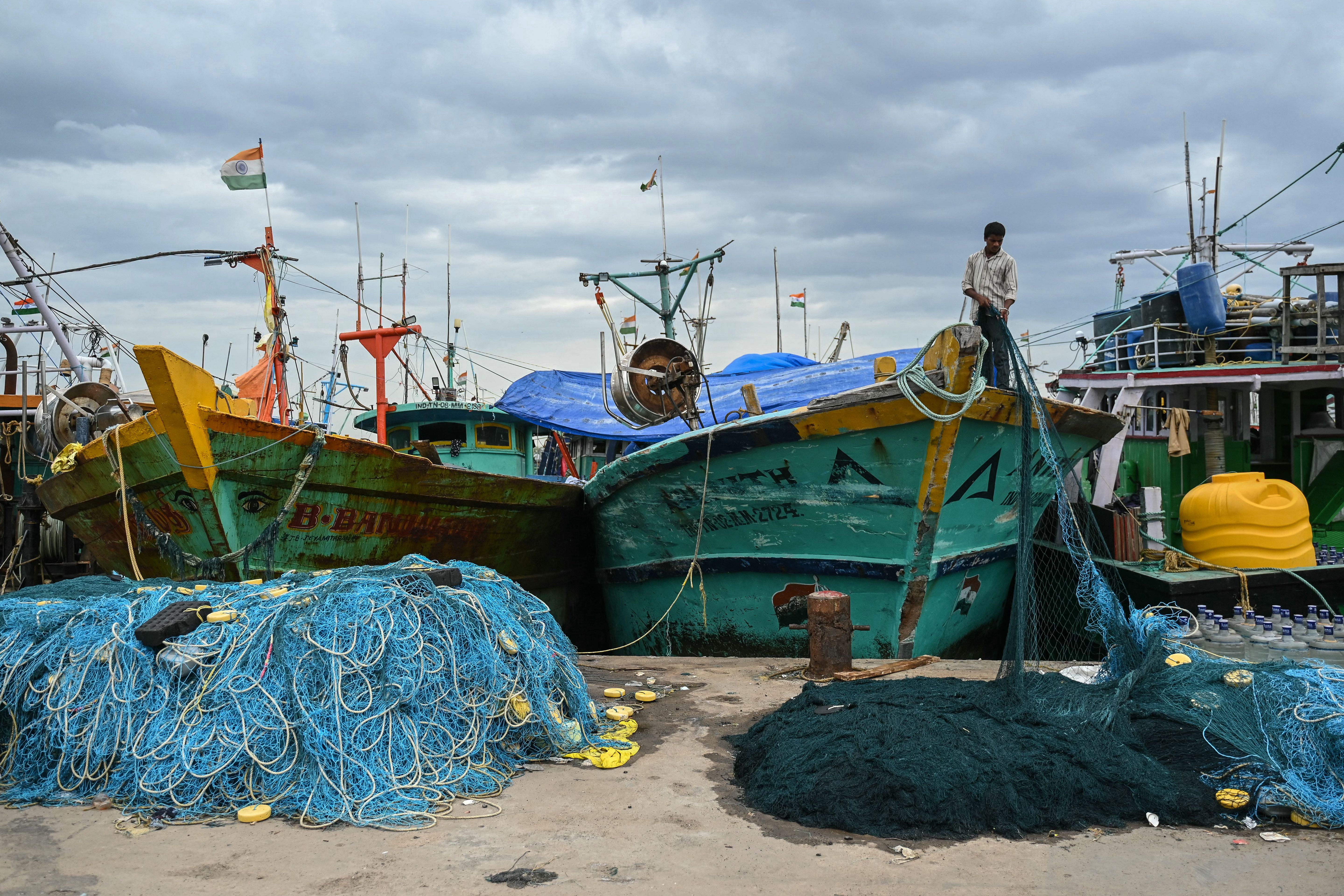
This article examines the scale and impact of Chinese IUU fishing operations globally and identifies the nature of the challenge posed by IUU fishing in the Indian Ocean Region (IOR). It also investigates why existing maritime law and international frameworks have struggled to address this growing threat.


Ajay Kumar, Charukeshi Bhatt
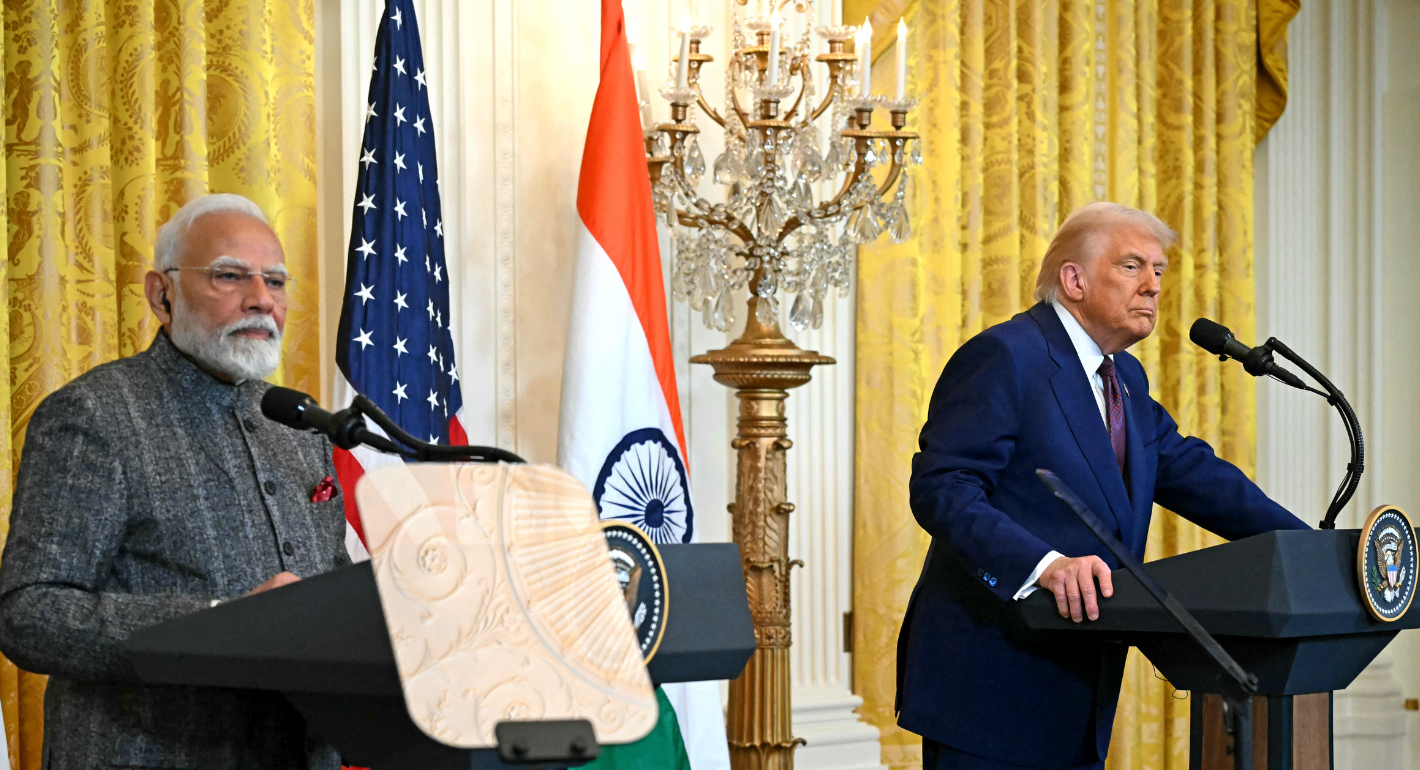
The India-U.S. relationship currently appears buffeted between three “Ts”—TRUST, Tariffs, and Trump.

Arun K. Singh