


• Research
  • About
  • Experts
Carnegie India logoCarnegie lettermark logo
{
  "authors": [
    "Deborah Gordon",
    "Wang Tao",
    "Matt Ferchen"
  ],
  "type": "other",
  "centerAffiliationAll": "dc",
  "centers": [
    "Carnegie Endowment for International Peace"
  ],
  "collections": [],
  "englishNewsletterAll": "ctw",
  "nonEnglishNewsletterAll": "",
  "primaryCenter": "Carnegie Endowment for International Peace",
  "programAffiliation": "SCP",
  "programs": [
    "Sustainability, Climate, and Geopolitics"
  ],
  "projects": [
    "Carnegie Oil Initiative"
  ],
  "regions": [
    "North America"
  ],
  "topics": [
    "Climate Change"
  ]
}

Source: Getty

Other

Creating an Oil-Climate Index: Key Lessons for Asian Policymakers

Oil policies in Asia will drive oil development practices and protections worldwide, but they require transparency and data disclosure so that Asia’s decision-makers can better weigh their oil options.

Link Copied
By Deborah Gordon, Wang Tao, Matt Ferchen
Published on Jul 31, 2015
Project hero Image

Project

Carnegie Oil Initiative

The Carnegie Oil Initiative analyzed global oils, assessing their differences from climate, environmental, economic, and geopolitical perspectives. This knowledge provides strategic guidance and policy frameworks for decision making.

Learn More

Source: Boao Review

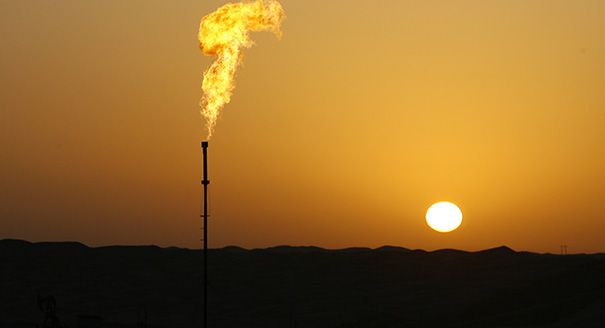
Over the next two decades, the countries in Asia are expected to remain oil import dependent while China, India, and Southeast Asian nations are projected to account for most of the world’s oil demand growth. Moreover, much of the Asian continent—with its vast coastlines second in length only to Canada—is at risk for sea level rise, intensifying storms, and other effects of climate change.

It is therefore imperative for all Asian leaders, already increasingly attuned to the need to improve energy and climate policies, to adopt high environmental standards for oil—especially their imports. A good place to start is to demand better oil information from producers and exporters so that policymakers can factor the actual climate footprints of oil into their decision-making.

Why is this important? It turns out that climate impacts vary significantly among global oils. Some of these alternative oils’ greenhouse gas (GHG) emission footprints are nearly twice as large as others. And the range of GHG emissions between oils is expected to grow as new, unconventional oil resources are identified. In an era of abundant oil choices, Asian policymakers would benefit from the information provided by the new Oil-Climate Index (OCI). Developed by the Carnegie Endowment for International Peace along with partners from Stanford University and the University of Calgary, the OCI can be of immediate practical use for Asian policy makers in reducing flaring and venting of gassy oils, rethinking extra heavy oils, and managing petroleum coke....

Read Full Text

About the Authors

Deborah Gordon

Former Director and Senior Fellow, Energy and Climate Program

Gordon was director of Carnegie’s Energy and Climate Program, where her research focuses on oil and climate change issues in North America and globally.

Wang Tao

Former Nonresident Scholar, Carnegie-Tsinghua Center for Global Policy

Wang Tao was a nonresident scholar in the Energy and Climate Program based at the Carnegie–Tsinghua Center for Global Policy.

Matt Ferchen

Former Nonresident Scholar, Carnegie-Tsinghua Center for Global Policy

Ferchen specializes in China’s political-economic relations with emerging economies. At the Carnegie–Tsinghua Center for Global Policy, he ran a program on China’s economic and political relations with the developing world, including Latin America.

Authors

Deborah Gordon
Former Director and Senior Fellow, Energy and Climate Program
Deborah Gordon
Wang Tao
Former Nonresident Scholar, Carnegie-Tsinghua Center for Global Policy
Wang Tao
Matt Ferchen
Former Nonresident Scholar, Carnegie-Tsinghua Center for Global Policy
Matt Ferchen
Climate ChangeNorth America

Carnegie India does not take institutional positions on public policy issues; the views represented herein are those of the author(s) and do not necessarily reflect the views of Carnegie, its staff, or its trustees.

More Work from Carnegie India

  • Source: iStock
    Commentary
    What’s Next for U.S. AI Policy?

    This commentary explores the likely actions of the Trump administration and driving forces on issues of deregulation, the United States’ leadership in AI, national security, and global engagements on AI safety.

      Shatakratu Sahu, Amlan Mohanty

  • Article
    One Year of the INDUS-X: Defense Innovation Between India and the U.S.

    Since its launch nearly a year ago, the INDUS-X has marked many milestones in the India-U.S. relationship. Much has been achieved, but there is room to further enhance defense cooperation between the two countries in the coming years.

      Ajay Kumar, Tejas Bharadwaj

  • Article
    What is the United States-India Initiative on Critical and Emerging Technology (iCET)?

    This article explicates what iCET is and what it should not be mistaken for. The initiative is not designed to deliver a single deal. Instead, it involves multiple streams for cooperation and collaboration between the United States and India on critical and emerging technologies.

      Rudra Chaudhuri

  • Article
    Biotechnology Collaboration Through the iCET: A New Beginning

    Based on preliminary research and stakeholder discussions, this article features four areas of biosafety and biosecurity that could potentially become concrete agenda items for collaboration between the United States and India under the iCET.

      Shruti Sharma

  • Article
    The U.S.-India Initiative on Critical and Emerging Technology (iCET): The Way Forward

    The article highlights critical takeaways from the unofficial discussions led by Carnegie India on the iCET with officials from both the countries, industry leaders, technologists, fund managers, entrepreneurs, and academics.

      Rudra Chaudhuri, Konark Bhandari, Ashima Singh

Get more news and analysis from
Carnegie India
Carnegie India logo, white
Unit C-4, 5, 6, EdenparkShaheed Jeet Singh MargNew Delhi – 110016, IndiaPhone: 011-40078687
  • Research
  • About
  • Experts
  • Projects
  • Events
  • Contact
  • Careers
  • Privacy
  • For Media
Get more news and analysis from
Carnegie India
© 2026 Carnegie Endowment for International Peace. All rights reserved.