

Commentary
Andrey Pertsev
{
  "authors": [
    "Andrey Pertsev"
  ],
  "type": "commentary",
  "centerAffiliationAll": "",
  "centers": [
    "Carnegie Endowment for International Peace",
    "Carnegie Russia Eurasia Center"
  ],
  "collections": [
    "Inside Russia"
  ],
  "englishNewsletterAll": "",
  "nonEnglishNewsletterAll": "",
  "primaryCenter": "Carnegie Russia Eurasia Center",
  "programAffiliation": "",
  "programs": [],
  "projects": [],
  "regions": [],
  "topics": [
    "Economy"
  ]
}
Source: Getty
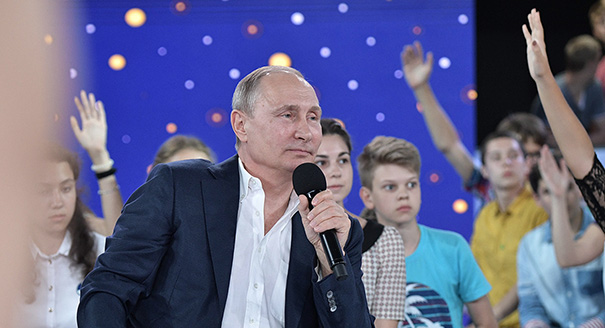
Vladimir Putin’s recent conversations with “ordinary Russians” are not an attempt to engage in direct democracy. Rather, they are intended to present the president with a new, artificial image of the Russian people; Kremlin officials are manufacturing conversations in which ordinary Russians are shown to be concerned with the same issues as their president.
Vladimir Putin is certainly meeting with a lot of “ordinary Russians” in advance of his 2018 reelection campaign: over the past several months, Putin has held numerous televised conversations with children, factory workers, fishermen, and a variety of other demographics across the country, discussing everything from Ukraine to Donald Trump.
This isn’t an entirely new campaign strategy. For much of his tenure, Putin has made a show of meeting with ordinary Russians, listening to their complaints and solving their problems with a wave of his hand—thereby adding some local luster to his national and international accomplishments. These spectacles sent the average voter a clear message: Putin listens to his people and responds to their needs.
Recently, however, there has been a change in the substance and format of these conversations, suggesting that the Kremlin now has a different set of goals. Whereas in the past these meetings were intended to reach voters, the president himself is now their main target: the presidential administration wants Putin to meet Russians who share his view of the world.
On July 21, state-controlled NTV aired Putin’s sit-down with schoolchildren from the Sirius Educational Center for Gifted Children—a program entitled “A Grown-Up Conversation” that had been heavily promoted in advance of its broadcast. Coming in the wake of Alexey Navalny’s spring anti-corruption rallies, which attracted tens of thousands of young people nationwide, “A Grown-Up Conversation” might be interpreted as a response to Navalny’s growing popularity. Normal kids don’t take to the streets, the conversation made clear; they study, accomplish lofty goals, and respect authority.
But it’s important to understand that young people were not the conversation’s intended audience. After all, they can hardly be called NTV’s most dedicated viewers. Adults, for the most part, couldn’t have been the target audience either—the show started at 4 p.m., when most people are still at work.
In all likelihood, the program had a target audience of one: Vladimir Putin himself. The Kremlin showed Putin an idealized image of Russian youth—one that contrasted sharply with images of millennials at the Navalny rallies.
If “A Grown-Up Conversation” had sought to woo Navalny supporters or undecided voters, the program would have gone completely differently. Young people take to the streets because they are unhappy with the government and fear for their and their country’s future. But no such topics came up.
Instead, the children asked their president about school, his favorite music, and being a brat as a child. Putin clearly enjoyed reminiscing about his past and reflecting on historical events, as well as on moral issues like whether children should obey their parents or their teachers. The new format, in short, was tailored to what the president likes to talk about.
Similarly, in a meeting with workers at a factory in Belgorod Region, Gennady Polyakov, an electro-metallurgical plant employee, asked Putin: “You’ve recently met Donald Trump. I’d like to know what you think of him as a person.” Indeed, rather than asking Putin to solve their problems, the factory workers asked questions that played into Putin’s personal interests. At the same meeting, another worker, Ivan Lapchenko, asked the president about historical falsifications. Putin responded with a lengthy rumination on history, then told veterans of a Belgorod construction brigade about his work as a carpenter.
Such conversations have little meaning to the average Russian and little PR value for the Kremlin. The previous format, in which Putin solved ordinary Russians’ problems, provided a far more powerful show of Putin’s interest in the everyman. But the president isn’t the everyman, and he’s quite happy with this new format.
It’s hard to believe that the worker in Belgorod’s chief concern is Donald Trump or historical falsifications, but it’s easy to see how Putin might be interested in the topic. In this sense, his conversations with ordinary Russians are more monologue than dialogue. The president discusses the topics he wants to discuss, and questions from the audience simply trigger his reflections. The Oliver Stone documentary on Putin, which the president is constantly reminded about, fits well into this context.
Putin’s conversations with these audiences are thus not an attempt to engage in direct democracy. Rather, they are intended to showcase a new, artificial image of the Russian people for the president. Kremlin officials are manufacturing conversations in which ordinary Russians are shown to be concerned with the same issues as their president.
This Putin-centric dialogue indicates that the Russian regime is becoming increasingly personalistic. Films, conversations, and everything else are all about him. Putin is the only thing that Russians are told to care about, and meeting the president is presented as an opportunity to learn more about him rather than as an opportunity to solve one’s problem.
The problem is that ordinary Russians may not appreciate this development. Most Russians do not concern themselves with Trump or historical falsifications, so when they hear workers discussing the topics, they think of the late Soviet period, when people would say one thing on TV and something totally different in their kitchens.

Andrey Pertsev is a journalist with Meduza website.
Recent Work
Andrey Pertsev
Andrey Pertsev
Carnegie India does not take institutional positions on public policy issues; the views represented herein are those of the author(s) and do not necessarily reflect the views of Carnegie, its staff, or its trustees.

On March 10, 2026, India’s Union Cabinet approved amendments to Press Note 3, a regulation that mandated government approval on all foreign direct investment (FDI) from countries sharing a land border with India. This amendment raises questions primarily about whether its stated benefits will materialize and if the risks have been adequately weighed. This piece will address the same.

Konark Bhandari

This piece examines India’s response to U.S. sanctions and tariffs, specifically assessing the immediate market consequences, such as alterations in import costs, and the broader strategic implications for India’s energy security and foreign policy orientation.

Vrinda Sahai

This paper examines the evolution of India-China economic ties from 2005 to 2025. It explores the impact of global events, bilateral political ties, and domestic policies on distinct spheres of the economic relationship.

Santosh Pai
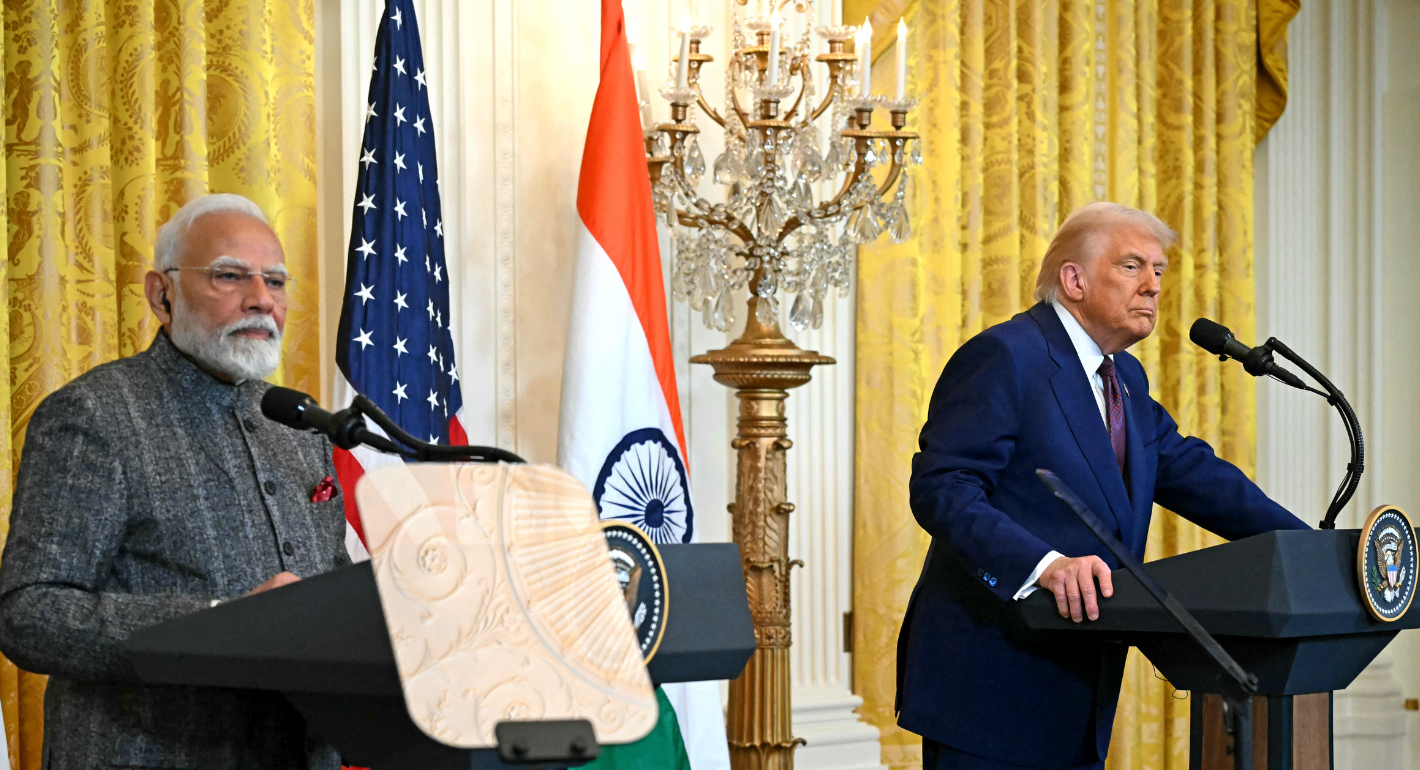
The India-U.S. relationship currently appears buffeted between three “Ts”—TRUST, Tariffs, and Trump.
Arun K. Singh
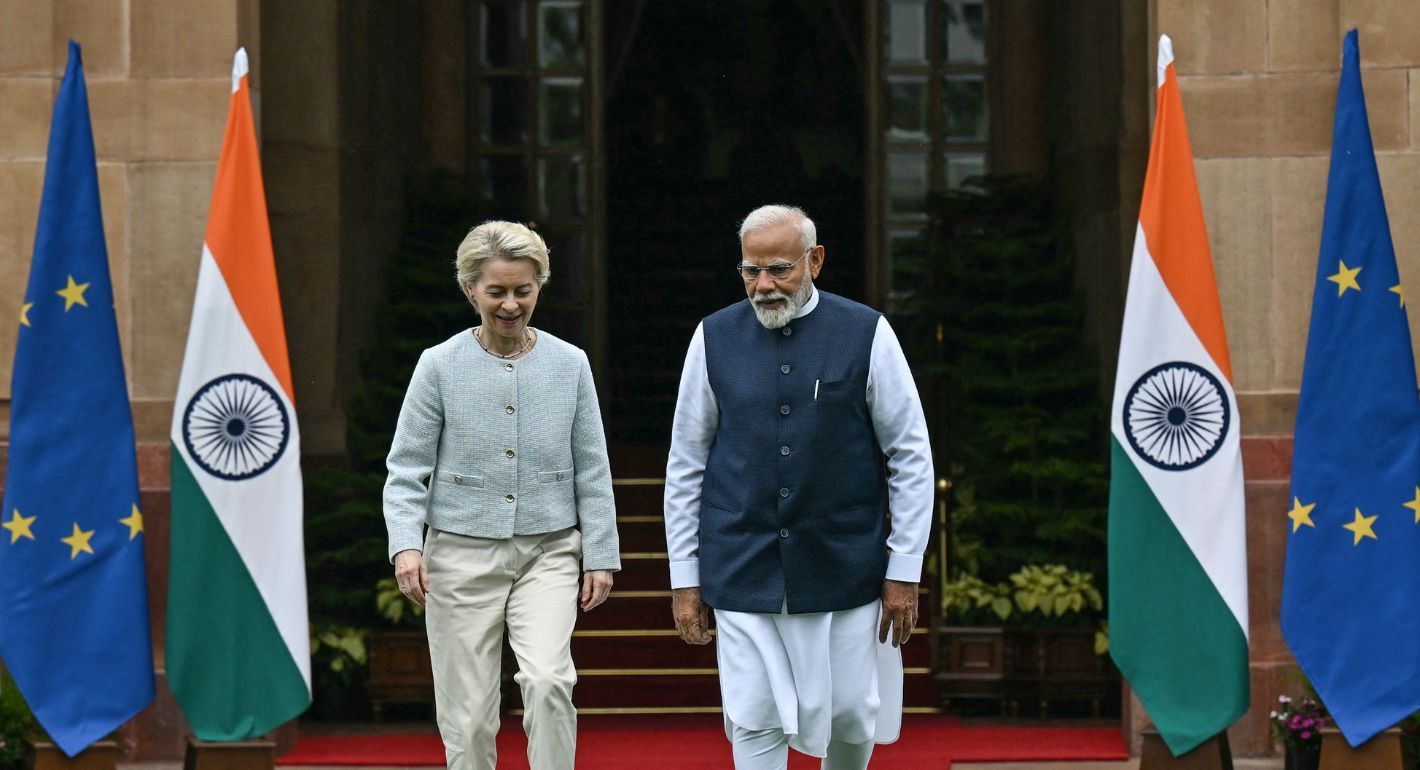
This article argues that the geopolitical circumstances have never been more conducive, not merely for the early conclusion of the free trade agreement (FTA) between India and the EU, but also for crafting a substantive and comprehensive strategic partnership.
Mohan Kumar