

Commentary
Tatiana Stanovaya
{
  "authors": [
    "Tatiana Stanovaya"
  ],
  "type": "commentary",
  "centerAffiliationAll": "",
  "centers": [
    "Carnegie Endowment for International Peace",
    "Carnegie Russia Eurasia Center"
  ],
  "collections": [
    "Inside Russia"
  ],
  "englishNewsletterAll": "",
  "nonEnglishNewsletterAll": "",
  "primaryCenter": "Carnegie Endowment for International Peace",
  "programAffiliation": "",
  "programs": [],
  "projects": [],
  "regions": [],
  "topics": [
    "Economy"
  ]
}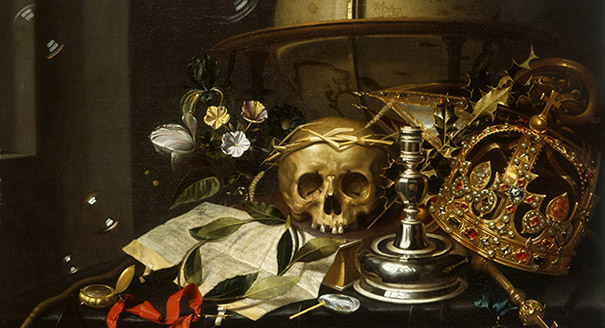
Source: Getty
The 2018 Russian presidential election will be the beginning of Vladimir Putin’s presumed final act as he seeks to ascend to the pantheon of Russia’s great historical figures. But as Putin loses interest in some of the more down-to-earth details of government, the Kremlin is testing new models of technocratic rule in order to sustain the regime.
Although Vladimir Putin has not formally announced his candidacy in next year’s Russian presidential election, the Kremlin is already working on his reelection. The only real questions are who he will run against and how many people will turn out to vote.
But treating the 2018 campaign as predictable and uninteresting misses the point. The campaign itself is a test run for a new form of Russia’s post-Putin style of government. The Kremlin is already engaged in a very particular form of institution-building to prepare for Putin’s departure from the position of Russian president in 2024.
After the 2014 takeover of Crimea, the nature of Putin’s popularity (and the way he sees himself) has fundamentally changed, something that has also strengthened his antipathy toward elections and campaigning. His legitimacy for most of his third term has rested more on patriotic fervor than on any democratic mandate. Putin now sees himself as a historical figure, and elections as a mere technicality. Western sanctions and the crises in Syria and Ukraine have further downgraded the importance of elections in his mind.
This is an important point in understanding Putin. After almost eighteen years in power, he sees himself as more accountable to the judgement of history than to the needs of the people. This abstract approach to politics means that the will of the people (and the role of elections) are further diminished in Russia and are no longer the source of his legitimacy. Rather, ever since the declaration that Crimea had returned to Russia, Putin has been the source of his own legitimacy.
Officials in the Kremlin are keenly aware of this change in perception. Their efforts have focused on creating a campaign that sees Putin reelected as a leader of historical significance rather than one bogged down in the small details of government. In practice, this means the entire system will focus on mitigating the political damage of Putin’s lack of interest in things such as pensions and the economy, while the president spends his next term making history.
But the system needs to look beyond Putin, who has been closely involved in decisionmaking for most of his time in office. The system is still deeply dependent on his whims, and in order for it to survive after he leaves, the regime must focus on strengthening institutions so that they can work autonomously and reliably without Putin’s intervention. This will likely result in a system guided by the interests of the technocrats.
Kremlin strategists are beginning to prefer legality over legitimacy. As such, the regime’s priorities are shifting to value procedures (the smooth functioning of government) over the public face of politics, and political institutions such as elections.
This is affecting the nature of the coming election. Putin has historically preferred to announce his intentions at the last possible moment. But the new strategists in the administration have pushed for earlier announcements. “It is impossible to drag this question [of whether or not Putin will run] out,” a Kremlin source told the Russian daily Kommersant recently, “it will look unnatural.” Putin will announce in November, and the election will take place in March.
The strategists and the president are not on the same page. The former want campaigning to begin as soon as possible to remove the suspense and tensions among political elites—making the situation more manageable and predictable. Putin, who has grown tired of democratic window dressing, is interested only in getting through this campaign with minimal loss to his own political standing.
Furthermore, one lingering but important question remains unresolved: whether Putin will run as an independent candidate or as a candidate of the ruling United Russia party. Kommersant reported in September that he is more likely to run as an independent candidate, which requires him to collect 2 million signatures. But the revealer of the Putin court’s secrets, the editor in chief of the Echo of Moscow radio station Alexei Venediktov, says this question is subject to intense internal debate.
The choice may seem inconsequential since the result will be outwardly the same (Putin as president), but it presents two very different paths for the future of the system he has constructed. An independent run makes more sense in the context of the current efforts to move away from a personalized and politicized system to a more technocratic model. But this move would marginalize the role of the United Russia party in Russian political life.
An independent run, however, would seem to add a missionary flavor to Putin’s reelection campaign—a means to further emphasize his distance from the political elites and his status as a historical figure, above the fray of tedious politics. It would also allow for comprehensive reshuffles of officials in political, state, and corporate positions later on.
Just as all previous presidential campaigns in the Putin era, the 2018 campaign will prove to be a watershed moment in the evolution of the current regime. The first campaign bridged the failing Yeltsin administration and Putin’s Russia. The 2004 election won Putin’s new regime complete legitimacy. The 2008 campaign with Medvedev at the helm showed autocracy has limits, and the constitution should be heeded. In 2012, we saw that the potential for the system’s liberalization had its own limits as well.
The 2018 election will legitimize Putin in a new way. He will become a historical figure rather than a popular leader. It will also test new concepts of technocratic models of government. The regime will attempt to make government autonomous of Putin’s day-to-day participation. The institutional transformation of the regime ushered in by the campaign will continue long after the election is over.

Senior Fellow, Carnegie Russia Eurasia Center
Tatiana Stanovaya is a senior fellow at the Carnegie Russia Eurasia Center.
Recent Work
Tatiana Stanovaya
Tatiana Stanovaya
Carnegie India does not take institutional positions on public policy issues; the views represented herein are those of the author(s) and do not necessarily reflect the views of Carnegie, its staff, or its trustees.

On March 10, 2026, India’s Union Cabinet approved amendments to Press Note 3, a regulation that mandated government approval on all foreign direct investment (FDI) from countries sharing a land border with India. This amendment raises questions primarily about whether its stated benefits will materialize and if the risks have been adequately weighed. This piece will address the same.

Konark Bhandari

This piece examines India’s response to U.S. sanctions and tariffs, specifically assessing the immediate market consequences, such as alterations in import costs, and the broader strategic implications for India’s energy security and foreign policy orientation.

Vrinda Sahai

This paper examines the evolution of India-China economic ties from 2005 to 2025. It explores the impact of global events, bilateral political ties, and domestic policies on distinct spheres of the economic relationship.

Santosh Pai
The India-U.S. relationship currently appears buffeted between three “Ts”—TRUST, Tariffs, and Trump.
Arun K. Singh
This article argues that the geopolitical circumstances have never been more conducive, not merely for the early conclusion of the free trade agreement (FTA) between India and the EU, but also for crafting a substantive and comprehensive strategic partnership.
Mohan Kumar