

Article
This piece argues that India’s central challenge is not managing a single flashpoint but resolving the underlying tension between expansion and institutional coherency of the BRICS grouping.
Vrinda Sahai
{
  "authors": [
    "Andrey Movchan"
  ],
  "type": "legacyinthemedia",
  "centerAffiliationAll": "",
  "centers": [
    "Carnegie Endowment for International Peace",
    "Carnegie Russia Eurasia Center"
  ],
  "collections": [],
  "englishNewsletterAll": "",
  "nonEnglishNewsletterAll": "",
  "primaryCenter": "Carnegie Endowment for International Peace",
  "programAffiliation": "",
  "programs": [],
  "projects": [],
  "regions": [
    "Russia"
  ],
  "topics": [
    "Economy"
  ]
}
Source: Getty
Russian banking system needs a supervisory authority independent of the central bank. Retail banks should be prohibited from investing in non-liquid assets, while the liquid securities market should be saved for investors
Source: Financial Times
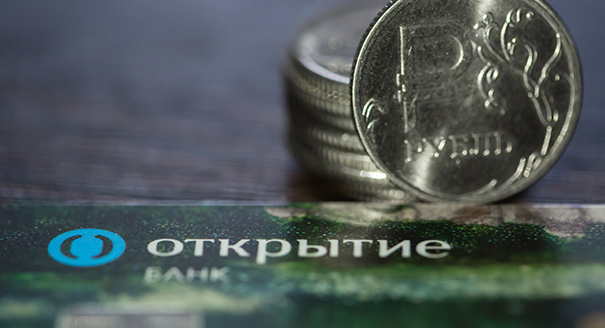
Russia’s privately owned banks are collapsing one by one. In 2017, Otkritie and B&N Bank failed within weeks of each other. In the past 17 years, 2,600 of just over 3,000 registered banks have lost their licences. Through years of mismanagement, the Bank of Russia, the country’s central bank, has created an unscrupulous and ineffective banking system. Now it must be rebuilt from the ground up.
The contemporary Russian financial sector emerged in the 1990s from the ruins of the Soviet banking system. Controlled by local oligarchs, banks focused on the accumulation of liabilities to finance shareholders’ purchases of privatising enterprises. Banks pursued profits through questionable activities, including money laundering and tax evasion. While many failed by the end of the millennium, most of those that survived did not transform into legitimate profit-generating institutions. Bankers expected that Russia’s economic growth, fuelled by the rise in oil prices, would cover hidden losses.
The 2008 financial crisis dashed these hopes. After five years of economic stagnation, consolidation of the fragmented banking sector would have been expected. But mergers and acquisitions have been rare, mostly because the Bank of Russia has created conditions that make prohibited transactions and asset stripping far more profitable.
The central bank has instituted excessive regulations that constrain institutions’ abilities to operate legally. Endless reporting requires Russian banks to employ five times as many employees per dollar lent as US counterparts.
In such a climate, banks have survived by finding ways around the law. They issued loans with fake collateral, overstated the value of assets and inflated formal capital through structured transactions with affiliated companies. Money laundering and cash conversion operations returned. In the past 15 years, more than 80 per cent of banks have exhausted their clients’ deposits through risky trades and offshore transfers to shareholders’ personal accounts.
Ironically, despite the draconian rules, the central bank is blind when it comes to oversight. The Bank of Russia has yet to forecast any collapse and has always denied any responsibility. In the case of Otkritie, Elvira Nabiullina, head of the central bank, said that Otkritie had overstated the prices of Russia’s sovereign bonds on its balance sheet. It is preposterous that such a misrepresentation made it past the central bank’s auditors, since bond prices are widely available. Yet the Bank of Russia refused to take issue with its auditors.
Even market mechanisms have failed to regulate Russia’s banking sector. The central bank’s system of guaranteeing the full balance of deposits up to $25,000 has stripped the market of its crucial regulator: investment risk.
The central bank has allowed Russian banks to cease performing their main function: being efficient intermediaries in capital markets. The institutions’ primary legal activity involves rerouting customers’ deposits to investments in Russian corporate and sovereign bonds.
Since the inflow of money inflates market prices, banks repurchase the bonds from the central bank multiple times using significant leverage to achieve higher returns. Prices are pumped up even higher, making the market unappealing for third-party investors.
The banking system needs a supervisory authority independent of the central bank. Retail banks should be prohibited from investing in non-liquid assets, while the liquid securities market should be saved for investors. Non-banking credit institutions and a marketplace for loans could encourage the market to distinguish between lending and transactional businesses to reduce the risk of purely transactional operations. To return an element of risk to the market, deposit insurance should never cover the entire balance and should be funded by depositors through an insurance fee.
Without these measures, Russia’s banking sector will remain a bankrupt system that merely facilitates the enrichment of people who know how to game the system.
Andrey Movchan
Former Nonresident Scholar, Carnegie Moscow Center
Movchan is a nonresident scholar at the Carnegie Moscow Center.

This piece argues that India’s central challenge is not managing a single flashpoint but resolving the underlying tension between expansion and institutional coherency of the BRICS grouping.

Vrinda Sahai

On March 10, 2026, India’s Union Cabinet approved amendments to Press Note 3, a regulation that mandated government approval on all foreign direct investment (FDI) from countries sharing a land border with India. This amendment raises questions primarily about whether its stated benefits will materialize and if the risks have been adequately weighed. This piece will address the same.

Konark Bhandari

This piece examines India’s response to U.S. sanctions and tariffs, specifically assessing the immediate market consequences, such as alterations in import costs, and the broader strategic implications for India’s energy security and foreign policy orientation.
Vrinda Sahai

This paper examines the evolution of India-China economic ties from 2005 to 2025. It explores the impact of global events, bilateral political ties, and domestic policies on distinct spheres of the economic relationship.

Santosh Pai
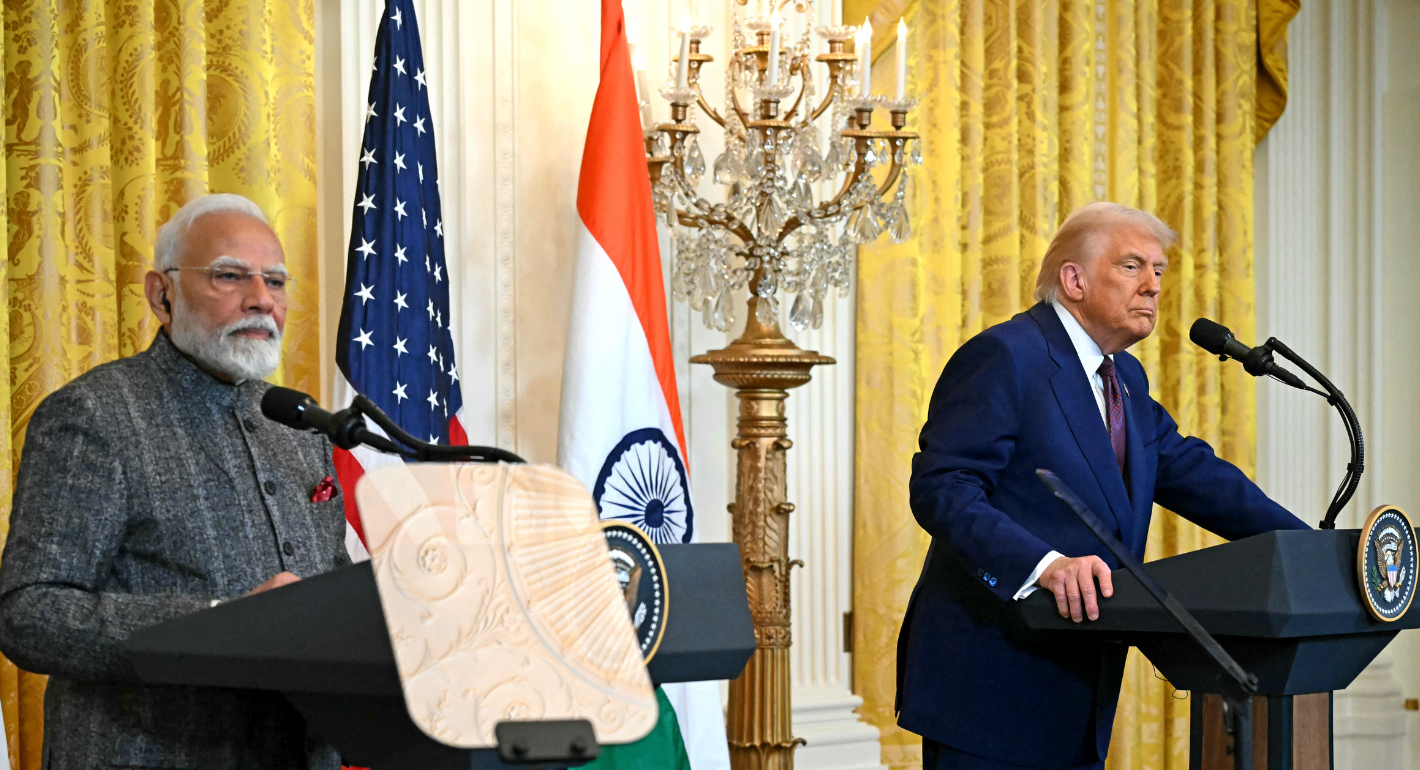
The India-U.S. relationship currently appears buffeted between three “Ts”—TRUST, Tariffs, and Trump.
Arun K. Singh