

Report
- +8
Salman Ahmed, Wendy Cutler, Rozlyn C. Engel, …
{
  "authors": [
    "Christopher Smart"
  ],
  "type": "legacyinthemedia",
  "centerAffiliationAll": "dc",
  "centers": [
    "Carnegie Endowment for International Peace"
  ],
  "collections": [],
  "englishNewsletterAll": "americanStatecraft",
  "nonEnglishNewsletterAll": "",
  "primaryCenter": "Carnegie Endowment for International Peace",
  "programAffiliation": "ASP",
  "programs": [
    "American Statecraft"
  ],
  "projects": [],
  "regions": [],
  "topics": [
    "Economy"
  ]
}
Source: Getty
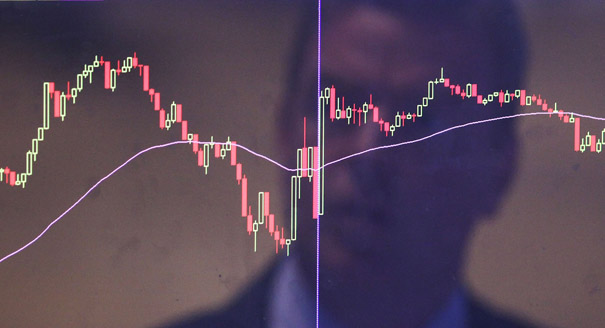
Will today’s market euphoria die from a political heart attack, the excesses of greed and leverage or the cumulative effects of old age?
Source: Medium
Markets power higher, apparently oblivious to the signs that they should be topping out. Handwringing about stretched price-to-earnings ratios, tight bond spreads and Bitcoin mania hardly matter amid a rare and roughly consistent story of synchronized global growth and ample liquidity.
And yet, an unmistakable sign of the approaching top is the perennial narrative at this stage of the cycle that Emerging Markets have entered a new phase of maturity that has made them better investments and perhaps more resilient to potential global financial shocks. The MSCI Emerging Markets Index is up roughly 30 percent over the last year, compared to roughly 18 percent for the S&P 500. This time just may be different.
But it’s not.
The logic runs that countries like Brazil and Russia and India have better fiscal discipline that improves their credit risk (true), flexible currencies that absorb external financial shocks (true) and better growth prospects (mostly true). Their markets have also continued to rise in spite of the classic sell-signal in past cycles: the prospect of higher U.S. interest rates and a stronger dollar, which has consistently led to a rapid outflow of hot money from these places. So far, there are few signs of any new so-called ‘taper tantrum’ and outflows from Emerging Markets overall have been modest at best.
And yet for however long this happy trend persists, investors should be under no illusions that there will be a turn. And when that comes, the flight to safety will not be in the direction of Sao Paolo or Moscow or Mumbai.
The only real question is what will be the actual trigger. Will today’s market euphoria die from a political heart attack, the excesses of greed and leverage or the cumulative effects of old age?
There are a number of clear political landmines on the road ahead. President Trump’s new National Security Strategy released this week promises fresh new confrontations with China over trade and investment policy, suggesting increased turmoil for the bilateral economic relationship. Yet if the disputes are mainly limited to technical analyses of pricing practices in specific industries, the broader impact may be limited.
In Mexico, next July’s presidential election campaign is heating up and the mounting resentment of Trump Administration’s policies on trade and immigration may boost the prospects of left-wing populist Andres Manuel Lopez Obrador. The Mexican peso is a large and liquid market, which makes it a prime vehicle for investors who want to reflect their broader views on Emerging Markets. There are messy scenarios ahead in Brazil, too, if former president Luiz Inazio Lula da Silva returns to power in the October election in spite of last year’s corruption conviction.
Elsewhere, however, there are few dramatic political events on the Emerging Markets calendar. Russia’s presidential election results in March are certain to extend Vladimir Putin’s term. Consequences from the standoff with North Korea or the collapse of Venezuela are difficult to predict, but they are being closely watched and it’s hard to see how either of them might dramatically change broader earnings or growth forecasts across emerging economies.
Alternatively, such dramatic market runs often collapse from the greed that leads to over-borrowing, although this seems less a concern in Emerging Markets than the developed world. The IMF’s latest Financial Stability Report notes that household debt to GDP in emerging economies has risen from 15 percent in 2008 to 21 percent in 2016, but remains well below the 63 percent recorded in advanced economies.
The risks will rise as increasingly exotic borrowers like Iraq and Tajikistan tap into global markets, and investors reach yield amid otherwise low interest rates. Even Greek debt now pays less than 4 percent. Still, Emerging Market leverage should not present much of a problem as long as global growth remains strong and balanced.
So, keep a sharp eye on growth.
If shock and greed seem less likely causes of the next selloff at this stage, markets ultimately remain vulnerable to the logic of the cycle. Profitable growth attracts both new capital and competition, which squeezes profit margins and reduces earnings. If there are inflationary pressures that cause interest rates to rise, then borrowing costs will squeeze the profits even faster. Markets simply age out.
In 2018, the U.S. economy may face stiffer headwinds if the Fed is forced to tighten faster than current expectations, and the European Central Bank will be closer to tightening, too. In Emerging Markets, most forecasts differ on how quickly China will slow rather on whether it will. If the recent strength in commodity prices moderates, that will undercut export revenues, too.
If Emerging Markets investors keep these risks in mind, the next market turn may be mostly a large cyclical correction that sets the stage for a new phase of profitable growth. But if they forget the inevitable logic of the cycle amid all the signs of apparent progress, they will more likely need to brace for a punishing crash.
Former Nonresident Fellow, Geoeconomics and Strategy Program
Christopher Smart was a nonresident fellow at the Carnegie Endowment for International Peace, where he focuses on the interaction of global financial markets and international economic policy.
Recent Work

Salman Ahmed, Wendy Cutler, Rozlyn C. Engel, …
Salman Ahmed, Allison Gelman, Tarik Abdel-Monem, …
Carnegie India does not take institutional positions on public policy issues; the views represented herein are those of the author(s) and do not necessarily reflect the views of Carnegie, its staff, or its trustees.

On March 10, 2026, India’s Union Cabinet approved amendments to Press Note 3, a regulation that mandated government approval on all foreign direct investment (FDI) from countries sharing a land border with India. This amendment raises questions primarily about whether its stated benefits will materialize and if the risks have been adequately weighed. This piece will address the same.

Konark Bhandari

This piece examines India’s response to U.S. sanctions and tariffs, specifically assessing the immediate market consequences, such as alterations in import costs, and the broader strategic implications for India’s energy security and foreign policy orientation.

Vrinda Sahai

This paper examines the evolution of India-China economic ties from 2005 to 2025. It explores the impact of global events, bilateral political ties, and domestic policies on distinct spheres of the economic relationship.

Santosh Pai
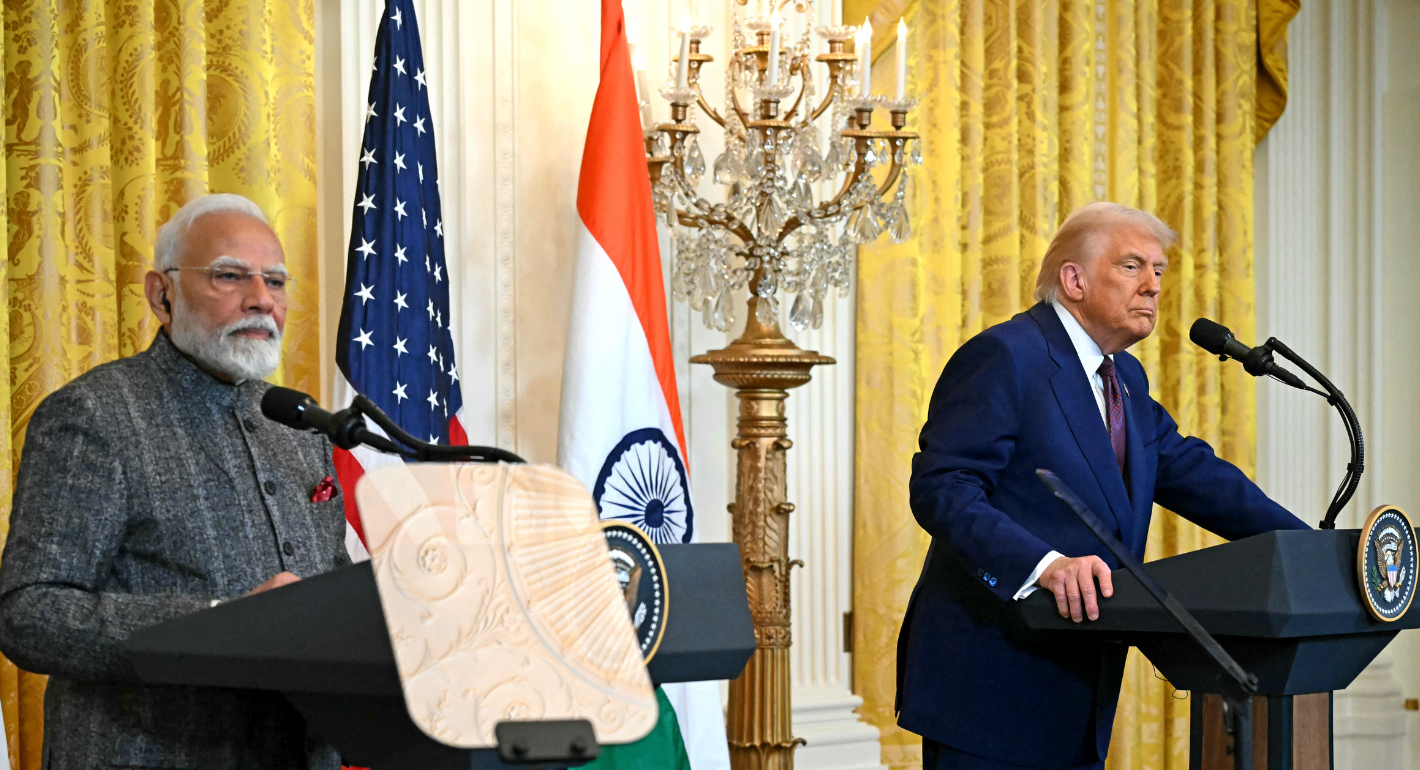
The India-U.S. relationship currently appears buffeted between three “Ts”—TRUST, Tariffs, and Trump.
Arun K. Singh
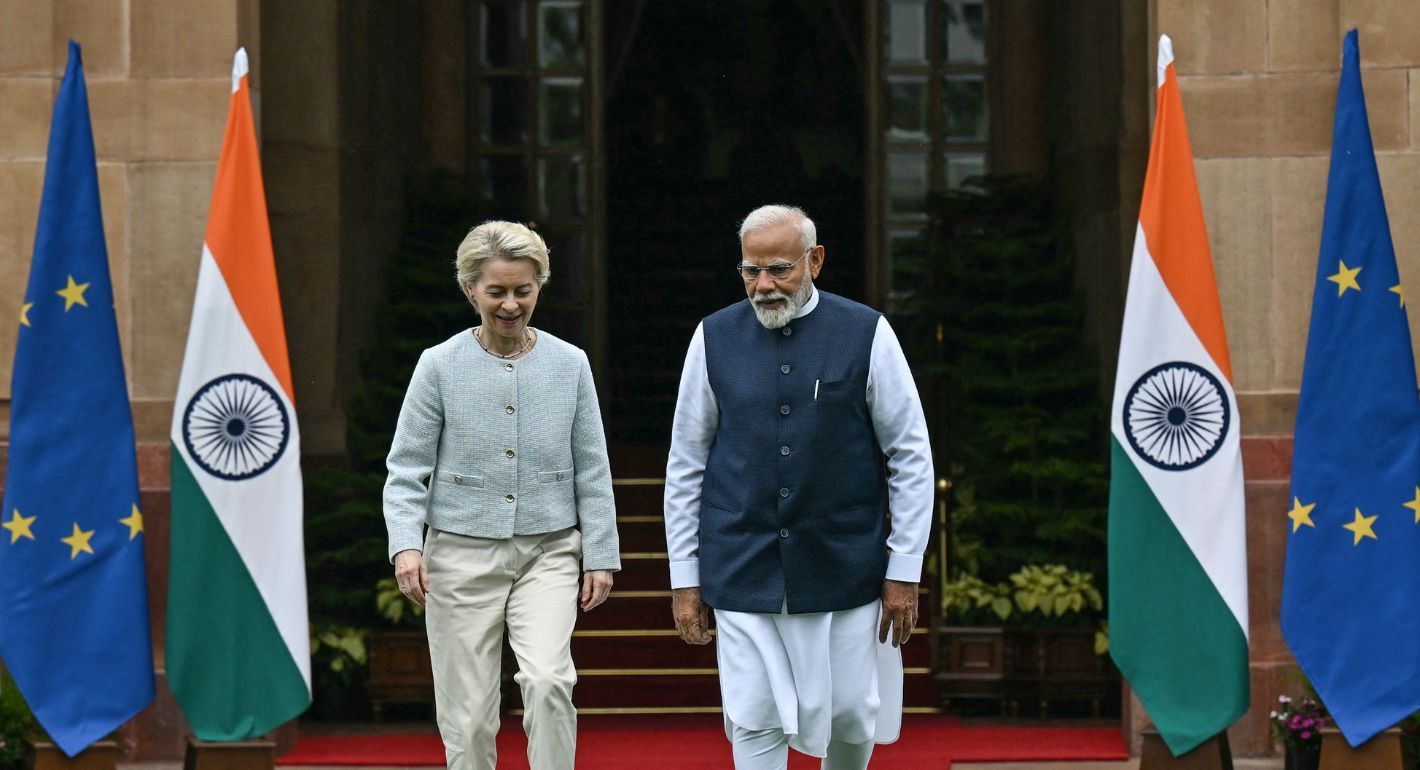
This article argues that the geopolitical circumstances have never been more conducive, not merely for the early conclusion of the free trade agreement (FTA) between India and the EU, but also for crafting a substantive and comprehensive strategic partnership.

Mohan Kumar