

Commentary
Katherine Charlet, Danielle Citron
{
  "authors": [
    "Katherine Charlet"
  ],
  "type": "legacyinthemedia",
  "centerAffiliationAll": "dc",
  "centers": [
    "Carnegie Endowment for International Peace"
  ],
  "collections": [],
  "englishNewsletterAll": "ctw",
  "nonEnglishNewsletterAll": "",
  "primaryCenter": "Carnegie Endowment for International Peace",
  "programAffiliation": "TIA",
  "programs": [
    "Technology and International Affairs"
  ],
  "projects": [],
  "regions": [
    "North America",
    "United States",
    "Russia",
    "Iran"
  ],
  "topics": [
    "Security",
    "Foreign Policy",
    "Technology"
  ]
}
Source: Getty
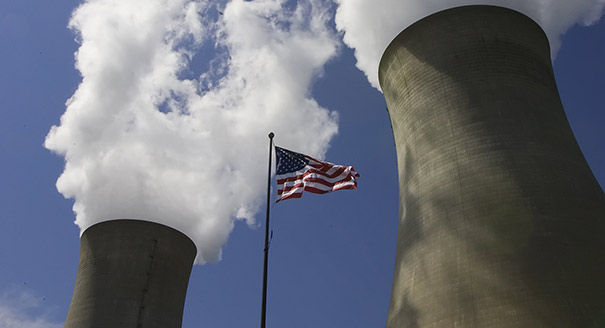
One genuine piece of news behind the U.S. sanctions against Russian individuals and organizations is the attribution to Russia of a hacking campaign that has targeted critical U.S. infrastructure.
Source: Axios
One genuine piece of news behind the U.S. sanctions against Russian individuals and organizations is the attribution to Russia of a cyberhacking campaign that has targeted critical U.S. infrastructure.
The details: Per the Treasury Department’s statement, “Since at least March 2016, Russian government cyber actors have also targeted … the energy, nuclear, commercial facilities, water, aviation and critical manufacturing sectors.”
The Department of Homeland Security has previously reported on cyber intrusions into critical infrastructure but has only identified an “Advanced Persistent Threat” without pointing the finger at a suspected culprit. In a move surely coordinated with Treasury’s announcement, the DHS updated its alert to note the Russian attribution and describe a “multi-stage campaign” into energy sector networks that included collection of “information pertaining to Industrial Control Systems.”
Why it matters: This attribution reinforces the need to secure critical infrastructure and continues a series of actions that have picked up steam since Homeland Security Advisor Tom Bossert told an audience last June that the U.S. government would “call out bad behavior and impose costs on our adversaries.” These include removal of Kaspersky from U.S. government systems, special counsel indictments,naming-and-shaming of Russia for the NotPetya attacks and this week’s sanctions and attribution.
What's next: These moves aren’t yet enough to stop Russia’s bad behavior. But it’s hard to imagine matters ending here.
Former Director, Technology and International Affairs Program
Katherine Charlet was the inaugural director of Carnegie’s Technology and International Affairs Program.
Recent Work
Katherine Charlet, Danielle Citron
Charlotte Stanton, Vivien Lung, Nancy (Hanzhuo) Zhang, …
Carnegie India does not take institutional positions on public policy issues; the views represented herein are those of the author(s) and do not necessarily reflect the views of Carnegie, its staff, or its trustees.

In any defense establishment, change is an ongoing process. However, despite the best of intentions, existing bureaucracies, bound by habit and years of socialization, have their limits in implementing transformative change.

Anit Mukherjee

As AI grows more sophisticated, as the supply chains that power it become more contested, and as access to frontier models becomes geopolitically charged, India must begin to ask a different set of questions. Not what applications it can build on someone else’s infrastructure but what the world needs.

Konark Bhandari

The Indian Ocean Region hosts one of the densest concentrations of subsea cables in the world. Yet, despite accounting for a significant share of global internet traffic, India’s participation remains limited.

Charukeshi Bhatt

How is AI reshaping space security, creating governance challenges, and where does international diplomacy stand today?


Tejas Bharadwaj, Almudena Azcárate Ortega

After the chill in ties between 2020 and 2024 that brought India–China relations to their lowest point in several decades, the two countries have engaged each other afresh. This paper argues that there are predominantly four imperatives guiding India’s approach to China, and they exist in an order of priority.

Saheb Singh Chadha