

Q&A
Matt Ferchen
{
  "authors": [
    "Matt Ferchen"
  ],
  "type": "other",
  "centerAffiliationAll": "",
  "centers": [
    "Carnegie Endowment for International Peace",
    "Carnegie China"
  ],
  "collections": [
    "China and the Developing World",
    "China’s Foreign Relations"
  ],
  "englishNewsletterAll": "",
  "nonEnglishNewsletterAll": "",
  "primaryCenter": "Carnegie China",
  "programAffiliation": "",
  "programs": [],
  "projects": [],
  "regions": [
    "Eastern Europe",
    "Western Europe"
  ],
  "topics": [
    "Economy"
  ]
}
Source: Getty
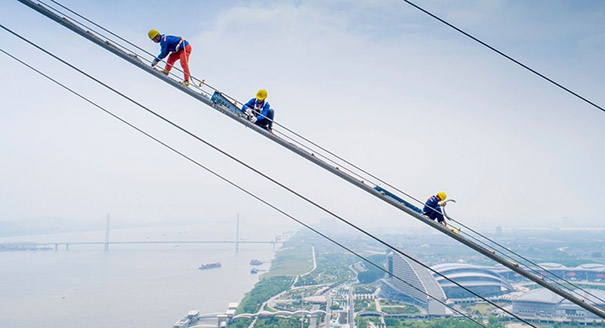
Concerns about China’s mercantilist trade and investment policies have been at the forefront of growing frictions between China, the EU and the United States, but the Belt and Road Initiative has also highlighted worries about the lending of billions of dollars for infrastructure projects by its “policy banks”.
Source: Clingendael Institute
In a very short amount of time, a new transatlantic consensus about China has emerged: because China is increasingly moving toward illiberalism in its politics and toward mercantilism in its economics, the U.S. and European governments must better understand, and protect themselves from, Chinese strategies to leverage commercial ties for political and geostrategic leverage. Concerns about China’s mercantilist trade and investment policies have been at the forefront of growing frictions between China, the EU and the United States, but the Belt and Road Initiative has also highlighted worries about the lending of billions of dollars for infrastructure projects by its “policy banks”: the China Export-Import Bank and the China Development Bank. However, even though Europe is the desired end-point of the BRI, little has been written about whether China’s policy banks should be considered part of China’s economic statecraft in the region and, if so, what the response should be.
The findings here demonstrate that while China’s policy banks are indeed key instruments of its broader economic statecraft strategies, including within the BRI, they have so far been only peripheral actors in China’s commercial strategies toward the EU. That said, the China Export-Import Bank has been instrumental in financing a signature, if highly controversial, railway project linking the capitals of Hungary and Serbia. In fact, it is in regions like the Western Balkans, with a number of countries that are not (yet) members of the EU, where China’s policy banks have been most active and welcome. Yet as China seeks to gain greater cooperation with EU counterparts to finance and build transportation and energy infrastructure either inside the EU or as part of Eurasian BRI projects, there is every likelihood that its policy banks will be the key instruments for such partnerships. And even if China’s policy banks are currently peripheral to China’s economic statecraft within the EU itself, they are increasingly at the heart of issues such as debt sustainability in regions like the Western Balkans as well in other countries and regions of importance to EU policy. Europe, as well as the United States, therefore has every reason to better understand the role of China’s policy banks in China's broader efforts at economic statecraft around the globe.

Former Nonresident Scholar, Carnegie-Tsinghua Center for Global Policy
Ferchen specializes in China’s political-economic relations with emerging economies. At the Carnegie–Tsinghua Center for Global Policy, he ran a program on China’s economic and political relations with the developing world, including Latin America.
Recent Work
Matt Ferchen
Matt Ferchen, Anarkalee Perera
Carnegie India does not take institutional positions on public policy issues; the views represented herein are those of the author(s) and do not necessarily reflect the views of Carnegie, its staff, or its trustees.

On March 10, 2026, India’s Union Cabinet approved amendments to Press Note 3, a regulation that mandated government approval on all foreign direct investment (FDI) from countries sharing a land border with India. This amendment raises questions primarily about whether its stated benefits will materialize and if the risks have been adequately weighed. This piece will address the same.

Konark Bhandari

This piece examines India’s response to U.S. sanctions and tariffs, specifically assessing the immediate market consequences, such as alterations in import costs, and the broader strategic implications for India’s energy security and foreign policy orientation.

Vrinda Sahai

This paper examines the evolution of India-China economic ties from 2005 to 2025. It explores the impact of global events, bilateral political ties, and domestic policies on distinct spheres of the economic relationship.

Santosh Pai

The India-U.S. relationship currently appears buffeted between three “Ts”—TRUST, Tariffs, and Trump.

Arun K. Singh
This article argues that the geopolitical circumstances have never been more conducive, not merely for the early conclusion of the free trade agreement (FTA) between India and the EU, but also for crafting a substantive and comprehensive strategic partnership.

Mohan Kumar