

Article
C. Raja Mohan, Darshana M. Baruah
{
  "authors": [
    "C. Raja Mohan"
  ],
  "type": "legacyinthemedia",
  "centerAffiliationAll": "",
  "centers": [
    "Carnegie Endowment for International Peace",
    "Carnegie India",
    "Malcolm H. Kerr Carnegie Middle East Center"
  ],
  "collections": [],
  "englishNewsletterAll": "",
  "nonEnglishNewsletterAll": "",
  "primaryCenter": "Carnegie India",
  "programAffiliation": "",
  "programs": [],
  "projects": [],
  "regions": [
    "Middle East",
    "Gulf",
    "Türkiye",
    "Qatar",
    "Saudi Arabia"
  ],
  "topics": [
    "Foreign Policy",
    "Political Reform"
  ]
}
Source: Getty
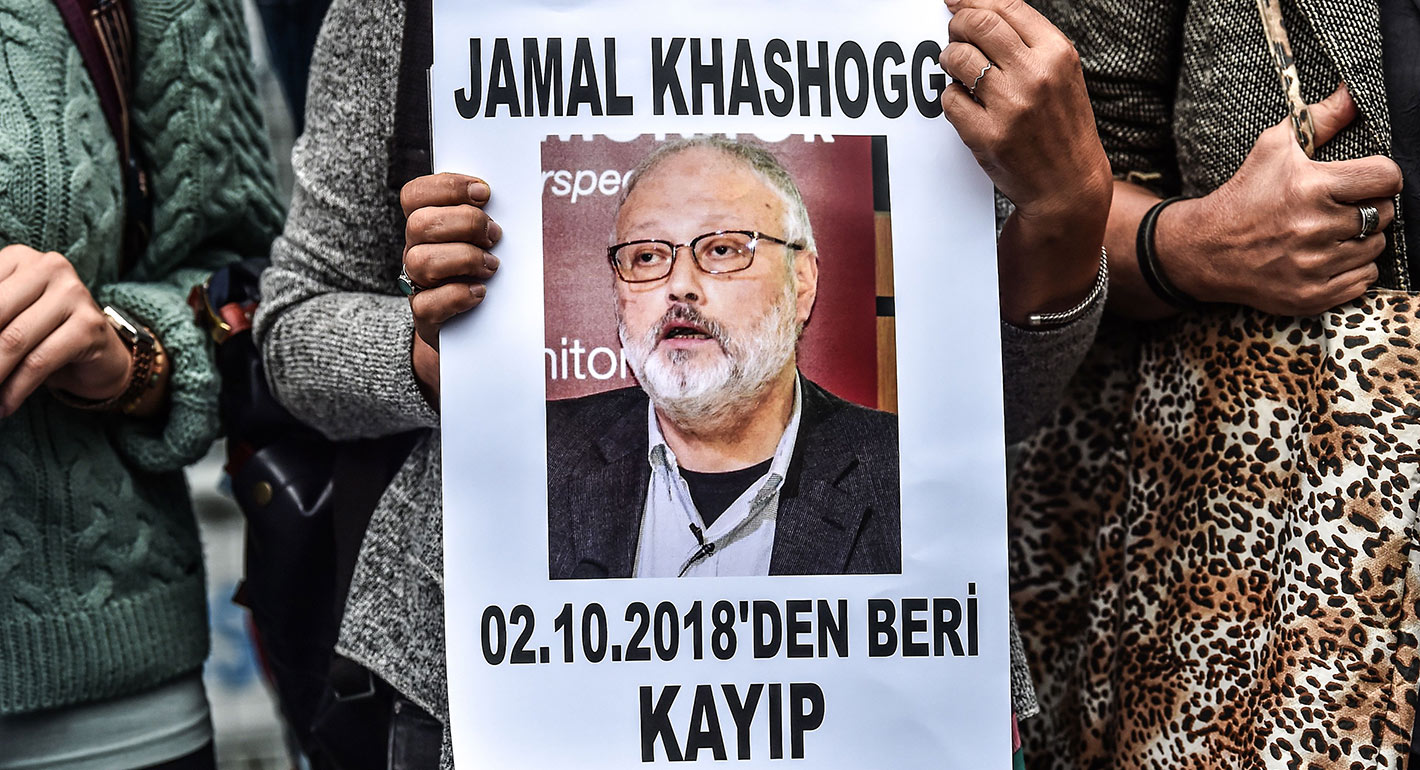
The outrageous murder of the Saudi dissident Jamal Khashoggi in the kingdom’s consulate in Istanbul has brought into sharp relief the deepening conflict between Riyadh and Ankara.
Source: Indian Express
The outrageous murder of the Saudi dissident Jamal Khashoggi in the kingdom’s consulate in Istanbul has brought into sharp relief the deepening conflict between Riyadh and Ankara. For Saudi Arabia, the challenge of coping with an increasingly assertive Turkey has become as demanding as the existential threat it sees from Shia Iran. Driving the great Sunni divide are radically different perspectives of the Saudi Crown Prince Mohammad bin Salman and the Turkish president Recep Tayyip Erdogan on the role of Islam in the future of the Middle East.
Consider, for example, their disagreement over the idea of “moderate Islam”. Last year, Crown Prince Salman unveiled a bold agenda of “returning the Kingdom of Saudi Arabia to moderate Islam”. He argued that the four decades following the Islamic Revolution in Iran during 1978-79 produced an abnormal state of affairs in Saudi Arabia.
As Tehran sought to extend its revolution to the Arab world, the House of Saud ceded more ground to the Wahhabi conservatives at home and extended support to jihadi groups beyond its borders in competition with Iran. As Salman put it, “After the Iranian revolution in 1979, people wanted to copy this model in different countries, one of them is Saudi Arabia. We didn’t know how to deal with it. And the problem spread all over the world. Now is the time to get rid of it.”
While much of the world welcomed Saudi reforms, not everyone was impressed. That Iran — the arch rival of the Saudis — would dismiss Salman’s claims was taken for granted. The most surprising attack on Salman came from Turkey’s Erdogan. Addressing an international conference a couple of weeks after Salman went public with his agenda, Erdogan told the crown prince does not own Islam: “The term ‘moderate Islam’ is being lathered up again.
The patent on ‘moderate Islam’ belongs to the West. There is no moderate or immoderate Islam; Islam is one. The aim of the concept is to weaken Islam. The person voicing this concept thinks it (Islam) belongs to him. No it does not belong to you”. In attacking the crown prince, Erdogan was also rejecting the unofficial but long-standing Saudi claim as the guardian of Islam.
That Salman and Erdogan are on different political trajectories is not in doubt. If Prince Salman is trying to liberalise the deeply religious Saudi society, Erdogan is turning a secular society into an Islamic one. If Salman has a huge challenge in consolidating his power at home and implementing bold reforms, Erdogan, older and cannier, has been in power for nearly a decade-and-a-half. He has crushed political opposition and neutered the secular elite. Erdogan also marginalised the armed forces that saw themselves as the legatees of Mustafa Kemal Ataturk’s 1923 revolution, which put modern Turkey on a secular foundation and abolished the Caliphate.
The argument between Salman and Erdogan is not just about Islam. It is also about the geopolitics of the Middle East. For decades, Turkey stayed out of the region’s politics. As a secular state, a member of the NATO and a candidate for the membership of the European Union, Turkey was seeking deeper integration into the West. As he sought to bring political Islam back into Turkey’s life, Erdogan turned inevitably to the Middle East.
The Saudis and its Sunni allies had no love for Turkey or the imperial rule of the Ottoman Empire. While they resented Erdogan’s “neo-Ottoman” ambitions, the Saudis hoped that a resurgent Sunni Turkey could help strengthen the coalition against Shia Iran. But the Arab Spring and the developments since then have put Ankara and Riyadh at odds with each other.
Erdogan is deeply empathetic to the kind of political Islam championed by the Muslim Brotherhood. The Saudis see the Brotherhood as a great threat to the established order in the Middle East and has branded it as a terrorist organisation and gone after its units in the kingdom. If Turkey backed the Brotherhood government that was elected to power in Cairo in 2012, Saudi Arabia endorsed the Egyptian army’s coup against it in 2013 and a sweeping crackdown on its members. Turkey has offered shelter to the Brotherhood activists fleeing from Egypt and the Gulf.
In Syria, the Saudi and Turkish interests seemed to align against the regime of Bashar al Assad. But the Sunni militias they back have often clashed with each other. The Turkish alliance with Qatar, at a time when Saudis were trying to isolate Doha for its support to the Brotherhood, is another dimension of the current conflict between Ankara and Riyadh.
Erdogan has no love for Shia Iran, but he has found a way of simultaneously competing and coordinating with Iran. Riyadh, in contrast, sees itself locked in a mortal combat with Tehran, a sharpening conflict with Turkey and the radical forces of political Islam. Speaking to a group of Egyptian editors last March, Prince Salman described them as the “triangle of evil”.
The Khashoggi killing has certainly weakened the Crown Prince and significantly improved Erdogan’s leverage, at the least for the moment. The US, meanwhile, is trying to limit the conflict between two of its closest allies — Saudi Arabia and Turkey — and redirect the energies of the region against Iran. There is no evidence so far that the US might succeed. If Turkey and the Western critics of Prince Salman mount the pressure beyond a point, there is no telling how the House of Saud might lash out.
This article was originally published in the Indian Express.
Former Nonresident Senior Fellow, Carnegie India
A leading analyst of India’s foreign policy, Mohan is also an expert on South Asian security, great-power relations in Asia, and arms control.
Recent Work

C. Raja Mohan, Darshana M. Baruah


Alexander Gabuev, Paul Haenle, C. Raja Mohan, …
Carnegie India does not take institutional positions on public policy issues; the views represented herein are those of the author(s) and do not necessarily reflect the views of Carnegie, its staff, or its trustees.

After the chill in ties between 2020 and 2024 that brought India–China relations to their lowest point in several decades, the two countries have engaged each other afresh. This paper argues that there are predominantly four imperatives guiding India’s approach to China, and they exist in an order of priority.

Saheb Singh Chadha

This piece argues that India’s central challenge is not managing a single flashpoint but resolving the underlying tension between expansion and institutional coherency of the BRICS grouping.

Vrinda Sahai

A partnership between India, a country of subcontinental size, and Africa, a continent of fifty-four countries, may seem asymmetric until one notes that both are home to nearly the same number of people—1.4 billion. This essay spells out the existing challenges to the partnership, its optimal potential, and the possible pathways to realize it over the next quarter-century.

Rajiv Bhatia

The India–EU Free Trade Agreement (FTA) is shaping up to be one of the most consequential trade negotiations, both economically and strategically. But, what’s in the agreement, what’s missing, and what will determine its success in the years ahead
Vrinda Sahai, Nicolas Köhler-Suzuki
Trump 2.0 has unsettled India’s external environment—but has not overturned its foreign policy strategy, which continues to rely on diversification, hedging, and calibrated partnerships across a fractured order.



Milan Vaishnav, ed., Sameer Lalwani, Tanvi Madan, …