

Commentary
Peter Kellner
{
  "authors": [
    "Peter Kellner"
  ],
  "type": "legacyinthemedia",
  "centerAffiliationAll": "dc",
  "centers": [
    "Carnegie Endowment for International Peace",
    "Carnegie Europe"
  ],
  "collections": [
    "Brexit and UK Politics"
  ],
  "englishNewsletterAll": "ctw",
  "nonEnglishNewsletterAll": "",
  "primaryCenter": "Carnegie Europe",
  "programAffiliation": "EP",
  "programs": [
    "Europe"
  ],
  "projects": [],
  "regions": [
    "Europe",
    "Western Europe",
    "United Kingdom",
    "Iran"
  ],
  "topics": [
    "EU"
  ]
}
Source: Getty
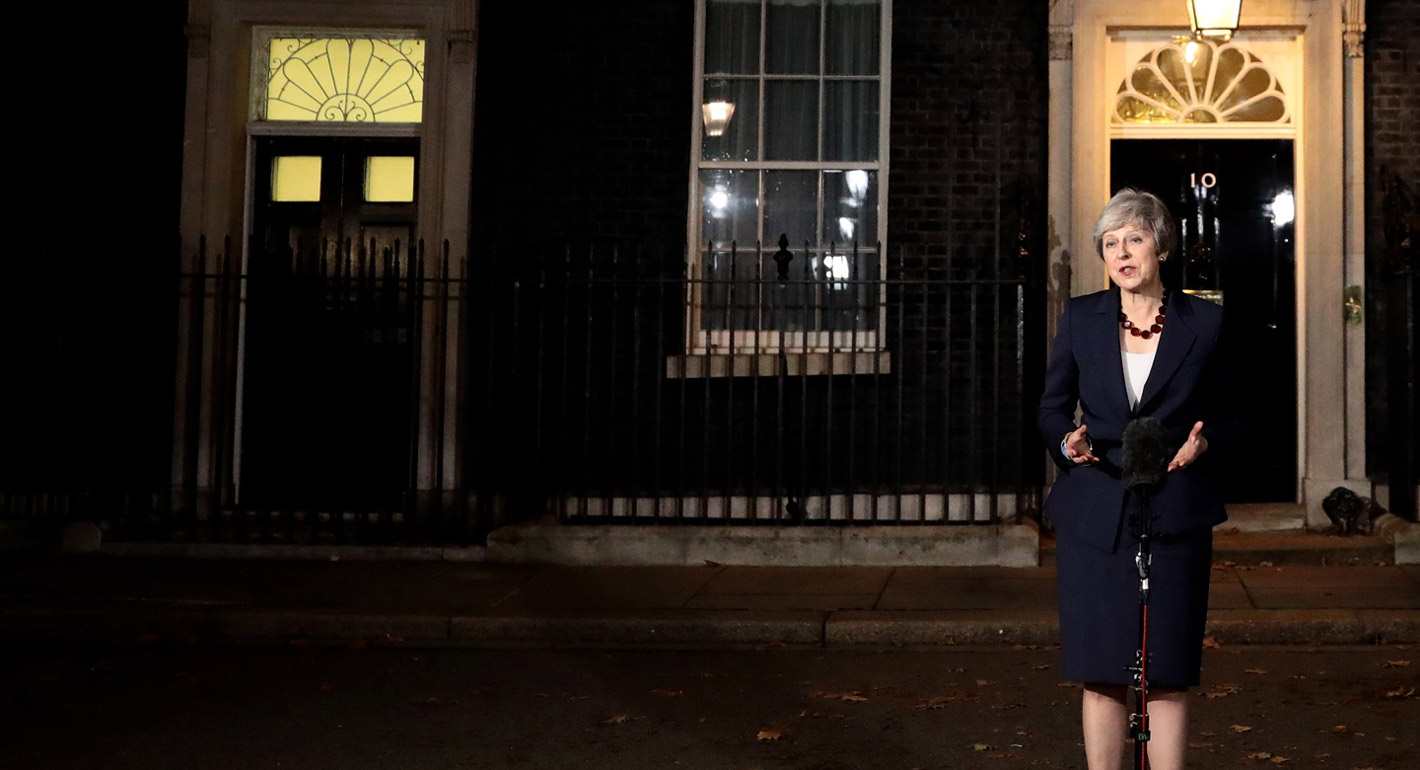
Something is eating away at the fabric of British politics. Brexit has much to do with it, but the consequences could be with us long after the current crisis is resolved, one way or another.
Source: UnHeard
Something odd, and possibly dangerous, is eating away at the fabric of British politics. Brexit, of course, has much to do with it, but the consequences could be with us long after the current crisis is resolved, one way or another.
Signs of the malaise can be clearly seen in an exclusive survey for UnHerd conducted by Deltapoll. It shows a remarkable lack of faith in both main party leaders, not just by voters generally but by high proportions of their own voters. Loyalties are being tested as never before.
In the past, one party leader has occasionally had a shaky reputation among their own supporters on one or two characteristics. In the early 1980s, many Labour voters thought Michael Foot was weak; towards the end of her premiership, many Tories considered Margaret Thatcher out of touch. But I have never seen so many supporters of both parties simultaneously hold such low opinions of their own leaders across the board
Here is the evidence. The following table shows the main findings.

Consider first the two columns, in black type, showing the responses of all voters. Both leaders have strongly negative ratings on all counts. That is unusual enough. But when we look at the blue figures, showing how Conservative voters view Theresa May, and the red figures, showing how Labour voters view Jeremy Corbyn, the scale of the drama becomes clear. The positive scores for May range from 57% of Conservative supporters who say she is strong, down to 40% who back her on Brexit. Her average score among Tory voters is 45%. Labour voters give Corbyn positive scores ranging from 64 to 38%; his average is 50%. Among all voters, the averages are, of course, even worse: May 26%, Corbyn 28%.
To put these figures in context, a successful leader would expect average scores of around 80% among their party’s own voters and 40% among the general public. For both leaders to fall so far short of these figures should set off alarm bells in both parties.
Here, though, is the paradox. Precisely because both leaders have terrible ratings, the scale of the problem is less obvious than it would be if only one was doing badly. In that case (as when Foot led Labour and towards the end of Thatcher’s premiership), their party would have support well below 30% in the polls and facing a landslide defeat. Instead, nothing much seems to have changed since the 2017 election. An average of recent polls shows the two parties still close together, and with almost as many supporters as 18 months ago. The high commands in both parties, though plainly struggling over Brexit, see no wider reason to panic.
In truth, they should be terrified. For the poll shows that the disenchantment with the main parties and their leaders has spread throughout Britain. Within Westminster, it is rare to find any backbench Labour or Conservative MP who, giving their candid views in private, will say their leader is any good or that their party is in anything other than deep trouble. But some hope this despair is a feature of the Westminster bubble, and that real voters away from London have not changed their views of politicians and parties that much.
In fact, it is increasingly hard to avoid the conclusion that millions of voters Left and Right are losing faith in the people who either govern us today or aspire to do so in the future.
Which brings us to the possible long-term consequences of current public attitudes. In any country with a different electoral system, the chances are that support for both Labour and the Conservatives would have crashed by now. Across Europe, countries with more proportional voting systems have seen the traditional big parties slump in recent years – even with leaders less widely derided than Britain’s.
Here, first-past-the-post creates a huge barrier to entry. Elsewhere, small parties ranging from the Greens to the far right have obtained a foothold in their parliaments with as little as 5% support, and then managed to increase their credibility. Here, they can’t. In 1983, the Liberal/SDP Alliance won 26% and only 23 seats; in 2015 Ukip’s 14% gave them just a single seat.
The party that might have benefited from the Tory and Labour travails is the Liberal Democrats. But they paid a heavy price for their role in the 2010-15 coalition government. While their support has picked up a little in recent months, they are still scarred by decisions they took almost a decade ago.
It is, of course, possible that when the Brexit drama has played out, normal service will resume. Perhaps May and Corbyn will both be replaced by leaders who have greater personal appeal to the electorate.
I am not so sure. My reason is that May and Corbyn’s truly awful ratings do not flow solely from their personal attributes. Both lead deeply divided parties, and these divisions are unlikely to disappear anytime soon. The faultlines will remain: inward-looking nationalism versus outward-looking enterprise with the Tories; ambitious socialism versus progressive capitalism with Labour. A leader that combined the strategic ability of Napoleon with the genius of Einstein and the moral courage of Mandela would still struggle to win public approval if they could not reunite their parties. The Deltapoll figures providence symptoms of a deeper crisis.
In short, both main parties are more fragile and less stable than for many decades. First-past-the-post could save both Labour and the Conservatives from the consequences of their current divisions. But it is no longer ridiculous to image a different future. Once the adhesive glue of our electoral system starts to crack, things can change with bewildering speed. A century ago, amid the stresses of post-First-World-War Britain and the divisions within the Liberal Party, realignment happened quickly. Labour climbed from fourth place in 1918 to government in 1924.
Will Brexit end up having the same glue-cracking effect? And if it does, will the beneficiaries be existing herbivores such as the Liberal Democrats and the Greens; or some new centre party created by disenchanted Labour and Tory moderates; or carnivores on the outer fringes of Right and Left? Is the century-long dominance of Britain’s Parliament by competing forces on the centre Right and centre Left about to end?
Ask me again in 10 years’ time and I shall tell you. Meanwhile I wouldn’t bet a great deal against changes that could be immense, and which not everyone will like.<

Peter Kellner
Former Nonresident Scholar, Carnegie Europe
Kellner was a nonresident scholar at Carnegie Europe, where his research focused on Brexit, populism, and electoral democracy.
Recent Work
Peter Kellner
Peter Kellner
Carnegie India does not take institutional positions on public policy issues; the views represented herein are those of the author(s) and do not necessarily reflect the views of Carnegie, its staff, or its trustees.
The Technology and Security Initiative (TSI) ought to be more strategic, especially at a time of geopolitical displacement. This is an opportunity to fuse two deep technology ecosystems to co-produce and co-innovate solutions, products, and emerging technologies of the future.



Rudra Chaudhuri, Tejas Bharadwaj, Konark Bhandari, …
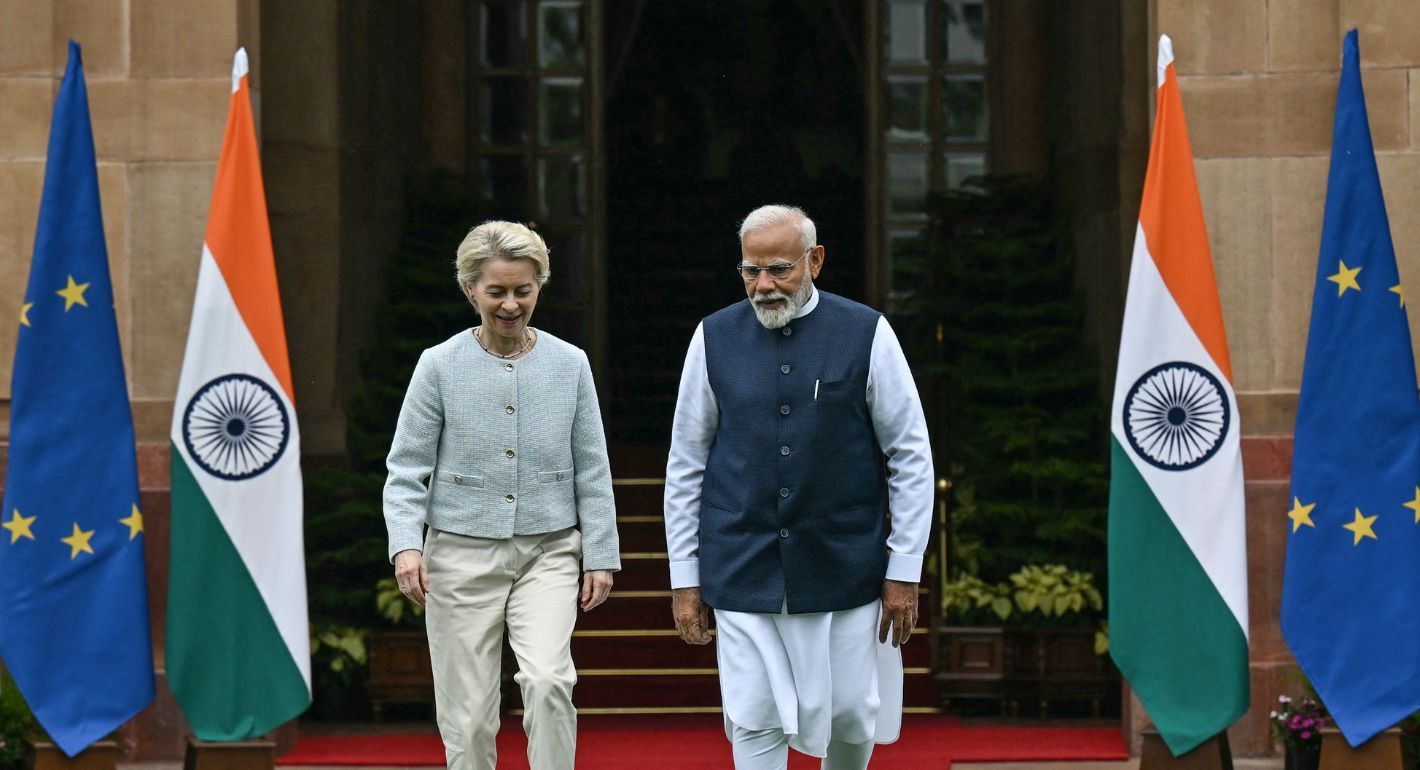
This article argues that the geopolitical circumstances have never been more conducive, not merely for the early conclusion of the free trade agreement (FTA) between India and the EU, but also for crafting a substantive and comprehensive strategic partnership.

Mohan Kumar
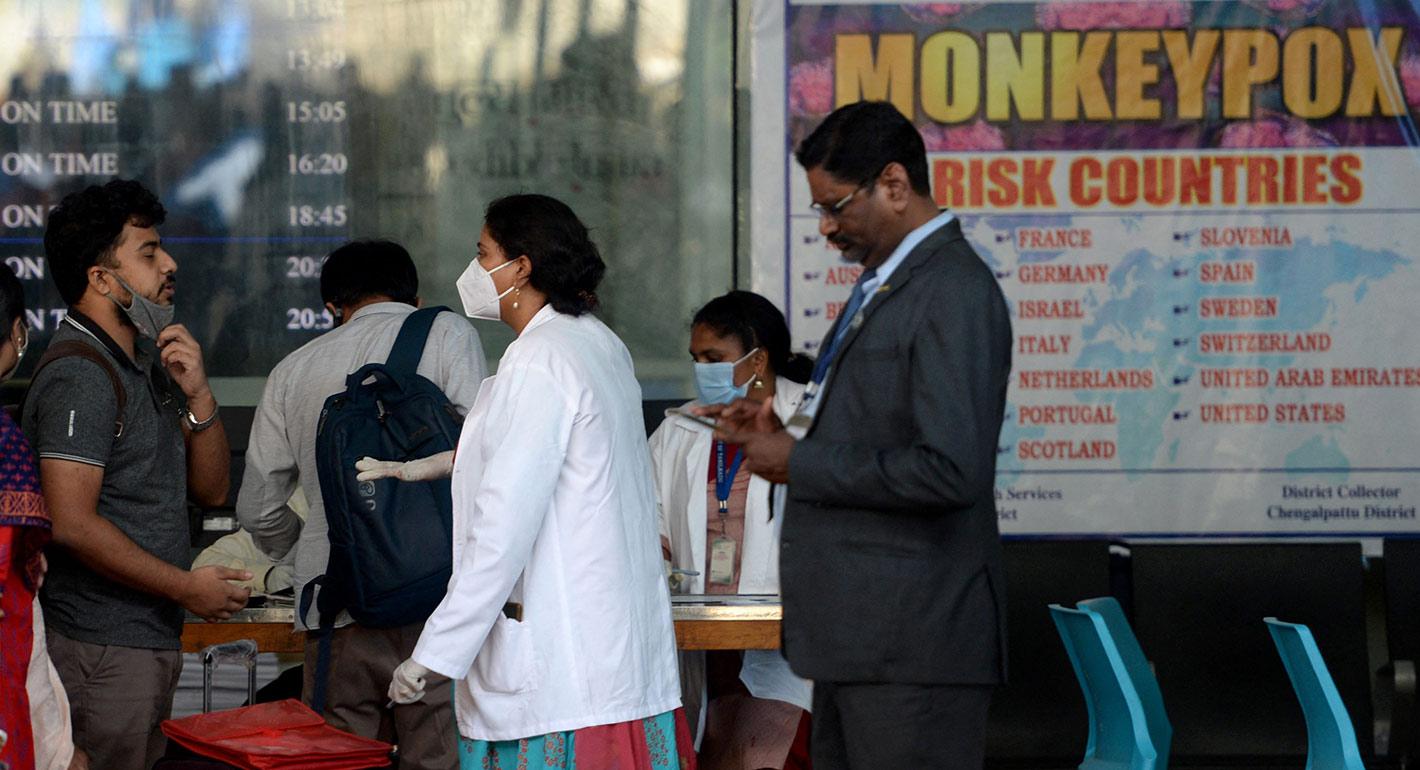
With monkeypox being declared a global health emergency, the WHO approach is an innovative and effective way to curb outbreaks of zoonotic diseases.

Shruti Sharma

In India, biotechnology has played an important role in helping stakeholders in academia, industry, and government develop new pandemic-related technology, from test kits to respiratory devices. But these biotechnology advancements can go further to strengthen India’s public health capacity.
Shruti Sharma
Unless the government can up its communications game, anti-vax movements could prolong India’s pandemic effects.
Shruti Sharma