

Commentary
Balázs Jarábik
{
  "authors": [
    "Balázs Jarábik"
  ],
  "type": "legacyinthemedia",
  "centerAffiliationAll": "dc",
  "centers": [
    "Carnegie Endowment for International Peace",
    "Carnegie Europe"
  ],
  "collections": [
    "Europe’s Eastern Neighborhood"
  ],
  "englishNewsletterAll": "ctw",
  "nonEnglishNewsletterAll": "",
  "primaryCenter": "Carnegie Endowment for International Peace",
  "programAffiliation": "EP",
  "programs": [
    "Europe"
  ],
  "projects": [],
  "regions": [
    "Eastern Europe",
    "Ukraine",
    "Europe",
    "Iran"
  ],
  "topics": []
}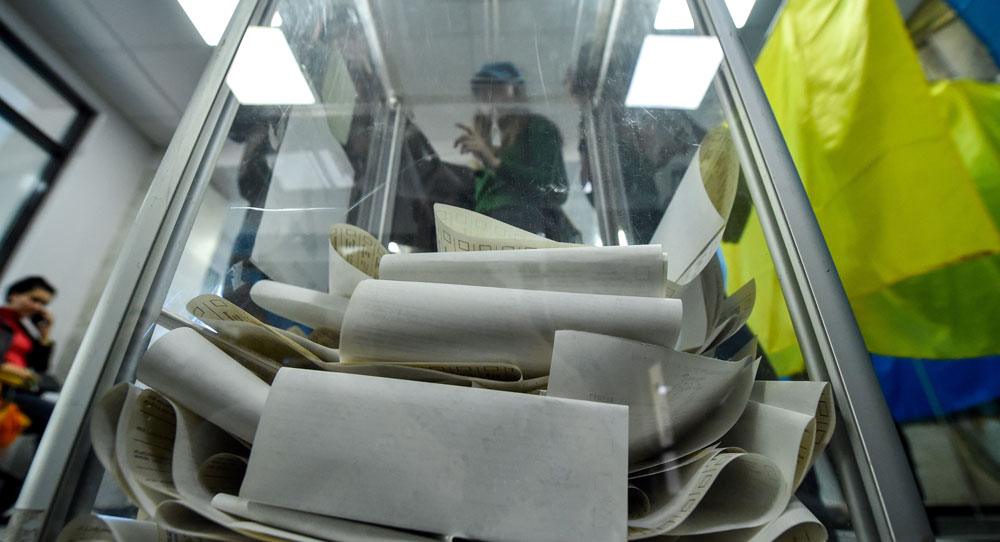
Source: Getty
A Zelenskiy presidency would offer a precious opportunity for a rethink. It’s time for Ukraine—and its backers in the West—to get serious.
Source: Politico Europe
In Ukraine, the time for jokes is over.
With an incredibly successful blitz campaign, television satirist Volodymyr Zelenskiy has captured the support of the vast majority of Ukrainians and appears poised to become the country’s next president in the election’s second round of voting Sunday.
The fictional president he plays in the satirical TV series “Servant of the People” gave millions a sense of hope that politics can be different. Now, we’re about to witness a truly unique political project: a reality show in which everyone gets to participate.The moment Ukrainians believed Zelenskiy could win, it was all over for incumbent President Petro Poroshenko.
A representative of the old system, Poroshenko could not change his tactics — but, as a joke in Kiev goes, he never worked so diligently as under the threat of a Zelenskiy presidency.
The showman’s political program is deliberately general so he can be seen as a centrist figure.
The president was fighting Mission Impossible: His policies backed nation-building and the war, instead of a better economy and governance. But Ukrainians are fed up with the war and the status quo. A huge number of voters — 88 percent of Zelenskiy’s supporters and even 76 percent of Poroshenko’s — say they want radical changes in Ukraine, according to polls.
Delivering on that demand won’t be easy. We know Zelenskiy is a shoo-in for the presidency, but we don’t know what his presidency will look like.
Zelenskiy's agenda is still somewhat murky, but there are several key elements to his political vision: direct democracy (he wants to pass a law on referendums), a 5 percent tax amnesty and new, tighter rules for oligarchs.
He is also calling for a new focus on the state’s role in service delivery while cutting the state’s direct (read, restrictive) impact on citizens. He has made numerous pledges to continue working with the International Monetary Fund — understandably, as Ukraine has to pay back almost $36 billion to foreign creditors in 2019-2021. He also has positioned himself as a supporter of Ukraine’s Euro-Atlantic integration.
But for the most part, Zelenskiy has been an effective performer, avoiding offering anything of substance on most issues and walking a tightrope not to alienate any one group of Ukrainian voters, except true Poroshenko believers.
The showman’s political program is deliberately general so he can be seen as a centrist figure — Ukraine’s answer to French President Emmanuel Macron. If he’s had smooth ride so far, it’s not just the result of luck, but of smart political strategy.
Things are about to get much tougher for him. Zelenskiy’s window of opportunity to make an impact on key issues that have rallied Ukrainians behind him is actually pretty small.
Ukraine has a mixed political system; the president needs the cooperation of parliament to make policy. Unless Zelenskiy shows that he can make the opaque party system work for him, his popularity will invariably suffer.
The next big hurdle will be parliamentary elections in October. Zelenskiy will try to follow in the footsteps of France’s Macron and Armenia’s new prime minister, Nikol Pashinyan, to break the national party system. He will try to win big by building a more inclusive, regionally balanced party and pushing the idea of direct democracy by engaging voters in town hall meetings (à la Macron) and via social networks (like Pashinyan).
He’ll face fierce opposition, including from Yulia Tymoshenko — a fellow presidential candidate and notorious political survivor — and Poroshenko. On the other hand, many of the country’s oligarchs, have been gravitating toward the winner. Their support is likely to be crucial to him being able to get anything done. If Zelenskiy can hold on to their backing, he may be able to use this window to push through some long overdue changes.
A Zelenskiy presidency would offer a precious opportunity for a rethink. It’s time for Ukraine — and its backers in the West — to get serious.
Zelenskiy will need to distinguish himself from the Poroshenko era ahead of October’s parliamentary elections. That means first and foremost dealing with Ukraine’s two least reformed institutions and the pillars of Poroshenko’s consolidation of power: the General Prosecutor's Office and the secret services (SBU). The people the new president nominates to head these institutions will be the first signs of his true intentions.
Another colossal challenge will be the continuing war in Donbas. As president, Zelenskiy’s immediate objective won’t be an aggressive push to reintegrate the region, a move that would spark serious resistance at home and from Russia, but rather to freeze the conflict. Attempting to heal the rift with Ukraine’s Western neighbors such as Hungary, Poland and Romania over language, identity and memory politics would also give him quick diplomatic “victories.”
Zelenskiy’s biggest challenge will be the same as that of his predecessors: How to break up a system based on (extreme) redistribution to the rich, while private monopolies led by oligarchs keep the state as weak as possible.
The high expectations that followed the pro-Western Maidan protest of 2014, when an oligarch went on to win the elections, were misplaced. A Zelenskiy presidency would offer a precious opportunity for a rethink. It’s time for Ukraine — and its backers in the West — to get serious.

Political analyst, former Slovak diplomat, and consultant specializing in Eastern Europe
Recent Work
Balázs Jarábik
Balázs Jarábik
Carnegie India does not take institutional positions on public policy issues; the views represented herein are those of the author(s) and do not necessarily reflect the views of Carnegie, its staff, or its trustees.
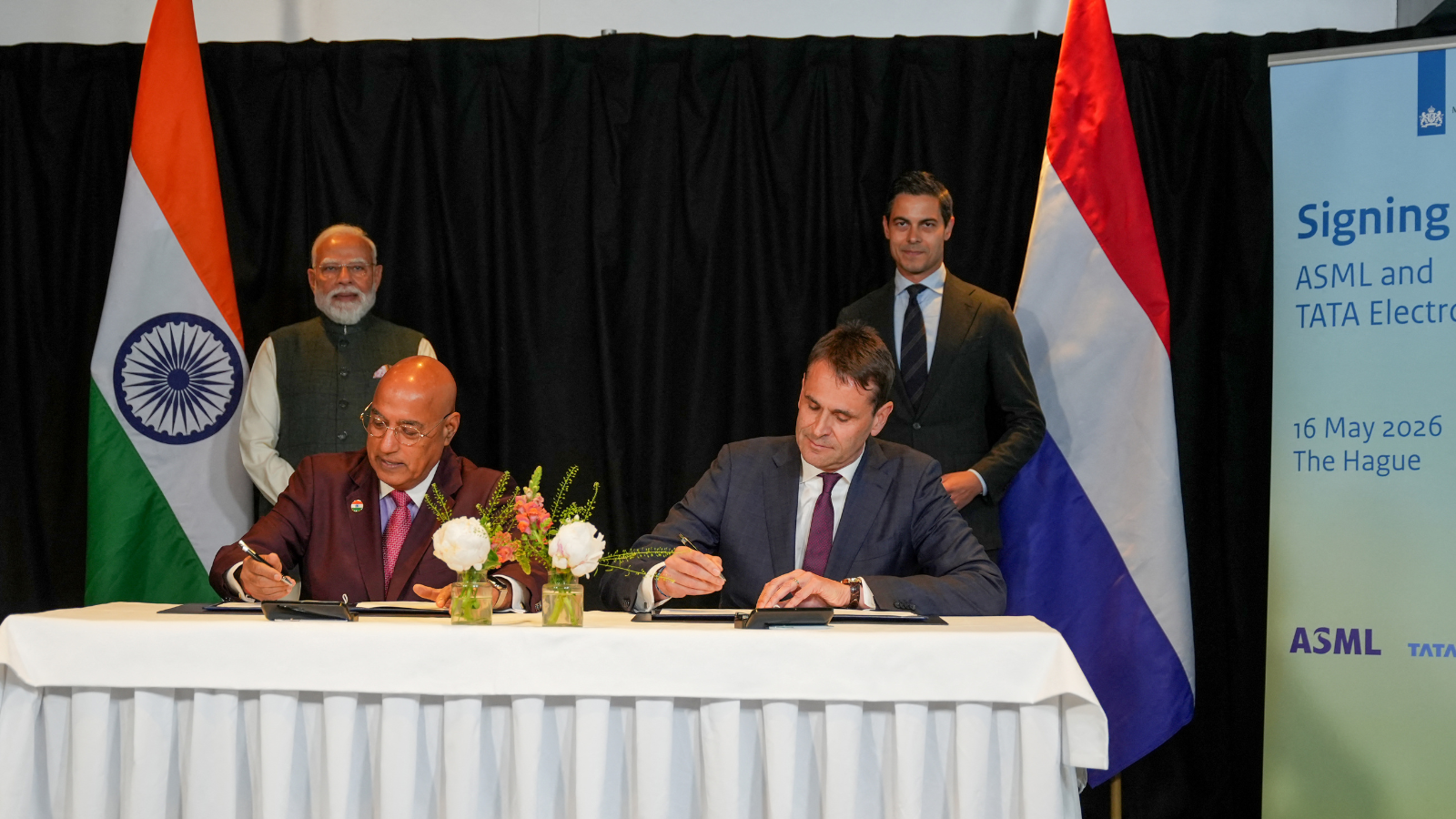
The ASML MoU with Tata Electronics is an indicator of how far the Indian semiconductor ecosystem has come. This ecosystem has been years in the making and represents real commercial logic.

Konark Bhandari

The India–EU Free Trade Agreement (FTA) is shaping up to be one of the most consequential trade negotiations, both economically and strategically. But, what’s in the agreement, what’s missing, and what will determine its success in the years ahead

Vrinda Sahai, Nicolas Köhler-Suzuki
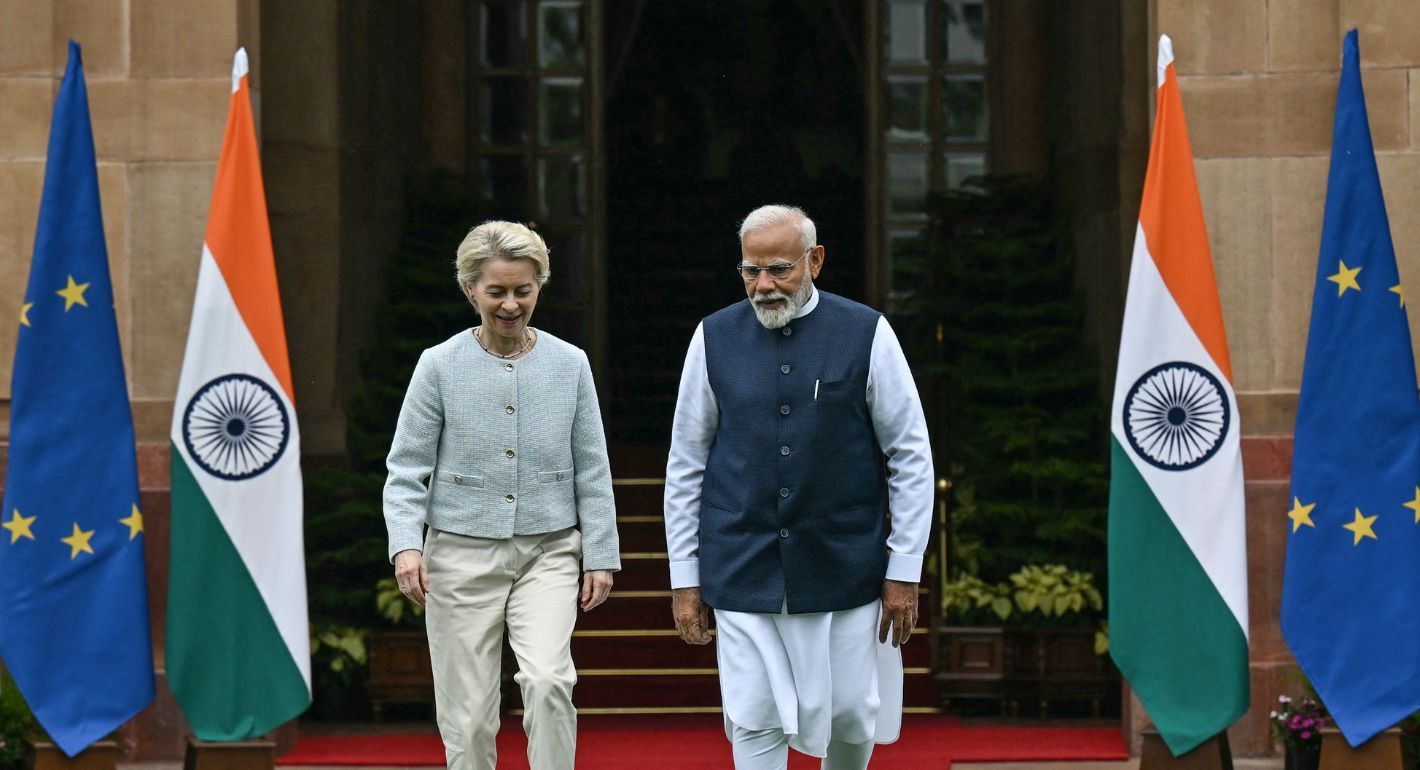
This article argues that the geopolitical circumstances have never been more conducive, not merely for the early conclusion of the free trade agreement (FTA) between India and the EU, but also for crafting a substantive and comprehensive strategic partnership.
Mohan Kumar
With monkeypox being declared a global health emergency, the WHO approach is an innovative and effective way to curb outbreaks of zoonotic diseases.

Shruti Sharma
In India, biotechnology has played an important role in helping stakeholders in academia, industry, and government develop new pandemic-related technology, from test kits to respiratory devices. But these biotechnology advancements can go further to strengthen India’s public health capacity.
Shruti Sharma