

Paper
- +3
Rajesh Bansal, Anirudh Burman, Rudra Chaudhuri, …
{
  "authors": [
    "Srinath Raghavan"
  ],
  "type": "legacyinthemedia",
  "centerAffiliationAll": "",
  "centers": [
    "Carnegie Endowment for International Peace",
    "Carnegie India"
  ],
  "collections": [],
  "englishNewsletterAll": "",
  "nonEnglishNewsletterAll": "",
  "primaryCenter": "Carnegie India",
  "programAffiliation": "",
  "programs": [],
  "projects": [],
  "regions": [
    "United States",
    "India"
  ],
  "topics": [
    "Foreign Policy"
  ]
}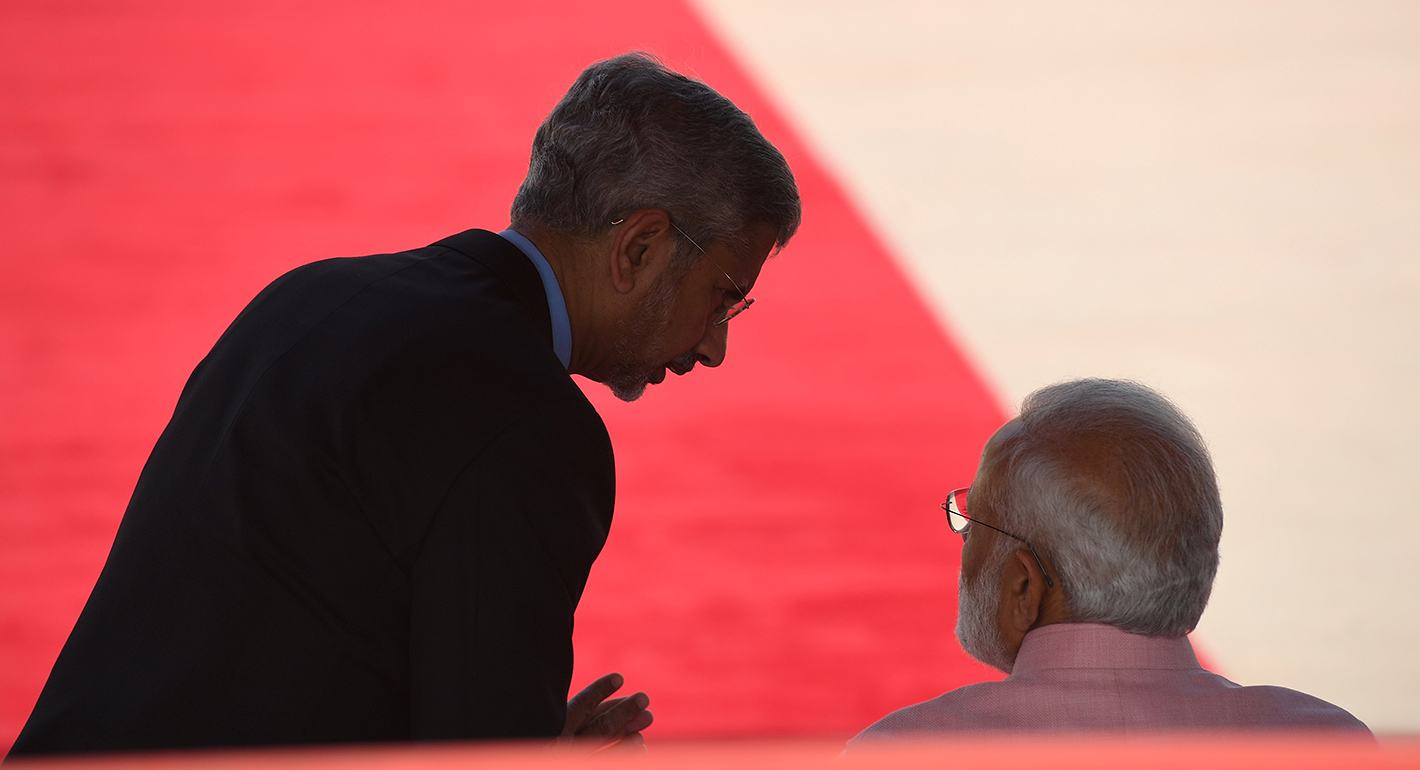
Source: Getty
Hours after he took over as the external affairs minister in the new Narendra Modi government, former diplomat S. Jaishankar had a situation on hand. U.S. President Donald Trump formally rescinded India’s designation as a beneficiary developing country under the Generalized System of Preferences.
Source: Print
Hours after he took over as the external affairs minister in the new Narendra Modi government, former diplomat S. Jaishankar had a situation on hand. US President Donald Trump formally rescinded India’s designation as a beneficiary developing country under the Generalized System of Preferences (GSP).
This designation, accorded to India in November 1975, provided preferential duty-free access to the US markets for an array of goods. It is the clearest expression yet of Trump’s intention to confront economic differences, especially bilateral trade deficit, with India head on — irrespective of its implications for the wider US-India relationship. While Jaishankar is no stranger to these issues, the context in which he will have to deal with them is more challenging than ever.

Nonresident Senior Fellow, Security Studies Program
Srinath Raghavan is a nonresident senior fellow at Carnegie India. His primary research focus is on the contemporary and historical aspects of India’s foreign and security policies.
Recent Work
Rajesh Bansal, Anirudh Burman, Rudra Chaudhuri, …
Srinath Raghavan
Carnegie India does not take institutional positions on public policy issues; the views represented herein are those of the author(s) and do not necessarily reflect the views of Carnegie, its staff, or its trustees.

On the last day of the India AI Impact Summit, India signed Pax Silica, a U.S.-led declaration seemingly focused on semiconductors. While India’s accession to the same was not entirely unforeseen, becoming a signatory nation this quickly was not on the cards either.

Konark Bhandari

On January 12, 2026, India's "workhorse," the Polar Satellite Launch Vehicle, experienced a consecutive mission failure for the first time in its history. This commentary explores the implications of this incident on India’s space sector and how India can effectively address issues stemming from the incident.

Tejas Bharadwaj
Connecting real-world AI use cases across sectors such as health, education, agriculture, and livelihoods can help policymakers, innovators, and institutions align around a shared goal. This article looks at a framework ensuring that AI works for everyone.
Shalini Kapoor, Tanvi Lall

This piece examines India’s response to U.S. sanctions and tariffs, specifically assessing the immediate market consequences, such as alterations in import costs, and the broader strategic implications for India’s energy security and foreign policy orientation.
Vrinda Sahai

This article looks at the progress of the Semiconductor Laboratory fab modernization plan based on publicly available documents, and potential learnings for future upgrades to government-owned fabs and India’s larger semiconductor ecosystem, especially regarding the use of refurbished equipment.
Shruti Mittal, Konark Bhandari