

Other
François Godement, Ashley J. Tellis
{
  "authors": [
    "François Godement"
  ],
  "type": "legacyinthemedia",
  "centerAffiliationAll": "dc",
  "centers": [
    "Carnegie Endowment for International Peace"
  ],
  "collections": [],
  "englishNewsletterAll": "asia",
  "nonEnglishNewsletterAll": "",
  "primaryCenter": "Carnegie Endowment for International Peace",
  "programAffiliation": "AP",
  "programs": [
    "Asia"
  ],
  "projects": [],
  "regions": [
    "East Asia",
    "China"
  ],
  "topics": [
    "Democracy"
  ]
}
Source: Getty
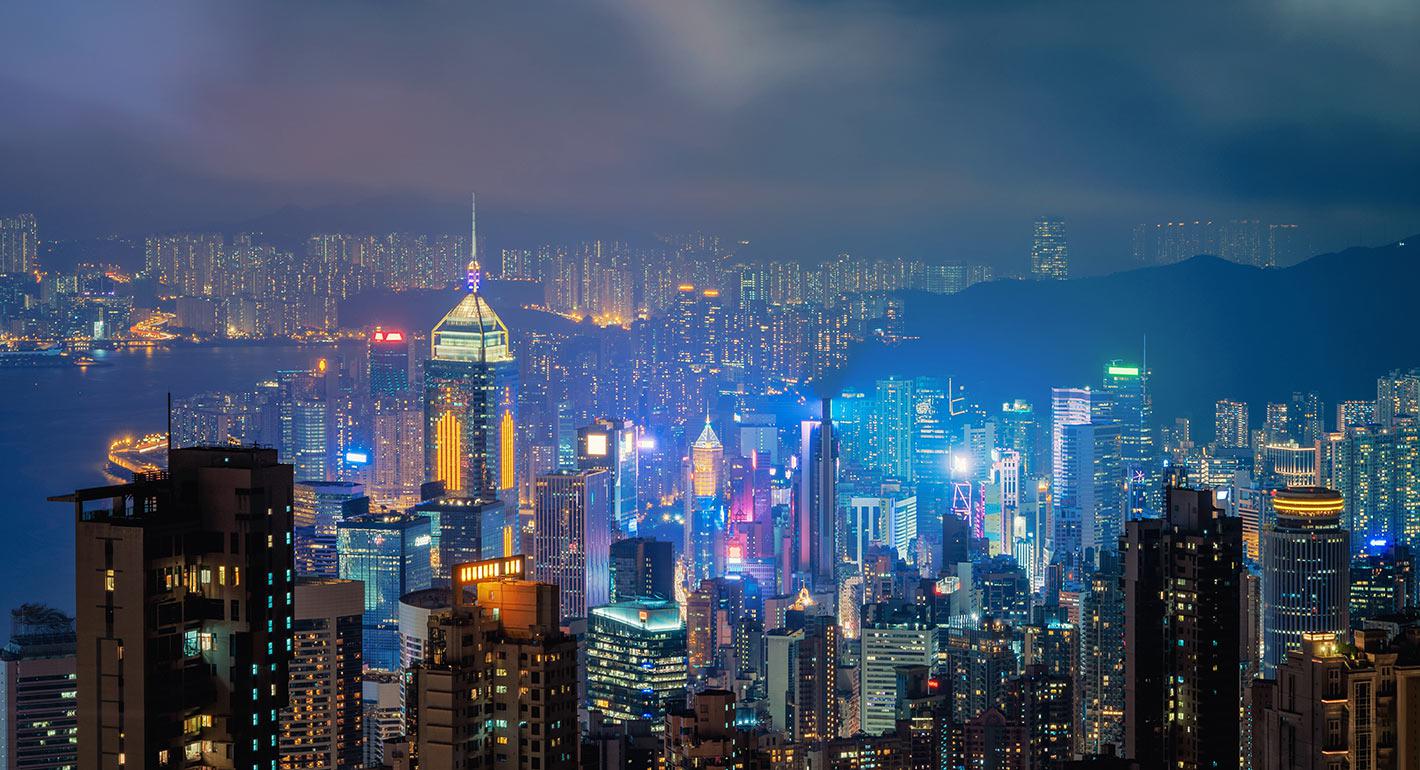
The demonstrations in Hong Kong are a delayed consequence of the Joint Declaration in 1984.
Source: Institut Montaigne
The collective intelligence and the civilized behavior of the Hong Kong people who have again massively demonstrated on August 18 deserve admiration.
But Hong Kong’s fate was sealed in 1984, when the Thatcher government signed the Joint Declaration for the retrocession to China in 1997. True, there was to be a 50-year reprieve as a Special Administrative Region run under the "One Country, Two Systems" maxim. But Deng Xiaoping had already insisted – in fact overruling Minister of Defence Geng Biao, Xi Jinping’s first boss – that PLA units would be stationed in Hong Kong after 1997. If at the time China promoted the idea that “Hongkongers rule Hong Kong”, it never agreed to a full democratic transition from colonial rule. Whatever the devilishly complex changes in electoral law since the early 1990s, it has been the basis of an agreement with the British that "functional constituencies" representing professional and interest groups, as well as appointed Electoral Committees, would balance the predictable effects of direct democratic vote. Neither Hongkongers nor China have changed: in 1991, two years after Tiananmen, democratic activists took 68 % of the direct vote. In 2016, they still represented 55 % of direct vote. The 2014 Umbrella Movement targeted, above all, the Electoral Committees. Today’s extraordinary mobilization again demands 100 % direct voting. China has wavered in its detailed views of Hong Kong’s electoral system, but it has never compromised on the main article – refusing direct democracy and controlling the appointment of the Region’s Chief Executive.
What we are seeing is a delayed consequence of the Joint Declaration. It was only Chris Patten, Hong Kong’s last colonial governor, who attempted to inject more democracy into the future electoral rules, and he was pilloried by China for this belated attempt. The young have been at the forefront of the Umbrella Movement and of today’s massive demonstrations not only because they suffer from the huge economic inequalities in Hong Kong, but simply because they know they will be around in 2047 and beyond. In fact, they have understood correctly that the preparation for this date is already underway.The physical reunification of Hong Kong with huge infrastructures and the new Greater Bay Area, the subtle changes such as shifting transit control to city stations inside Hong Kong, the project for an extradition law that follows cases of rendition by kidnapping, the tightening control of the press by financial means all point to another reality: the protective cover of "One Country, Two Systems" has started dissolving well ahead of 2047. It is feigned naiveté to pretend we are surprised that this is happening.
This article was originally published by Institut Montaigne.

Former Nonresident Senior Fellow, Asia Program
Godement, an expert on Chinese and East Asian strategic and international affairs, was a nonresident senior fellow in the Asia Program at the Carnegie Endowment for International Peace.
Recent Work
François Godement, Ashley J. Tellis

François Godement, Abigaël Vasselier

This piece argues that India’s central challenge is not managing a single flashpoint but resolving the underlying tension between expansion and institutional coherency of the BRICS grouping.

Vrinda Sahai

This paper examines the evolution of India-China economic ties from 2005 to 2025. It explores the impact of global events, bilateral political ties, and domestic policies on distinct spheres of the economic relationship.

Santosh Pai
This article examines the scale and impact of Chinese IUU fishing operations globally and identifies the nature of the challenge posed by IUU fishing in the Indian Ocean Region (IOR). It also investigates why existing maritime law and international frameworks have struggled to address this growing threat.


Ajay Kumar, Charukeshi Bhatt
This compendium brings together three essays by scholars who participated in Carnegie India's Security Studies Dialogue in 2024, each examining a different aspect of China’s policies. Drawing on their expertise and research, the authors offer fresh perspectives on key geopolitical challenges.


Vijay Gokhale, Suyash Desai, Amit Kumar, …

This commentary explores the likely actions of the Trump administration and driving forces on issues of deregulation, the United States’ leadership in AI, national security, and global engagements on AI safety.


Shatakratu Sahu, Amlan Mohanty