

Paper
- +4
George Perkovich, Ariel (Eli) Levite, Lyu Jinghua, …
{
  "authors": [
    "Lyu Jinghua"
  ],
  "type": "commentary",
  "centerAffiliationAll": "",
  "centers": [
    "Carnegie Endowment for International Peace",
    "Carnegie China"
  ],
  "collections": [
    "China’s Foreign Relations",
    "China and the Developing World",
    "Carnegie China Commentaries"
  ],
  "englishNewsletterAll": "",
  "nonEnglishNewsletterAll": "",
  "primaryCenter": "Carnegie Endowment for International Peace",
  "programAffiliation": "",
  "programs": [],
  "projects": [],
  "regions": [
    "East Asia",
    "China"
  ],
  "topics": [
    "Economy"
  ]
}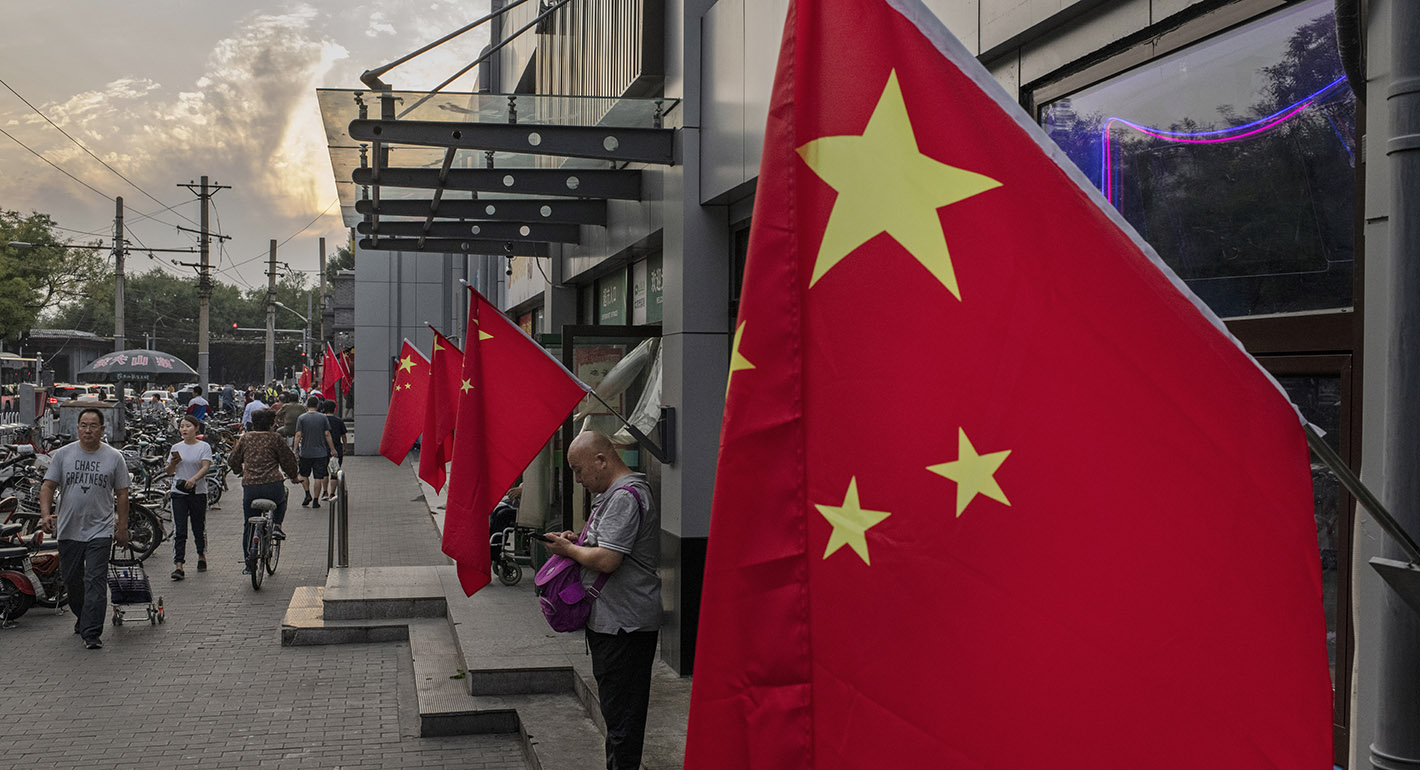
Source: Getty
How has Beijing’s approach to multilateral institutions evolved in the seventy years since the founding of the People’s Republic of China?
During the 70 years since the founding of the People’s Republic of China, Beijing has evolved from a challenger to a contributor to global governance. Such an evolution is the result of the changing international system, China’s growing strength, and the need to accommodate it in the international order.
China’s approach has been influenced by three lessons that it has learned over the past 70 years:
These lessons have served as the logic behind how China’s global governance has evolved and will continue to develop.
This quick take is part of a series authored by scholars from across the Carnegie Endowment’s global network, in advance of the seventieth anniversary of the founding of the People’s Republic of China.
Former Visiting Scholar, Cyber Policy Initiative
Lyu Jinghua was a visiting scholar with Carnegie’s Cyber Policy Initiative. Her research focuses primarily on cybersecurity and China-U.S. defense relations.
Recent Work


George Perkovich, Ariel (Eli) Levite, Lyu Jinghua, …

Jon Bateman, Lyu Jinghua

After the chill in ties between 2020 and 2024 that brought India–China relations to their lowest point in several decades, the two countries have engaged each other afresh. This paper argues that there are predominantly four imperatives guiding India’s approach to China, and they exist in an order of priority.

Saheb Singh Chadha

This piece argues that India’s central challenge is not managing a single flashpoint but resolving the underlying tension between expansion and institutional coherency of the BRICS grouping.

Vrinda Sahai

On March 10, 2026, India’s Union Cabinet approved amendments to Press Note 3, a regulation that mandated government approval on all foreign direct investment (FDI) from countries sharing a land border with India. This amendment raises questions primarily about whether its stated benefits will materialize and if the risks have been adequately weighed. This piece will address the same.

Konark Bhandari

This piece examines India’s response to U.S. sanctions and tariffs, specifically assessing the immediate market consequences, such as alterations in import costs, and the broader strategic implications for India’s energy security and foreign policy orientation.
Vrinda Sahai

This paper examines the evolution of India-China economic ties from 2005 to 2025. It explores the impact of global events, bilateral political ties, and domestic policies on distinct spheres of the economic relationship.

Santosh Pai