

Commentary
Steve Feldstein
{
  "authors": [
    "Steve Feldstein"
  ],
  "type": "legacyinthemedia",
  "centerAffiliationAll": "dc",
  "centers": [
    "Carnegie Endowment for International Peace"
  ],
  "collections": [],
  "englishNewsletterAll": "democracy",
  "nonEnglishNewsletterAll": "",
  "primaryCenter": "Carnegie Endowment for International Peace",
  "programAffiliation": "DCG",
  "programs": [
    "Democracy, Conflict, and Governance"
  ],
  "projects": [],
  "regions": [
    "East Asia",
    "China"
  ],
  "topics": [
    "Economy",
    "Trade",
    "Technology"
  ]
}
Source: Getty
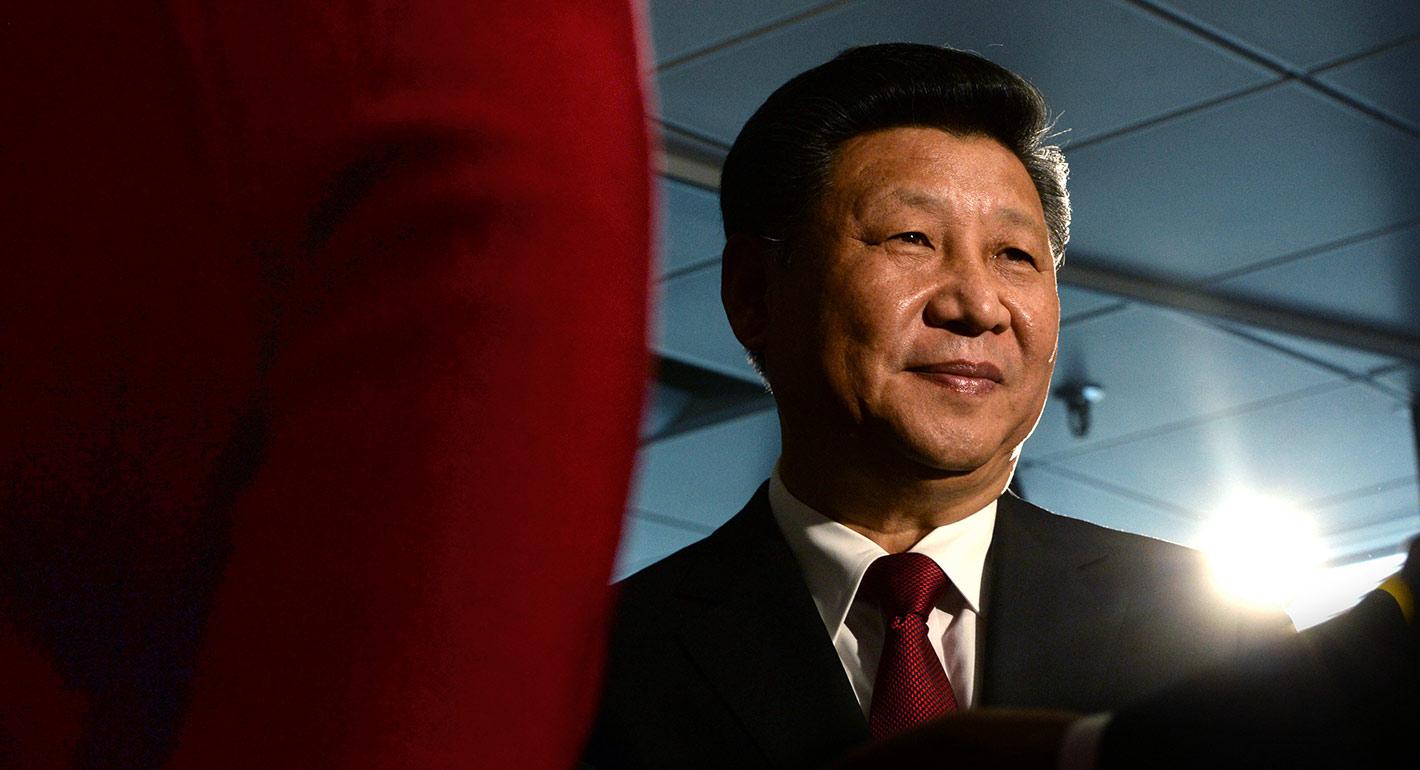
China’s proliferation of digital authoritarian tools presents serious challenges. Its technology is used by repressive regimes to quell mass protests, monitor political opponents, and keep autocratic leaders in power.
Source: War on the Rocks
Last year, the Wall Street Journal and AP broke stories about how Chinese technicians from Huawei were working directly with government security forces in Uganda and Serbia to install advanced facial recognition cameras for surveillance purposes. Both countries have spotty human rights records. In Uganda, longtime ruler Yoweri Museveni faces upcoming elections in 2021 and is laying a repressive groundwork to intimidate would-be political opponents and suppress opposition voters. Similarly, Serbia under the ruling Serbian Progressive Party has increasingly moved in an illiberal direction. Both governments have strong incentives to use digital tools to counter their opponents and ensure their political survival. In both cases, the Chinese have proven to be willing partners.
What can we make of China’s involvement? Do its actions represent a larger effort to spread coercive technology in order to bolster non-democratic leaders? What is driving these trends?

Director and Senior Fellow, Democracy, Conflict, and Governance Program
Steve Feldstein is a senior fellow and director of the Democracy, Conflict, and Governance Program at the Carnegie Endowment for International Peace. His research focuses on technology, national security, the global context for democracy, and U.S. foreign policy. His new book, Bytes and Bullets: Global Rivalry, Private Tech, and the New Shape of Modern Warfare, is now available from St. Martin’s Press.
Recent Work
Steve Feldstein
Steve Feldstein, Shreya Joshi
Carnegie India does not take institutional positions on public policy issues; the views represented herein are those of the author(s) and do not necessarily reflect the views of Carnegie, its staff, or its trustees.

As AI grows more sophisticated, as the supply chains that power it become more contested, and as access to frontier models becomes geopolitically charged, India must begin to ask a different set of questions. Not what applications it can build on someone else’s infrastructure but what the world needs.

Konark Bhandari

The Indian Ocean Region hosts one of the densest concentrations of subsea cables in the world. Yet, despite accounting for a significant share of global internet traffic, India’s participation remains limited.

Charukeshi Bhatt

How is AI reshaping space security, creating governance challenges, and where does international diplomacy stand today?


Tejas Bharadwaj, Almudena Azcárate Ortega

After the chill in ties between 2020 and 2024 that brought India–China relations to their lowest point in several decades, the two countries have engaged each other afresh. This paper argues that there are predominantly four imperatives guiding India’s approach to China, and they exist in an order of priority.

Saheb Singh Chadha

This piece argues that India’s central challenge is not managing a single flashpoint but resolving the underlying tension between expansion and institutional coherency of the BRICS grouping.

Vrinda Sahai