

Commentary
Yukon Huang, Isaac B. Kardon, Matt Sheehan
{
  "authors": [
    "Yukon Huang"
  ],
  "type": "commentary",
  "centerAffiliationAll": "dc",
  "centers": [
    "Carnegie Endowment for International Peace"
  ],
  "collections": [
    "Coronavirus"
  ],
  "englishNewsletterAll": "asia",
  "nonEnglishNewsletterAll": "",
  "primaryCenter": "Carnegie Endowment for International Peace",
  "programAffiliation": "AP",
  "programs": [
    "Asia"
  ],
  "projects": [],
  "regions": [
    "East Asia",
    "China"
  ],
  "topics": [
    "Economy",
    "Trade"
  ]
}
Source: Getty
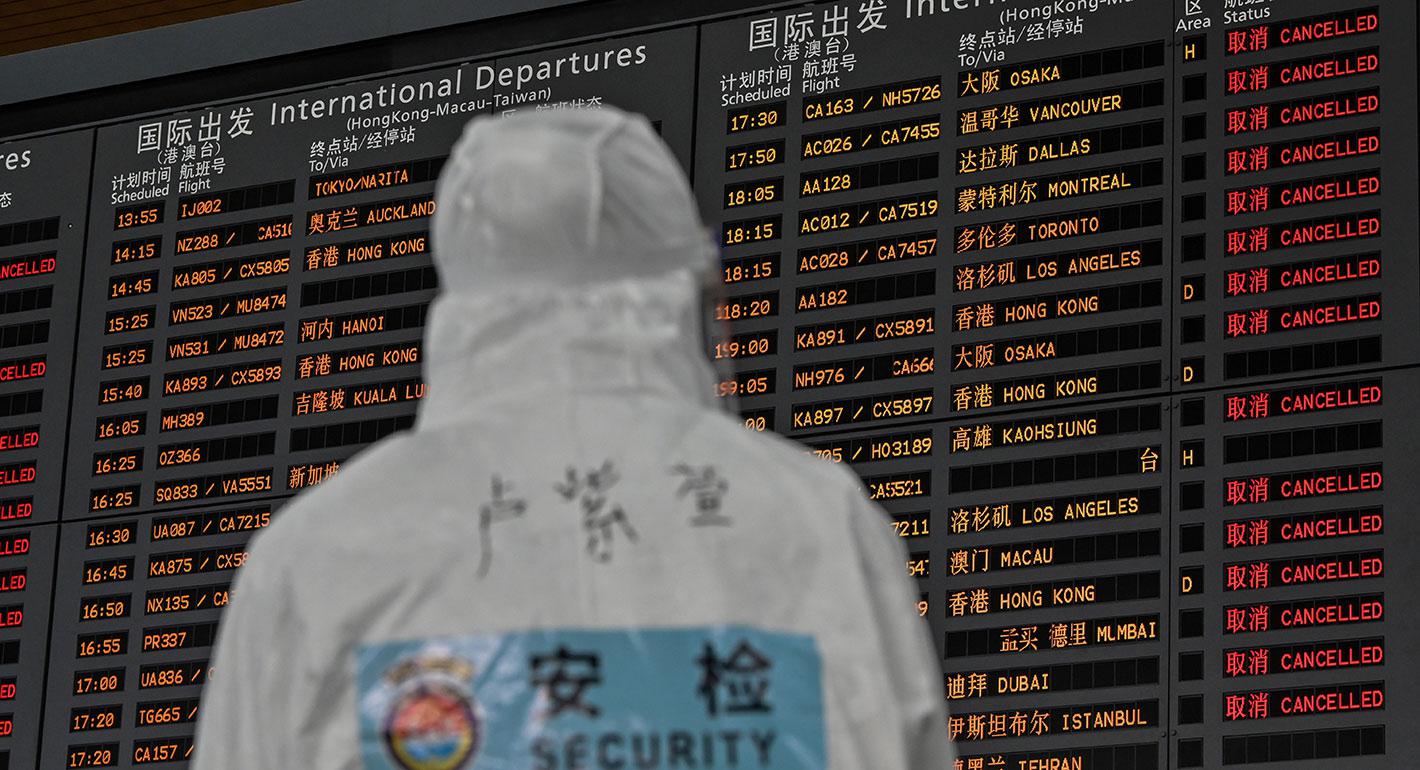
China’s producers hope to restore capacity in the weeks ahead, but sagging demand in export markets could hold back economic recovery.
China’s leadership expected that economic growth in 2020 would be a celebratory event, marking a doubling of the economy’s size over the past decade. The new coronavirus, however, has obliterated those forecasts.
Beijing’s draconian measures brought the epidemic under control sooner than anticipated. Although the extent and speed of the virus’s spread paralyzed Chinese society, the nationwide shutdown led to the epidemic’s slowdown in mid-February. On March 10, Chinese President Xi Jinping took a victory lap by visiting the epicenter of Wuhan, capital of Hubei Province. By March 19, the number of new domestically driven cases fell to zero. All other new cases were recent returnees who found it safer to be in China than in Europe, the epidemic’s new epicenter, or the United States, where the spread of the virus is accelerating.
Yet the economic damage to China is severe, and its prospects for recovery—even with massive financial support—remain uncertain. Sustainably restoring China’s productive capacity in the coming weeks would require an unlikely revival of U.S. demand. China’s recently announced economic indicators for January and February were much weaker than market watchers had forecast. Year over year, retail sales fell by 20.5 percent and industrial production by 13.5 percent—China’s worst numbers on record.
The prolonged containment effort has left hundreds of millions of migrant workers unable to return to work, and factories are now struggling to get back to full capacity given the shortages of labor and essential parts. Analysts have downgraded their outlook for the Chinese economy and consider a historic contraction in the first quarter nearly guaranteed. Even with a major fiscal stimulus and interest rate cuts, estimates for 2020 growth vary from 1 percent to 4 percent against the original target of 6 percent.
By contrast, the 2002–2003 economic recovery from the SARS virus was V-shaped, as China made up the entirety of its short-term losses by quickly tapping strong consumer demand in the West. China was relatively unaffected by the 2008 financial crisis, when global production and supply networks continued to function, enabling it to maintain rapid growth.
While China’s economy is slowly restarting, major European economies are in turmoil and the United States is still in the early stages of ramping up its response with unprecedented fiscal measures. China will likely struggle to find enough customers across the West, and emerging markets elsewhere are simply not large enough to compensate. Affected sectors include automobiles, as major Western companies have closed down production, and communications equipment, as supply chains have been disrupted.
The outbreak will likely force a reexamination of the logic underpinning the U.S. administration’s extensive use of tariffs to pressure China on trade and investment reforms. The phase one trade deal concluded in January is now inoperative, since there is no possibility that China can meet its agreement to purchase vast quantities of American goods this year. More importantly, the U.S. strategy to pair tariffs with trade restrictions is incompatible with new priorities, such as ensuring producers have access to necessary parts. For better and for worse, the global economy is based on connectivity. The revival of world trade and well-functioning supply networks is essential to resuscitating growth in both China and the West.

Senior Fellow, Asia Program
Huang is a senior fellow in the Carnegie Asia Program where his research focuses on China’s economy and its regional and global impact.
Recent Work


Yukon Huang, Isaac B. Kardon, Matt Sheehan
Yukon Huang, Genevieve Slosberg

After the chill in ties between 2020 and 2024 that brought India–China relations to their lowest point in several decades, the two countries have engaged each other afresh. This paper argues that there are predominantly four imperatives guiding India’s approach to China, and they exist in an order of priority.

Saheb Singh Chadha

This piece argues that India’s central challenge is not managing a single flashpoint but resolving the underlying tension between expansion and institutional coherency of the BRICS grouping.

Vrinda Sahai

On March 10, 2026, India’s Union Cabinet approved amendments to Press Note 3, a regulation that mandated government approval on all foreign direct investment (FDI) from countries sharing a land border with India. This amendment raises questions primarily about whether its stated benefits will materialize and if the risks have been adequately weighed. This piece will address the same.

Konark Bhandari

This piece examines India’s response to U.S. sanctions and tariffs, specifically assessing the immediate market consequences, such as alterations in import costs, and the broader strategic implications for India’s energy security and foreign policy orientation.
Vrinda Sahai

This paper examines the evolution of India-China economic ties from 2005 to 2025. It explores the impact of global events, bilateral political ties, and domestic policies on distinct spheres of the economic relationship.

Santosh Pai