Is the Kremlin intentionally downplaying the threat of the coronavirus?
Andrei Kolesnikov | senior fellow and chair of the Russian Domestic Politics and Political Institutions program at the Carnegie Moscow Center
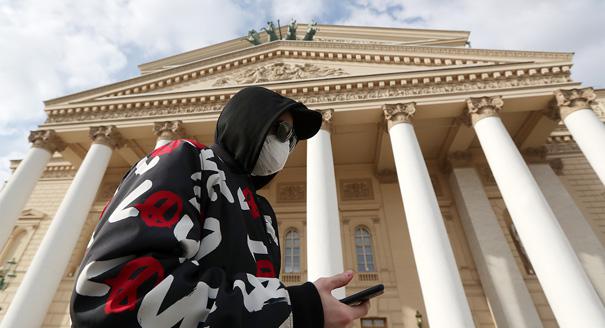
From Vladimir Putin on down, Russian officialdom is at pains to emphasize that they have everything under control. Still, there are obvious contradictions in the official response. While the authorities have banned large public gatherings and sporting events and closed theaters, museums, schools, and universities, they are still moving ahead with a planned nationwide vote on April 22 on changing the constitution.
The quasi-referendum will allow Putin to run for president in 2024 and, theoretically at least, stay in power until 2036. Also unaffected are events that encourage the public to rally around the flag such as preparations for a massive 75th anniversary Victory Day parade on Red Square and the public commemorations honoring family members who fought in World War II. The Russian Defense Ministry is proceeding with the spring call up for compulsory military service.
The Kremlin believes that demonstrations of the state’s prowess in combating the virus can help distract attention from the economic fallout from the slump in oil prices and the weaker ruble. This is a moment of truth for Russia’s authoritarian regime to prove whether it has comparative advantages over Western-style democracies. That explains why Russia is sending medical aid to Italy. Of course, such moves could provoke a negative public reaction, as average Russians ask why on earth their country is sending resources abroad at this difficult time.
It’s hard to imagine that the coronavirus will somehow upend Putin’s gambit to extend his term in office. Meanwhile, there are early indications that the government is planning new rounds of intervention to shore up the economy. The crisis provides the Kremlin with an ironclad excuse for expected economic difficulties in the coming months: any further drop in household incomes or declines in GDP growth are surely the result of the pandemic, not the country’s sclerotic political and economic system.
Is this Chernobyl redux: is the government lying about the number of Russians infected?
Tatiana Stanovaya | Nonresident scholar at the Carnegie Moscow Center and founder of R.Politik, a political analysis firm
There is plenty of reason to suspect that the government itself likely does not have accurate data about the spread of the coronavirus inside Russia. Until this week, all of Russia’s COVID-19 tests were being processed at a single facility in Siberia. There also are indications that the test wasn’t sensitive enough to identify all positive cases. That suggests that a number of infections may have been missed. Testing is soon expected to be ramped up, which should provide a more accurate picture.
In the absence of concrete indications that the actual situation is approaching the crisis level witnessed in hard-hit countries elsewhere in the world, the authorities are using the available data to show that they have things under control. The Kremlin’s desire to put an optimistic slant on the situation reflects the political imperative to go ahead with the constitutional referendum on April 22, which is very important for Putin personally.
At the same time, modern Russia is not the Soviet Union. Even in Russia, people have plenty of alternatives to state-controlled media. It would be virtually impossible to conceal the truth entirely. That is not to say that the authorities won’t try to manipulate and distort information. A case in point is the decision to reclassify the cause of death of an elderly woman who had tested positive for the virus as a blood clot. For now, an information war is raging over how to characterize the real situation, with the authorities trying to understate the threat, and independent journalists, experts, and opposition activists questioning that approach.
Is the Kremlin using the crisis as an opportunity to score propaganda victories?
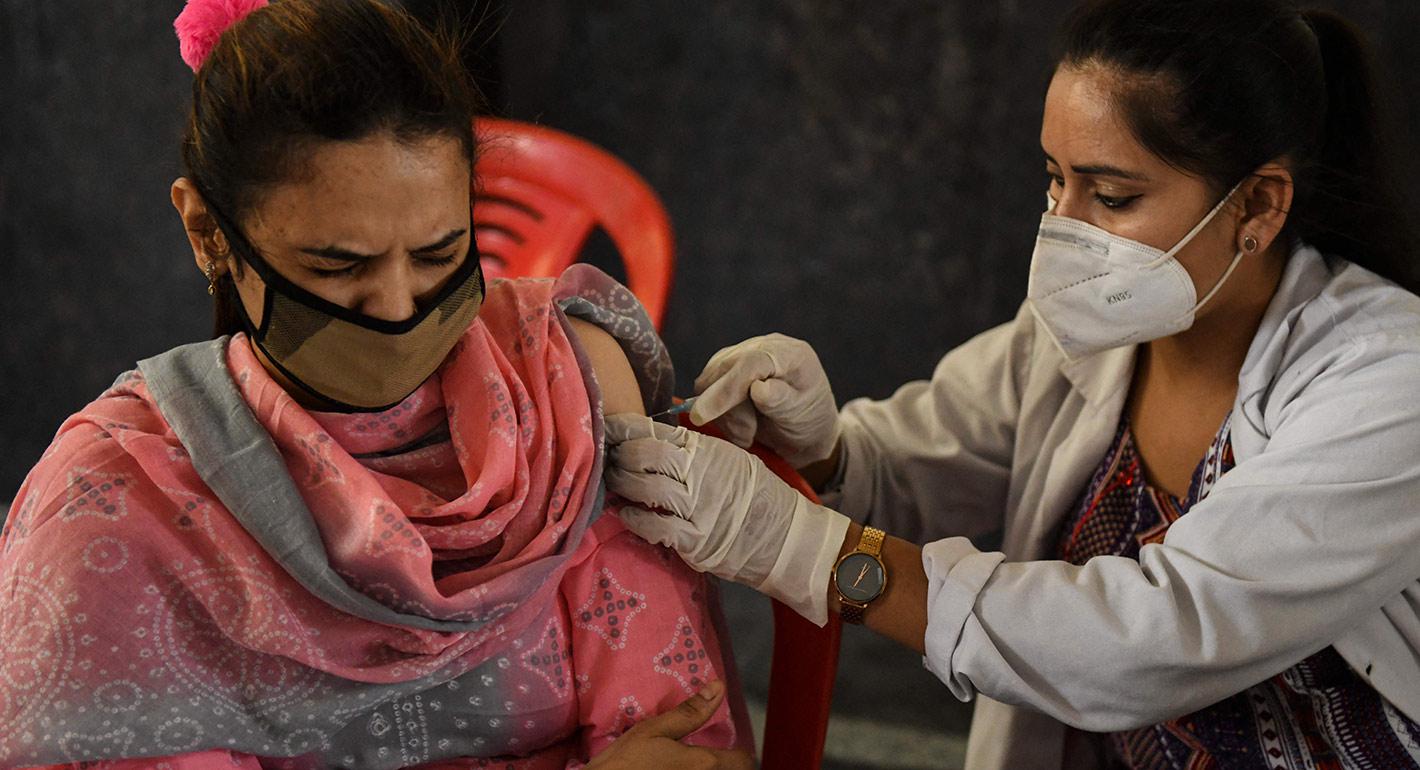
Alexander Baunov | Senior fellow at the Carnegie Moscow Center and editor-in-chief of Carnegie.ru
The epicenter of the epidemic has now spread from China to Western liberal democracies. With more deaths from coronavirus being recorded in Italy than China, the battle against the virus has come to represent a competition of political systems. Which system is more effective in such trying circumstances: China’s or the democratic West’s?
This competition is still at a relatively early stage, but, thanks to Putin’s decision to extend his rule, he is essentially making a final choice in favor of authoritarianism and demonstrating that he is firmly invested in the victory of that system.
The Russian leader is also a sworn believer in alliances of necessity. This is the tactic he chose in the immediate aftermath of 9/11 and tried to pursue during the war against the Islamic State (ISIL). Such alliances are based not on bringing Russia into line with Western standards, but rather on the existence of an indisputable common enemy. Right now, that enemy is the coronavirus.
The countries that have suffered the most are ripe for the deployment of soft power. While EU countries close their borders to one another, and the once-mighty Brussels is beset by internal devisions, the bogeymen of the Western media—China, Russia, and Cuba—are rushing emergency medical aid to Italy.
For countries that would like to see the existing world order revised in their favor, the pandemic is an opportunity to reform that order. That outcome depends, of course, on Western leaders continuing to underperform and allow the epidemic to get the upper hand. Which side will prevail is as yet unclear: the battle is far from over.