

Commentary
How is AI reshaping space security, creating governance challenges, and where does international diplomacy stand today?
Tejas Bharadwaj, Almudena Azcárate Ortega
{
  "authors": [
    "Christopher Hill"
  ],
  "type": "legacyinthemedia",
  "centerAffiliationAll": "dc",
  "centers": [
    "Carnegie Endowment for International Peace"
  ],
  "collections": [],
  "englishNewsletterAll": "asia",
  "nonEnglishNewsletterAll": "",
  "primaryCenter": "Carnegie Endowment for International Peace",
  "programAffiliation": "AP",
  "programs": [
    "Asia"
  ],
  "projects": [],
  "regions": [
    "North America",
    "United States",
    "East Asia",
    "China"
  ],
  "topics": [
    "Foreign Policy",
    "Global Governance"
  ]
}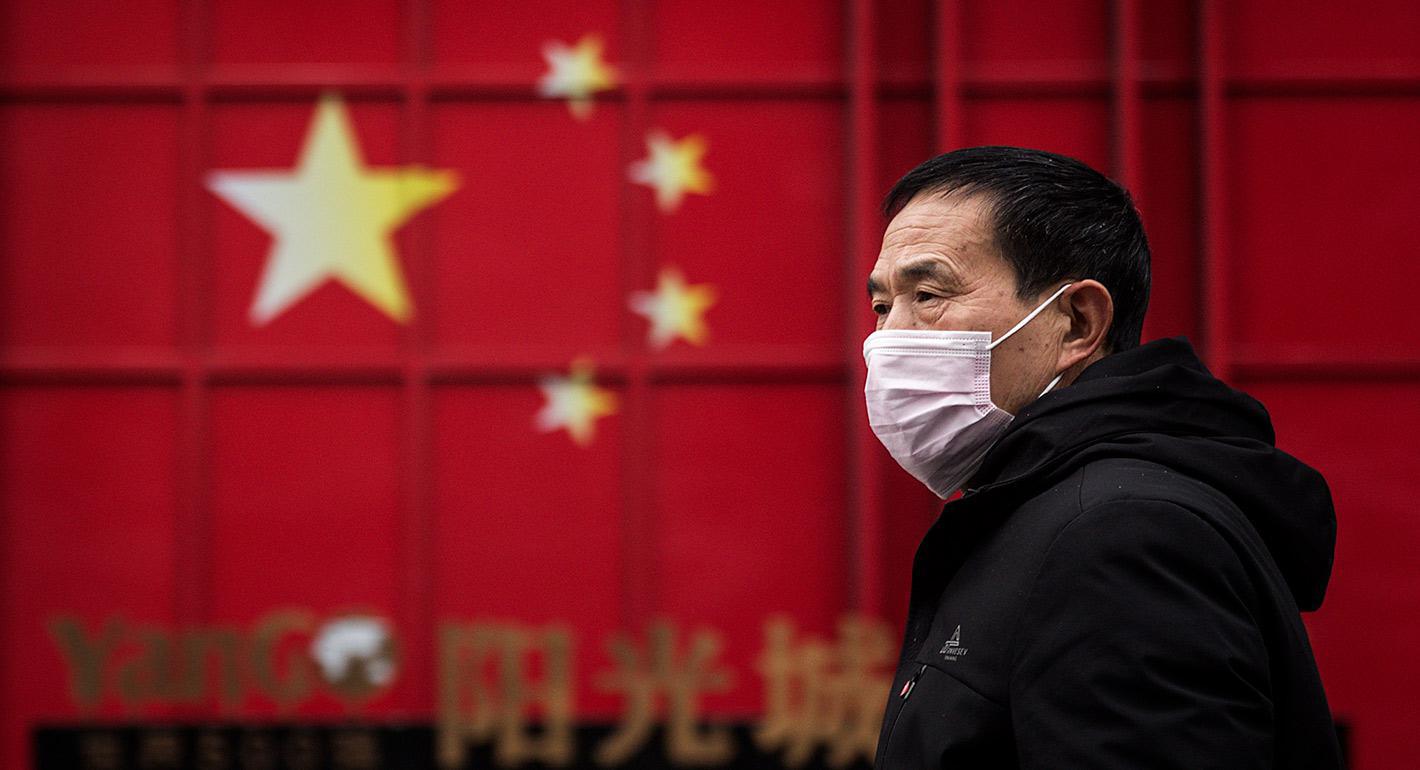
Source: Getty
In any crisis, even in the midst of a pandemic, there is a moment where everybody might benefit from taking a deep breath and thinking clearly about the way forward.
Source: Hill
China’s foreign ministry — not unlike the U.S. State Department’s own checkered reputation in the United States — has a reputation among some in China for too often apologizing to foreign government positions and, in these fraught times, for committing the crime of excessive reasonableness. The foreign ministry’s strategy for mitigating such accusations, not surprisingly, is to employ a spokesperson who can protect the ministry from such critics, and demonstrate that the foreign ministry is not full of apologists as it is often accused, but rather is one that can fight back, and fight back hard. Enter foreign ministry spokesperson Zhao Lijian.
On March 11, a lightyear ago in coronavirus time, Zhao Lijian tweeted that “it might be the US army” that brought the disease to China, an accusation that had been making its way across China’s very active blogosphere where just about anything goes, provided it doesn’t include criticism of the Beijing government.
Former Nonresident Senior Fellow, Asia Program
Ambassador Christopher Robert Hill is currently an adjunct professor at Columbia SIPA. He is a former career diplomat, a four-time ambassador, nominated by three presidents, whose last post was as ambassador to Iraq.
Carnegie India does not take institutional positions on public policy issues; the views represented herein are those of the author(s) and do not necessarily reflect the views of Carnegie, its staff, or its trustees.

How is AI reshaping space security, creating governance challenges, and where does international diplomacy stand today?


Tejas Bharadwaj, Almudena Azcárate Ortega

After the chill in ties between 2020 and 2024 that brought India–China relations to their lowest point in several decades, the two countries have engaged each other afresh. This paper argues that there are predominantly four imperatives guiding India’s approach to China, and they exist in an order of priority.

Saheb Singh Chadha

This piece argues that India’s central challenge is not managing a single flashpoint but resolving the underlying tension between expansion and institutional coherency of the BRICS grouping.

Vrinda Sahai

A partnership between India, a country of subcontinental size, and Africa, a continent of fifty-four countries, may seem asymmetric until one notes that both are home to nearly the same number of people—1.4 billion. This essay spells out the existing challenges to the partnership, its optimal potential, and the possible pathways to realize it over the next quarter-century.

Rajiv Bhatia

The U.S.–India semiconductor cooperation story is well-stocked with top-level strategic intent. What remains unresolved, however, are some underlying challenges that will determine whether the cooperation actually functions. Three such friction points stand out.

Shruti Mittal