

{
  "authors": [
    "Ulrich Kühn",
    "Alexey Arbatov",
    "David Santoro",
    "Tong Zhao"
  ],
  "type": "other",
  "centerAffiliationAll": "dc",
  "centers": [
    "Carnegie Endowment for International Peace"
  ],
  "collections": [
    "Future of Arms Control"
  ],
  "englishNewsletterAll": "ctw",
  "nonEnglishNewsletterAll": "",
  "primaryCenter": "Carnegie Endowment for International Peace",
  "programAffiliation": "NPP",
  "programs": [
    "Nuclear Policy"
  ],
  "projects": [],
  "regions": [],
  "topics": []
}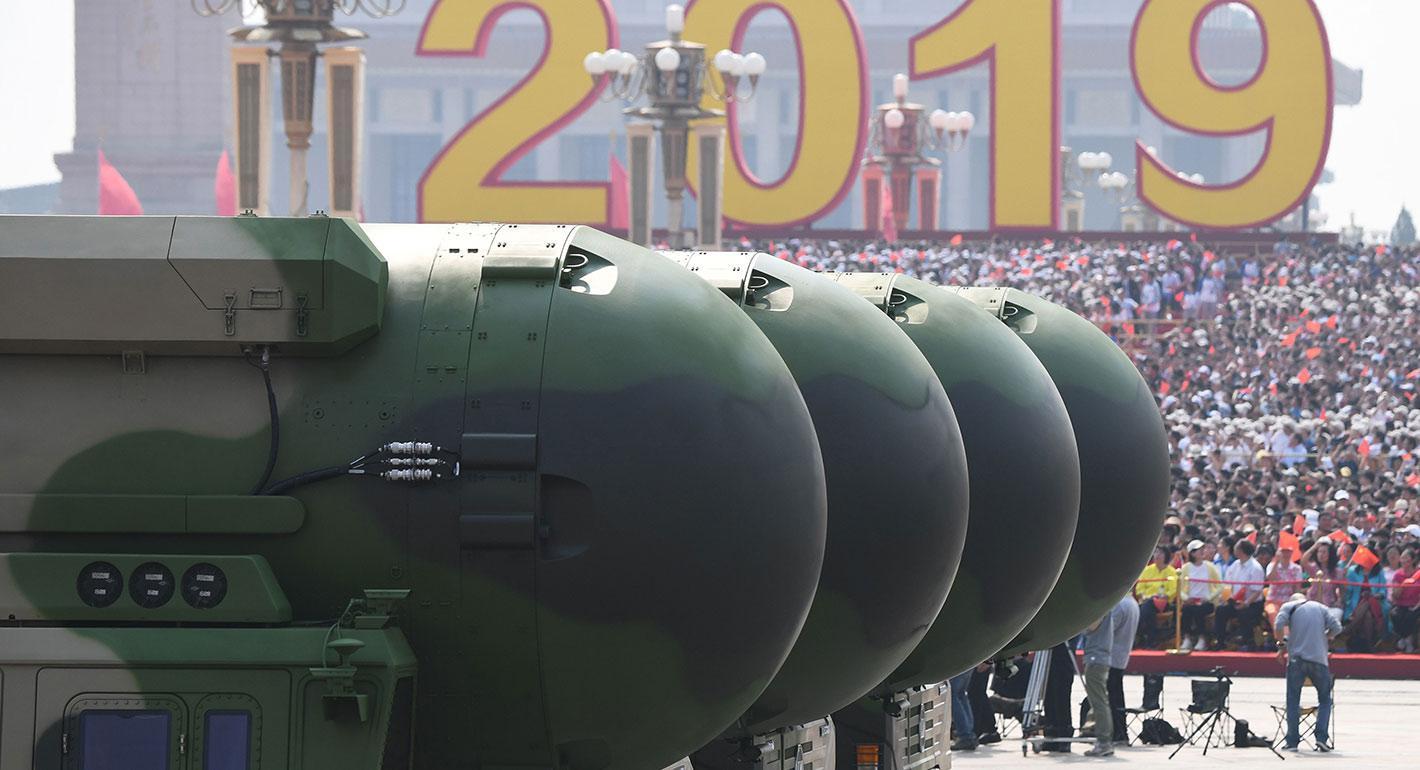
Source: Getty
Trilateral Arms Control? Perspectives From Washington, Moscow, and Beijing
As the world enters an age of seemingly unconstrained great power competition, arms control between Russia, China, and the United States could help strengthen arms race and crisis stability and provide a platform for strategic dialogue.
Source: IFSH
With the end of the INF Treaty in 2019, trilateral arms control – meaning arms control between the United States, Russia, and China – has gained center stage. Only shortly after the U.S. withdrawal, U.S. President Trump declared that he wants a new nuclear pact to be signed by both Russia and China. Other U.S. administration officials have set the goal of including China in a future follow-on framework to the New START agreement, which expires in February 2021. However, could trilateral arms control be possible at all, and what would be necessary conditions?
In this IFSH Research Report, internationally renowned experts Alexey Arbatov (Russia), David Santoro (United States), and Tong Zhao (China) discuss what is possible and what is not. Edited by Ulrich Kühn (IFSH), the report includes a number of very specific proposals, including from China, on how to move forward on trilateral arms control.
About the Authors

Former Nonresident Scholar, Nuclear Policy Program
Ulrich Kühn was a nonresident scholar at the Carnegie Endowment for International Peace, and the head of the arms control and emerging technologies program at the Institute for Peace Research and Security Policy at the University of Hamburg.
Alexey Arbatov
Alexey Arbatov is the head of the Center for International Security at the Primakov National Research Institute of World Economy and International Relations.
David Santoro

Senior Fellow with the Nuclear Policy Program and Carnegie China
Tong Zhao is a senior fellow with the Nuclear Policy Program and Carnegie China, Carnegie’s East Asia-based research center on contemporary China. Formerly based in Beijing, he now conducts research in Washington on strategic security issues.
Carnegie India does not take institutional positions on public policy issues; the views represented herein are those of the author(s) and do not necessarily reflect the views of Carnegie, its staff, or its trustees.