

Article
Dan Baer
{
  "authors": [
    "Dan Baer"
  ],
  "type": "legacyinthemedia",
  "centerAffiliationAll": "dc",
  "centers": [
    "Carnegie Endowment for International Peace"
  ],
  "collections": [],
  "englishNewsletterAll": "ctw",
  "nonEnglishNewsletterAll": "",
  "primaryCenter": "Carnegie Endowment for International Peace",
  "programAffiliation": "EP",
  "programs": [
    "Europe"
  ],
  "projects": [],
  "regions": [
    "North America",
    "United States",
    "Iran"
  ],
  "topics": [
    "Democracy",
    "Foreign Policy",
    "Global Governance"
  ]
}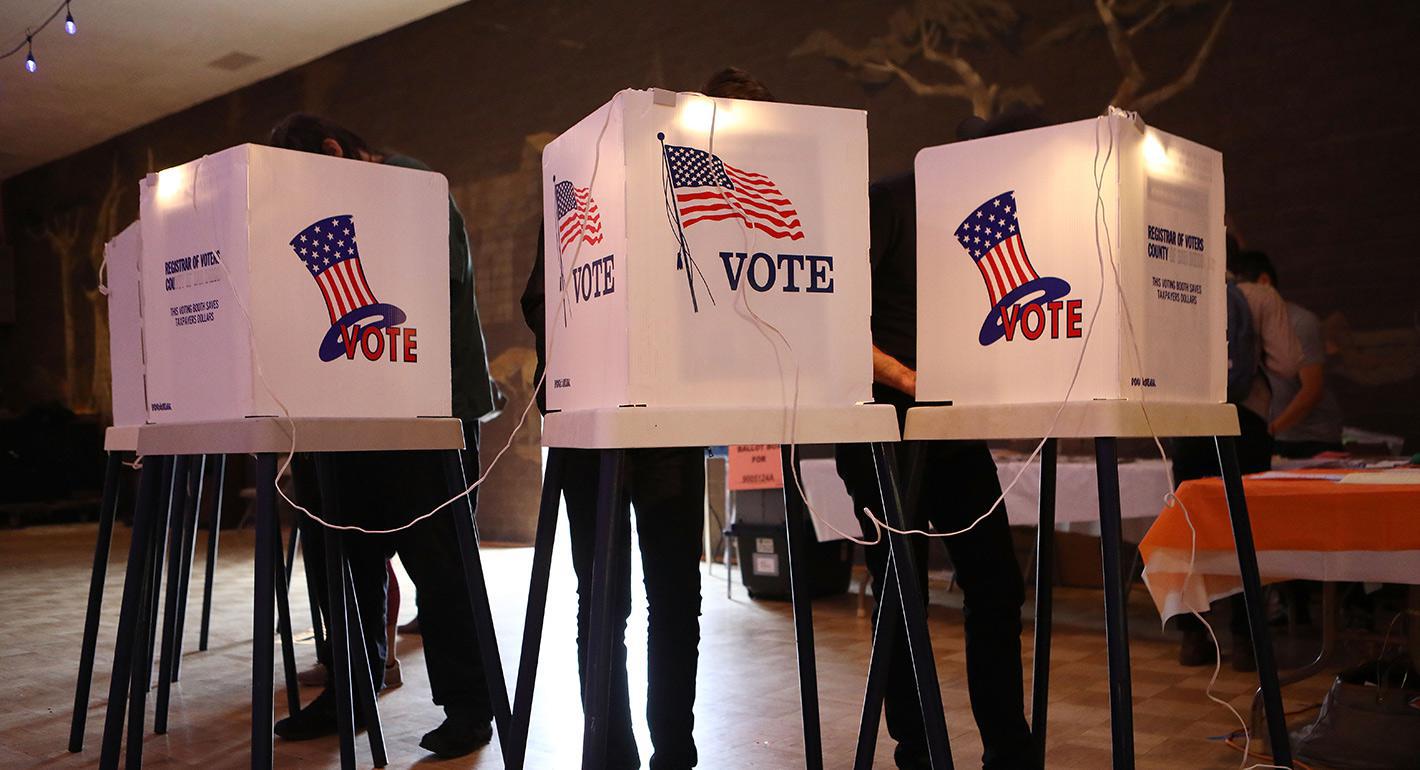
Source: Getty
Campaigns have had to cancel fundraisers that make up a significant portion of their revenue and modify their engagement over social media and email to strike the right tone for the moment.
Source: Colorado Sun
If you conducted a survey of political candidates and asked them to name the best and worst parts of running for office, the vast majority would tell you that their favorite part is talking to voters, small business owners, activists and others about real issues they face.
And an even larger majority would tell you that the worst part is fundraising. Many of us get annoyed by constant solicitations from campaigns. Rest assured, candidates and their teams hate asking for money all the time, too.
As the coronavirus pandemic has spread, political fundraising, like many other activities, has been in a tailspin.
Campaigns have had to cancel fundraisers that make up a significant portion of their revenue and modify their engagement over social media and email to strike the right tone for the moment.
As elsewhere, the pandemic is inspiring innovation as candidates experiment with nationwide Zoom fundraisers with special guests piping in from their living rooms. But, in addition to the limitations posed by the pandemic, the economic devastation and the attendant stock market drop have led both big- and small-dollar donors to pull back.
Overall, we can expect that the fundraising numbers reported by candidates this quarter (and next quarter) to be significantly lower than expected.
Some have suggested that asking for money for a political campaign in a time of national emergency is gauche or even ethically fraught. To be sure, all of our interactions right now need to reflect an awareness of the stress that many of us are under; we all need to be respectful of our interlocutors and mindful of the moment.
Many of us are rightly focused on the hardest hit in our communities — those who have lost jobs, those who were already economically precarious and now face losing a home or not being able to put food on the table.
It is absolutely right that those of us who can find ways to support others during this difficult time do so, including by donating to charities that are helping those in need. It’s understandable that for many people, this urgent need is a priority right now.
But donating to political campaigns shouldn’t be seen as something frivolous or in tension with supporting the most vulnerable; indeed, it is another way of advancing overlapping and compatible objectives.
If there’s any lesson that our present calamity can already teach us it is how important it is to have competent, honest, effective leaders in elected positions. If we want a healthier, more just, more prosperous society for all of us — including the most vulnerable — we must elect leaders who will deliver that future. There has never been a better time to invest in better government.
The pandemic and its economic consequences have been exacerbated by failures in leadership. Well-funded campaigns are more likely to succeed, and there is nothing immoral about making donations to try to replace the leaders who have failed (and those who have served as their willing accessories).
The American political system is broken — fundraising takes up an inordinate amount of our elected leaders’ time, particularly at the federal level but increasingly at the state and local levels, too.
In addition to pulling them away from spending time on actually doing their jobs, fundraising often requires them to spend a disproportionate amount of time with wealthy people, often wealthy people from other states, who don’t have the same concerns as the constituents that elected leaders are supposed to — and usually want to — represent.
In the long term, the future health of our democracy depends upon curbing the corrosive role that money plays in our politics. We are right to focus on corporate money and SuperPACs in the near term, but the problem is much bigger than that.
For now, though, in the system we have, money is a critical driver of electoral success. And if we want to see a different cast of characters in Washington, it will take a massive collective investment in lifting up new voices and elevating competent leaders.
Senior Vice President; Director, Europe Program
Dan Baer is a senior vice president of the Carnegie Endowment for International Peace and director of the Europe Program. Under President Obama, he was U.S. ambassador to the Organization for Security and Cooperation in Europe (OSCE) and he also served deputy assistant secretary of state for the Bureau of Democracy, Human Rights, and Labor.
Recent Work


Richard Youngs, Erik Jones, Dan Baer, …
Carnegie India does not take institutional positions on public policy issues; the views represented herein are those of the author(s) and do not necessarily reflect the views of Carnegie, its staff, or its trustees.

How is AI reshaping space security, creating governance challenges, and where does international diplomacy stand today?


Tejas Bharadwaj, Almudena Azcárate Ortega

After the chill in ties between 2020 and 2024 that brought India–China relations to their lowest point in several decades, the two countries have engaged each other afresh. This paper argues that there are predominantly four imperatives guiding India’s approach to China, and they exist in an order of priority.

Saheb Singh Chadha

This piece argues that India’s central challenge is not managing a single flashpoint but resolving the underlying tension between expansion and institutional coherency of the BRICS grouping.

Vrinda Sahai

A partnership between India, a country of subcontinental size, and Africa, a continent of fifty-four countries, may seem asymmetric until one notes that both are home to nearly the same number of people—1.4 billion. This essay spells out the existing challenges to the partnership, its optimal potential, and the possible pathways to realize it over the next quarter-century.

Rajiv Bhatia

The U.S.–India semiconductor cooperation story is well-stocked with top-level strategic intent. What remains unresolved, however, are some underlying challenges that will determine whether the cooperation actually functions. Three such friction points stand out.

Shruti Mittal