


• Research
  • About
  • Experts
Carnegie India logoCarnegie lettermark logo
{
  "authors": [
    "Richard Youngs",
    "Elene Panchulidze"
  ],
  "type": "other",
  "centerAffiliationAll": "dc",
  "centers": [
    "Carnegie Endowment for International Peace",
    "Carnegie Europe"
  ],
  "collections": [
    "Coronavirus"
  ],
  "englishNewsletterAll": "democracy",
  "nonEnglishNewsletterAll": "",
  "primaryCenter": "Carnegie Europe",
  "programAffiliation": "DCG",
  "programs": [
    "Democracy, Conflict, and Governance"
  ],
  "projects": [],
  "regions": [],
  "topics": [
    "Foreign Policy",
    "Democracy",
    "Political Reform"
  ]
}

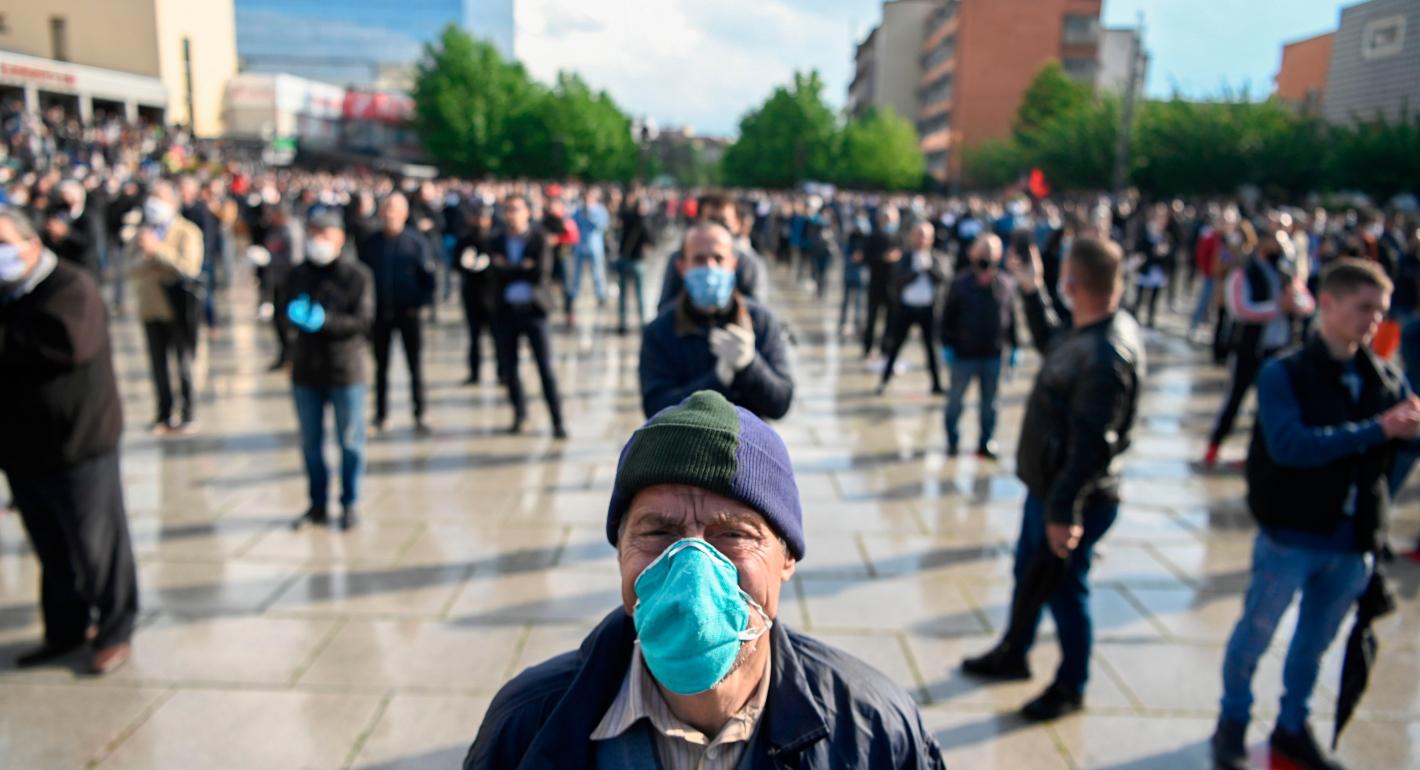
Source: Getty

Other
Carnegie Europe

Global Democracy and COVID-19: Upgrading International Support

The pandemic is having distinctive political implications across different types of regime. Policy responses need to be tailored to these contrasting outcomes and risks in the way they seek to advance and uphold democratic rights.

Link Copied
By Richard Youngs and Elene Panchulidze
Published on Jul 14, 2020

Source: European Endowment for Democracy

Summary

This report assesses the impact that Covid-19 is having on democracy around the world. It examines how international democracy support organisations and donors are responding to the challenges related to the pandemic and calls for a stronger and reformulated international democracy support both now and into the longer-term future. Rather than getting immersed in inconclusive debates about which kind of political system is set to deal best with Covid-19, the report calls for a more practical policy effort to ensure that democratic norms are defended and work in a way that is tightly relevant to the pandemic. While democratic systems may have several potential advantages in fighting pandemics and their aftermath, these need to be proactively fostered. The report demonstrates that the pandemic is having distinctive political implications across different types of regime. Policy responses need to be tailored to these contrasting outcomes and risks in the way they seek to advance and uphold democratic rights.

Aligning with the statement - ‘A Call to Defend Democracy’- based on an assessment of crisis-related democratic trends, the report offers five concrete recommendations for how governments and international organisations concerned with supporting democracy globally should respond to the Covid-19 crisis. It advocates: a global monitoring of Covid-19 related democratic infringements; new ways of including democracy efforts into Covid-19 emergency and recovery aid; an enhanced support of democratic civic activism that has emerged during the pandemic; a new multilateral initiative to learn lessons from how democracies have coped with the crisis; and an effort to explore the growth in new types of democratic practice that have proliferated under Covid-19. Through these recommendations, the report offers guidance to democracy organisations and donors as they endeavour to keep democracy on the international agenda during the global health crisis, as well as for civil society organisations adjusting their strategies to the altered context. These issues are also of broader relevance to governments and citizens around the world given the challenge of sustaining Covid-19 measures over the longer-term that do not trample on basic democratic practices.

Read Full Text

This report was led by the European Endowment for Democracy and supported by 11 democracy organizations.

About the Authors

Richard Youngs

Senior Fellow, Democracy, Conflict, and Governance Program

Richard Youngs is a senior fellow in the Democracy, Conflict, and Governance Program, based at Carnegie Europe. He works on EU foreign policy and on issues of international democracy.

Elene Panchulidze

Head of Research, European Partnership for Democracy

Elene Panchulidze is head of research at the European Partnership for Democracy.

Authors

Richard Youngs
Senior Fellow, Democracy, Conflict, and Governance Program
Richard Youngs
Elene Panchulidze
Head of Research, European Partnership for Democracy
Elene Panchulidze
Foreign PolicyDemocracyPolitical Reform

Carnegie India does not take institutional positions on public policy issues; the views represented herein are those of the author(s) and do not necessarily reflect the views of Carnegie, its staff, or its trustees.

More Work from Carnegie India

  • Commentary
    The Impact of U.S. Sanctions and Tariffs on India’s Russian Oil Imports

    This piece examines India’s response to U.S. sanctions and tariffs, specifically assessing the immediate market consequences, such as alterations in import costs, and the broader strategic implications for India’s energy security and foreign policy orientation.

      Vrinda Sahai

  • Commentary
    NISAR Soars While India-U.S. Tariff Tensions Simmer

    On July 30, 2025, the United States announced 25 percent tariffs on Indian goods. While diplomatic tensions simmered on the trade front, a cosmic calm prevailed at the Sriharikota launch range. Officials from NASA and ISRO were preparing to launch an engineering marvel into space—the NASA-ISRO Synthetic Aperture Radar (NISAR), marking a significant milestone in the India-U.S. bilateral partnership.

      Tejas Bharadwaj

  • Commentary
    Indian Airstrikes in Pakistan: May 7, 2025

    On May 7, 2025, between 1:05 and 1:30 a.m. (IST), airstrikes carried out by the Indian Air Force hit nine locations inside Pakistan and Pakistan occupied Kashmir (PoK). It was codenamed Operation Sindoor.

      Rudra Chaudhuri

  • Research
    Views From Taipei: Essays by Young Indian Scholars on China

    This compendium brings together three essays by scholars who participated in Carnegie India's Security Studies Dialogue in 2024, each examining a different aspect of China’s policies. Drawing on their expertise and research, the authors offer fresh perspectives on key geopolitical challenges.

      • +1

      Vijay Gokhale, Suyash Desai, Amit Kumar, …

  • Commentary
    The India-U.S. TRUST Initiative: Advancing Semiconductor Supply Chain Cooperation

    As part of the TRUST initiative, leaders of the two countries committed to building trusted and resilient supply chains, including for semiconductors and critical minerals. India and the United States have made steady progress in this area over the years. This essay explores the takeaways from discussions on semiconductor supply chains that took place at Carnegie India’s 9th Global Technology Summit.

      Konark Bhandari

Get more news and analysis from
Carnegie India
Carnegie India logo, white
Unit C-4, 5, 6, EdenparkShaheed Jeet Singh MargNew Delhi – 110016, IndiaPhone: 011-40078687
  • Research
  • About
  • Experts
  • Projects
  • Events
  • Contact
  • Careers
  • Privacy
  • For Media
Get more news and analysis from
Carnegie India
© 2026 Carnegie Endowment for International Peace. All rights reserved.