

Other
François Godement, Ashley J. Tellis
{
  "authors": [
    "François Godement"
  ],
  "type": "legacyinthemedia",
  "centerAffiliationAll": "dc",
  "centers": [
    "Carnegie Endowment for International Peace"
  ],
  "collections": [],
  "englishNewsletterAll": "asia",
  "nonEnglishNewsletterAll": "",
  "primaryCenter": "Carnegie Endowment for International Peace",
  "programAffiliation": "AP",
  "programs": [
    "Asia"
  ],
  "projects": [],
  "regions": [],
  "topics": [
    "Democracy"
  ]
}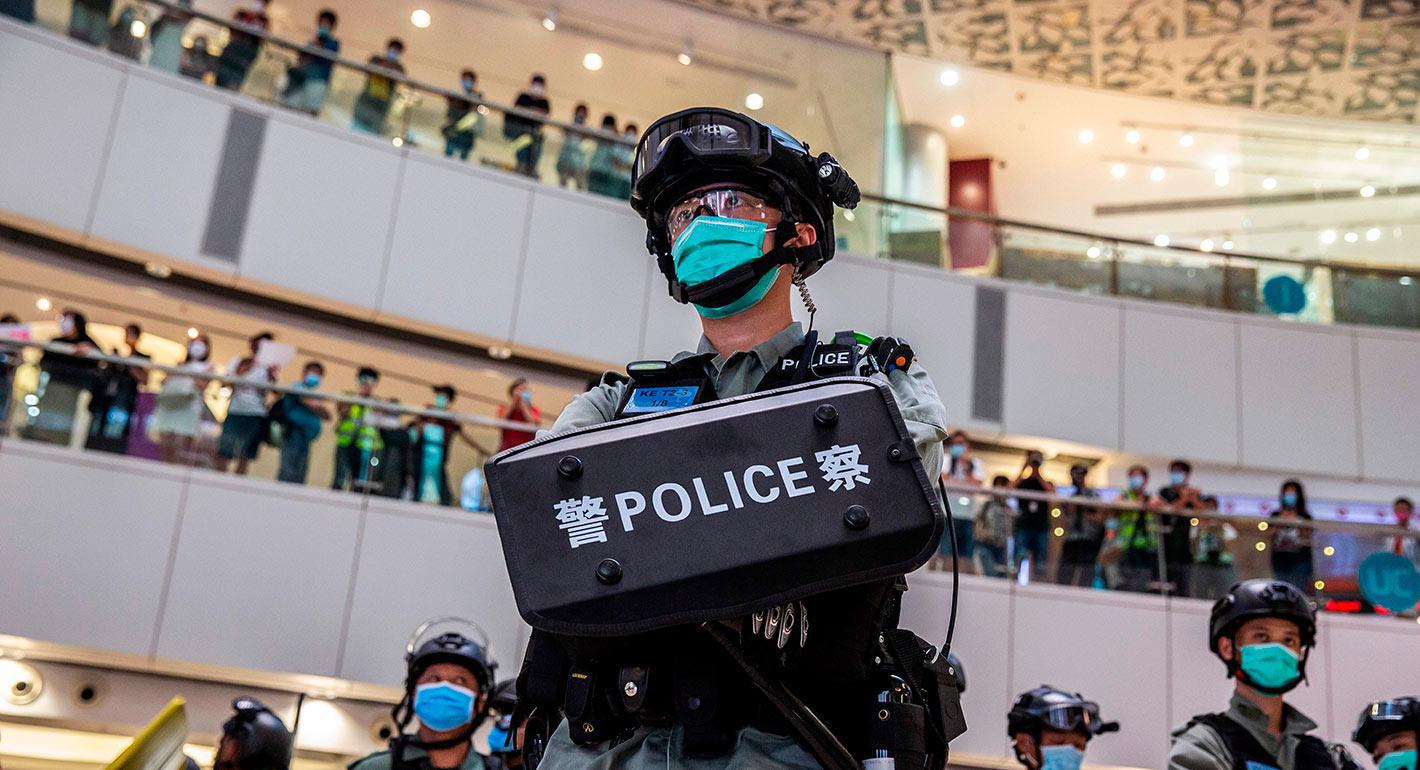
Source: Getty
The perception of the impact from the National Security Law (NSL) imposed on Hong Kong will vary from sector to sector.
Source: Institut Montaigne
The perception of the impact from the National Security Law (NSL) imposed on Hong Kong will vary from sector to sector. It has been immediate on political activists and the large segment of the population that was involved in mass protests for almost a year and a half. Disbanding of political groups that will likely be targeted immediately, preparations for departure from the Special Administrative Region (SAR), and a literal overnight disappearance of visible signs of individual activism show that the Hongkongers have taken the full measure of what the law brings: an alignment with PRC political control practices.
But the many expatriates who have made Hong Kong their permanent or temporary home may see the situation differently. The business community, academics, journalists and lawyers had become accustomed to a Hongkongese extraterritoriality, safeguarded by the Basic Law until 2047, according to an international treaty, as well as by China's economic interest. Shreds of this situation remain, since Hong Kong's financial centre remains the first point of exit for Chinese capital. Umbrella companies, initially intended to circumvent US bans on financial transactions with China, have become shell companies, acting as the first layer concealing the origin of Chinese investments abroad. The English language media and academic community may believe they will be spared the full extent of the law, though one can safely assume self-censorship will inevitably increase.
France has a typical dilemma: Hong Kong has long been an attractive location for French banks and insurance companies, which have often conducted their Chinese operations from Hong Kong. This includes many luxury and spirits companies, whose products sold in China are typically imported from Hong Kong, but also culture, media and social sciences, with journalists based in Hong Kong, a research centre on China, a China-focused journal (under various names since the late 1970s), a large Alliance Française, the French International School and various festivals. Of course, the coronavirus has slowed down the pace of these activities, and perhaps our cultural relations have not been excessively audacious recently. The last "university" conference mentioned on the French Consulate’s official website dates back to October 2019 - Dominique de Villepin had then celebrated Napoleon and his "legitimacy by deeds" - an expression that President Xi would have approved if he had heard of it. In addition, German tourists are now warned by their government of the possible hazards from the National Security Law. [...]
This article was originally published by Institut Montaigne.

Former Nonresident Senior Fellow, Asia Program
Godement, an expert on Chinese and East Asian strategic and international affairs, was a nonresident senior fellow in the Asia Program at the Carnegie Endowment for International Peace.
Recent Work
François Godement, Ashley J. Tellis

François Godement, Abigaël Vasselier
Carnegie India does not take institutional positions on public policy issues; the views represented herein are those of the author(s) and do not necessarily reflect the views of Carnegie, its staff, or its trustees.

Experts weigh in on whether the United States is too hostile toward China.

Stephen Wertheim, Evan S. Medeiros, Vijay Gokhale
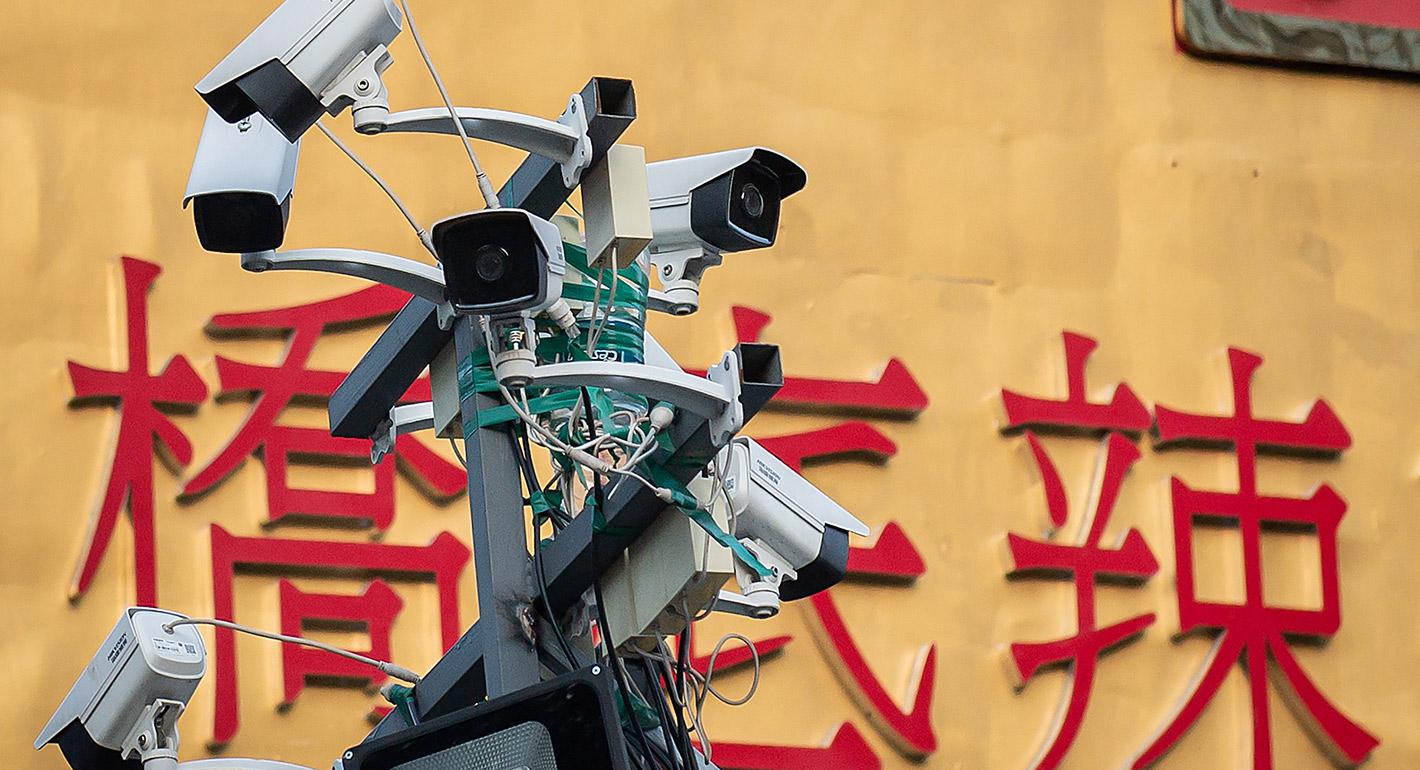
Governments around the world are turning to new forms of digital surveillance to monitor the spread of the coronavirus, though they are mostly using existing laws to do so.

Anirudh Burman
In recent years, some of the most dramatic situations in Indian public life have arisen in the higher judiciary—an arm of the state ideally characterized by collegiality, scholarship, predictability, and remoteness from raucous politics.

Suyash Rai, Anirudh Burman
There are many lessons to be drawn from the darker days of India’s political history. The one that ought to be demystified is the view that the suspension or promotion of democracy necessarily stuns or shocks international leaders to the extent that those in India might expect them to.

Rudra Chaudhuri
In India, it is useful to view the relative success of criminal politicians as a byproduct of democratic practice, rather than its authoritarian antithesis.

Milan Vaishnav