
• Research
  • About
  • Experts
Carnegie India logoCarnegie lettermark logo
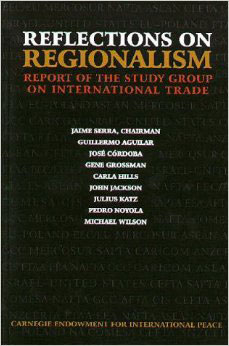
Reflections on Regionalism: Report of the Study Group on International Trade
Book

Reflections on Regionalism: Report of the Study Group on International Trade

Reflections on Regionalism: Report of the Study Group on International Trade

Link Copied
By Gene Grossman, John Jackson, Pedro Noyola, Michael Wilson, Julius Katz, José Córdoba, Carla Hills
Published on Jul 1, 1997

Source: Washington, DC: Carnegie Endowment for International Peace, 1997

Summary

Over the last three decades, regional trade agreements (RTAs) have proliferated to the point where, by 1995, virtually all members of the newly formed World Trade Organization (WTO) were members of an RTA of some kind—whether a customs union, a free-trade agreement, or an interim agreement leading to one or the other.

Analysts are divided about the effects of RTAs. Some believe that taking further steps in the direction of trade and investment liberalization—even when restricted to a particular region—contributes to creation of world trade and investment. Others believe that the implicit discrimination that these agreements embody diverts rather than creates worldwide trade and investment.

The Study Group—composed of eminent former trade negotiators and experts—gives its assessment of the thrust of existing theoretical as well as empirical analyses of the effects of RTAs. It then offers the WTO a series of recommendations aimed at strengthening its leadership role in managing RTAs. The proposals focus on improving existing rules governing RTA formation as well as operation so as to minimize the risk of trade and investment diversion resulting from RTAs and to induce trade- and investment-creating behavioral patterns for existing and future RTAs.

Advance Praise

“Reflections on Regionalism points up a neglected issue in GATT/WTO negotiations. We need to be sure the strong interest in regional arrangements doesn't undermine the multilateral system, and the illustrious and experienced authors show how it should be done.”

—Paul A. Volcker

“This report focuses beautifully on the reasons why the proliferating free trade agreements now pose a danger to the world trading system and offers creative solutions to the problems they present.”

—Jagdish Bhagwati

About the Authors

Gene Grossman

John Jackson

Pedro Noyola

Michael Wilson

Julius Katz

José Córdoba

Carla Hills

Authors

Gene Grossman
John Jackson
Pedro Noyola
Michael Wilson
Julius Katz
José Córdoba
Carla Hills
Trade

Carnegie India does not take institutional positions on public policy issues; the views represented herein are those of the author(s) and do not necessarily reflect the views of Carnegie, its staff, or its trustees.

More Work from Carnegie India

  • Commentary
    The Impact of U.S. Sanctions and Tariffs on India’s Russian Oil Imports

    This piece examines India’s response to U.S. sanctions and tariffs, specifically assessing the immediate market consequences, such as alterations in import costs, and the broader strategic implications for India’s energy security and foreign policy orientation.

      Vrinda Sahai

  • Article
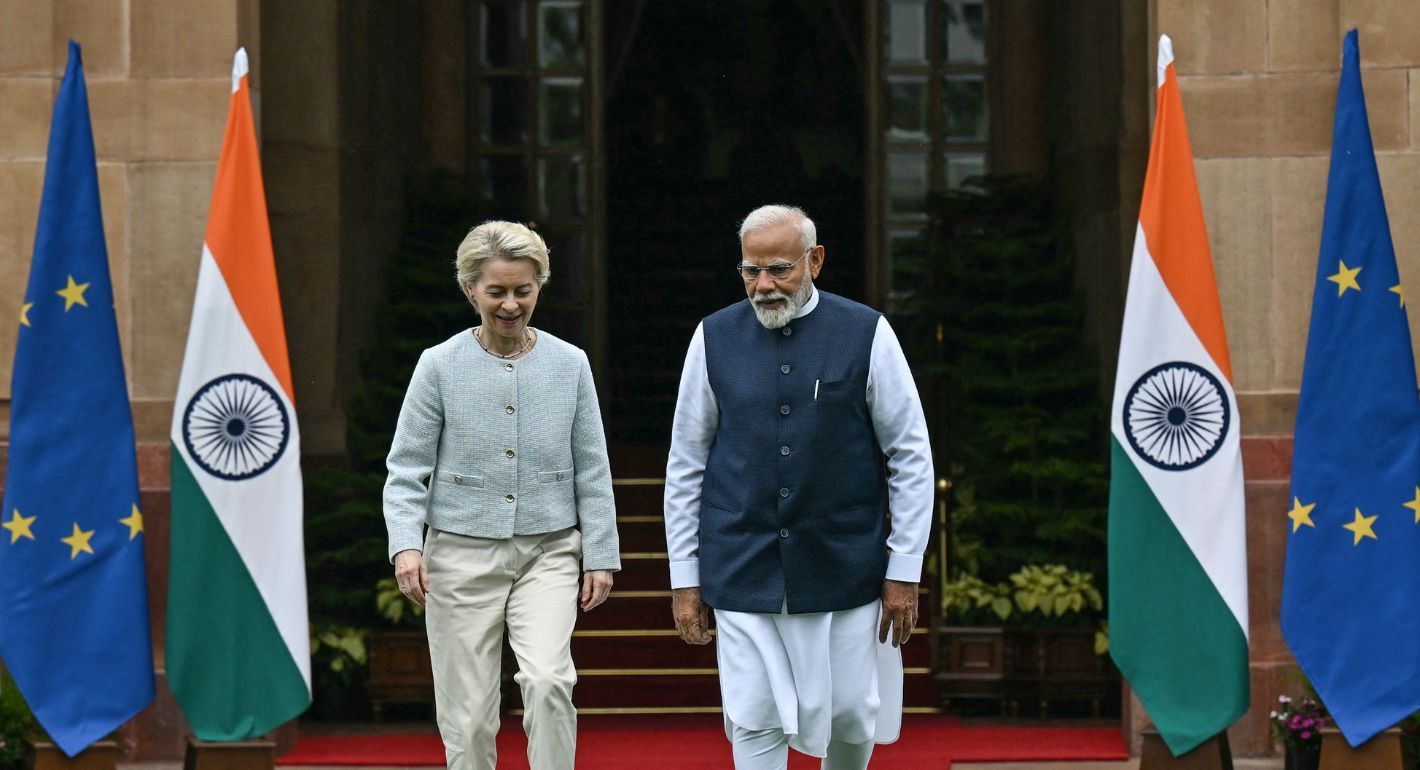
    Can Geopolitical Alignment Seal the India-EU FTA?

    This article argues that the geopolitical circumstances have never been more conducive, not merely for the early conclusion of the free trade agreement (FTA) between India and the EU, but also for crafting a substantive and comprehensive strategic partnership.

      Mohan Kumar

  • Paper
    China’s Digital Yuan: An Alternative to the Dollar-Dominated Financial System

    China’s central bank has plans to roll out a digital yuan, which could circumvent the U.S. dollar in important global financial transactions. Here are some ways the digital yuan could pose a challenge to the dollar’s prominence.

      Rajesh Bansal, Somya Singh

  • Paper
    Measuring Trade Facilitation: Evidence from India

    The World Trade Organization’s Trade Facilitation Agreement has placed trade facilitation initiatives high on the agenda of international governments. This case study of India studies what trade facilitation may mean for a fast-paced economy.

      Vijay Singh Chauhan, Sruti Vijayakumar

  • Article
    The BRI in Post-Coronavirus South Asia

    After the coronavirus pandemic wanes, how will China’s reorientation of the Belt and Road Initiative to address global health concerns influence its relationships with South Asian countries?

      Deep Pal, Rahul Bhatia

Get more news and analysis from
Carnegie India
Carnegie India logo, white
Unit C-4, 5, 6, EdenparkShaheed Jeet Singh MargNew Delhi – 110016, IndiaPhone: 011-40078687
  • Research
  • About
  • Experts
  • Projects
  • Events
  • Contact
  • Careers
  • Privacy
  • For Media
Get more news and analysis from
Carnegie India
© 2026 Carnegie Endowment for International Peace. All rights reserved.