• Research
  • About
  • Experts
Carnegie India logoCarnegie lettermark logo
Technology
REQUIRED IMAGE

REQUIRED IMAGE

Article

Britain: Nuclear Business As Usual, or Catalyst for Change?


The Acronym Institute published a report, Worse than Irrelevant? British Nuclear Weapons in the 21st Century, addressing the future ofBritain’s nuclear weapons system and outlining potential replacement options for the existing stockpile.


Britain’s decision will have important ramifications for the nonproliferation regime and the commitment of nuclear weapons states towards their disarmament obligations under Article VI of the Non-Proliferation Treaty.


The report calls for a comprehensive review ofBritain’s security and defense strategies, taking into accountBritain’s commitment to nonproliferation and the efficacy of nuclear deterrence in the changing security environment of the 21st century. The report contrasts the nuclear threats of the Cold War with the predominant security challenges in today’s post-Cold War environment such as climate change and environmental degradation, terrorism, poverty, transnational illicit trade, and failing states. The authors conclude that nuclear weapons have no useful role in protecting against today’s security challenges, adding that nuclear weapons are “not merely irrelevant,” but that they “have the potential to add greatly to other threats, notably terrorism, organised crime and trafficking.” (Read More)


Link Copied
By Caterina Dutto
Published on Nov 28, 2006

The Acronym Institute published a report, Worse than Irrelevant? British Nuclear Weapons in the 21st Century, addressing the future of Britain’s nuclear weapons system and outlining potential replacement options for the existing stockpile.


Britain’s decision will have important ramifications for the nonproliferation regime and the commitment of nuclear weapons states towards their disarmament obligations under Article VI of the Non-Proliferation Treaty.


The report calls for a comprehensive review of Britain’s security and defense strategies, taking into account Britain’s commitment to nonproliferation and the efficacy of nuclear deterrence in the changing security environment of the 21st century. The report contrasts the nuclear threats of the Cold War with the predominant security challenges in today’s post-Cold War environment such as climate change and environmental degradation, terrorism, poverty, transnational illicit trade, and failing states. The authors conclude that nuclear weapons have no useful role in protecting against today’s security challenges, adding that nuclear weapons are “not merely irrelevant,” but that they “have the potential to add greatly to other threats, notably terrorism, organised crime and trafficking.”


Britain currently deploys four Vanguard-class nuclear submarines equipped with US Trident DF missiles, which are due to retire in 2020s. The report discusses five possible policy options.


  • Direct “like-for-like” replacement of Britain’s current force structure with a new generation of strategic ballistic-missile-carrying nuclear submarines (SSBNs) and missiles. This plan would further extend the UK’s reliance on the US for weapons procurement and nuclear cooperation.
  • The “Trident Lite” plan would further reduce Britain’s “minimum deterrent” of Trident missiles from 65 to 58 and would decrease the British nuclear stockpile from 300 to “fewer than 200.” The plan would also revise and “de-target” the operational readiness levels of nuclear forces from Cold War hair-trigger alert of 15 minutes to a measure of days.
  • Adapting smaller submarines to carry nuclear weapons is another policy option. The smaller HMS Astute nuclear-powered “hunter-killer” submarines are scheduled to be completed by 2009, and the government may be considering reconfiguring them to carry either a reduced number of Trident missiles, tipped cruise missiles, or a new type of submarine-launched intermediate range missile (SLIRBM) still in production in the United States. 
  • Other proposals for smaller, more “flexible nuclear weapons” would be less expensive than the Trident system and would be more in line with the new US national security strategy. While many British policymakers and military officials are noted as skeptical of the new US strategy, the possibility of deploying tactical or sub-strategic nuclear forces have not been ruled out.
  • A final option is for service life extension for the existing nuclear force structure. The House of Commons Defence Committee expressed concerns that the extension would likely only add “an additional five years,” but other experts insist that extension could add another 15-20 years based on the US experience.


The authors of the report conclude that the elimination of worldwide nuclear stockpiles is “a more feasible—and more pressing—security priority than current official assumptions and policies acknowledge.” They urge British policymakers to “take time for an informed debate” about the replacement of the Trident system rather than rushing to a decision. The Acronym Institute’s report has been published ahead of the release of a White Paper on Britain's policy options on replacing Britain’s nuclear weapons system due later this year.


To access the full text of the Acronym Institute's report, click here.

Caterina Dutto
Former Research Assistant
North AmericaUnited StatesNuclear PolicyNuclear Energy

Carnegie India does not take institutional positions on public policy issues; the views represented herein are those of the author(s) and do not necessarily reflect the views of Carnegie, its staff, or its trustees.

More Work from Carnegie India

  • Commentary
    The Impact of U.S. Sanctions and Tariffs on India’s Russian Oil Imports

    This piece examines India’s response to U.S. sanctions and tariffs, specifically assessing the immediate market consequences, such as alterations in import costs, and the broader strategic implications for India’s energy security and foreign policy orientation.

      Vrinda Sahai

  • Commentary
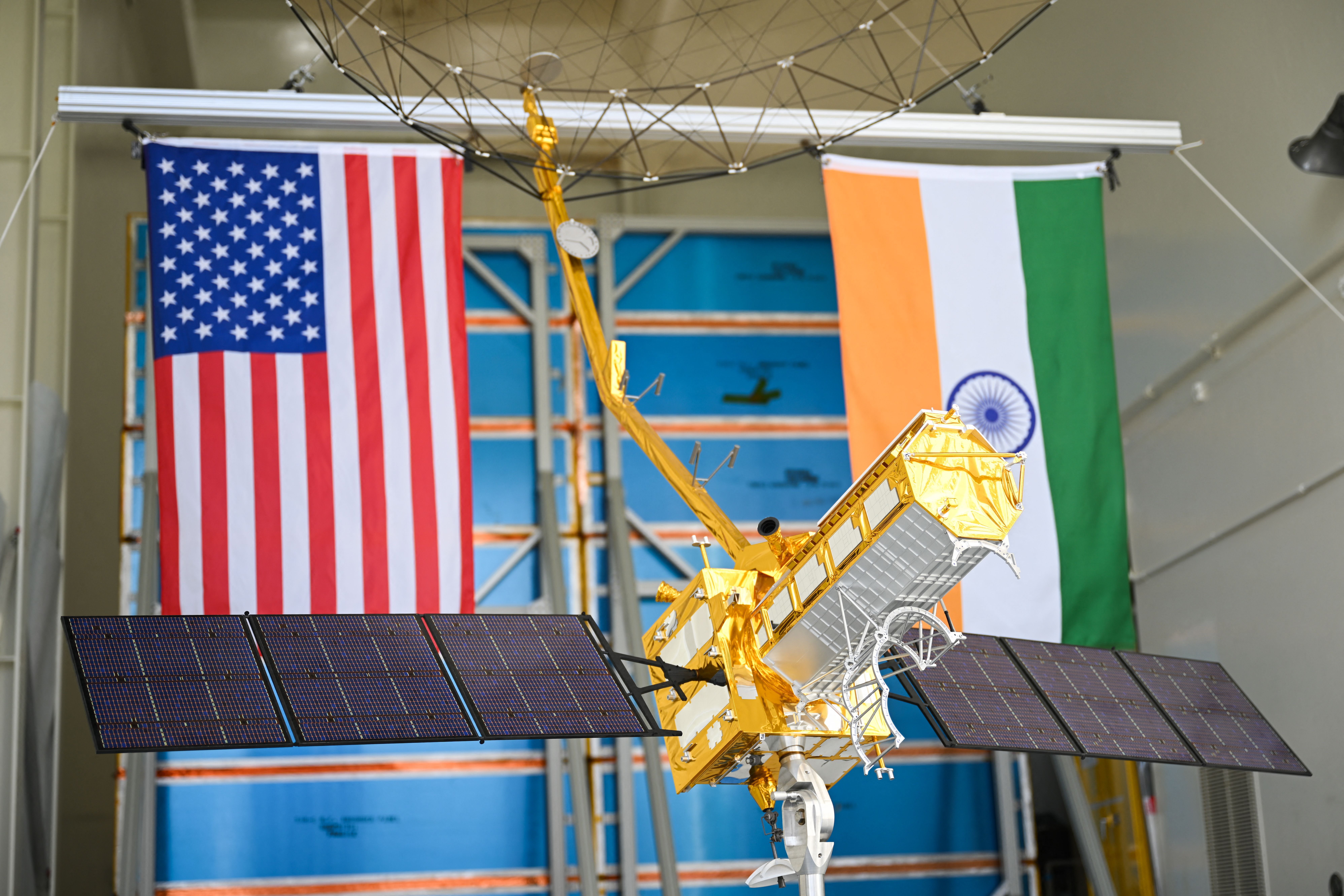
    NISAR Soars While India-U.S. Tariff Tensions Simmer

    On July 30, 2025, the United States announced 25 percent tariffs on Indian goods. While diplomatic tensions simmered on the trade front, a cosmic calm prevailed at the Sriharikota launch range. Officials from NASA and ISRO were preparing to launch an engineering marvel into space—the NASA-ISRO Synthetic Aperture Radar (NISAR), marking a significant milestone in the India-U.S. bilateral partnership.

      Tejas Bharadwaj

  • Commentary
    TRUST and Tariffs

    The India-U.S. relationship currently appears buffeted between three “Ts”—TRUST, Tariffs, and Trump.

      Arun K. Singh

  • Commentary
    The India-U.S. TRUST Initiative: Advancing Semiconductor Supply Chain Cooperation

    As part of the TRUST initiative, leaders of the two countries committed to building trusted and resilient supply chains, including for semiconductors and critical minerals. India and the United States have made steady progress in this area over the years. This essay explores the takeaways from discussions on semiconductor supply chains that took place at Carnegie India’s 9th Global Technology Summit.

      Konark Bhandari

  • Commentary
    The India-U.S. TRUST Initiative: A Resilient Pharma Supply Chain

    This essay takes stock of the early momentum generated by the joint leaders’ commitment to catalyze public and private investments in building Indian manufacturing capacity—both domestically and in the United States—for active pharmaceutical ingredients (APIs) for critical medicines.

      Shruti Sharma

Get more news and analysis from
Carnegie India
Carnegie India logo, white
Unit C-4, 5, 6, EdenparkShaheed Jeet Singh MargNew Delhi – 110016, IndiaPhone: 011-40078687
  • Research
  • About
  • Experts
  • Projects
  • Events
  • Contact
  • Careers
  • Privacy
  • For Media
Get more news and analysis from
Carnegie India
© 2026 Carnegie Endowment for International Peace. All rights reserved.