

• Research
  • About
  • Experts
Carnegie India logoCarnegie lettermark logo
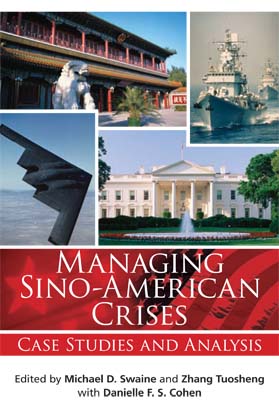
Managing Sino-American Crises: Case Studies and Analysis
Book

Managing Sino-American Crises: Case Studies and Analysis

Sensitivities and suspicions between Washington and Beijing have heightened as China’s global power and influence have grown. Arguably, this new international order could increase the chances of a political-military crisis—or perhaps outright conflict—between the two powers.

Link Copied
By Michael D. Swaine, Tuosheng Zhang, Danielle F.S. Cohen
Published on Dec 4, 2006

Additional Links

Table of ContentsIntroductionBook Review in <i>The China Quarterly</i>Paperback - $24.95

Source: Washington

The Taiwan Strait.  The Korean War and Vietnam. The bombing of the Chinese Embassy in Belgrade. The Sino-U.S. aircraft collision incident.  U.S.-China relations have witnessed significant tensions and conflict.

Sensitivities and suspicions between Washington and Beijing have heightened as China’s global power and influence have grown. Arguably, this new international order could increase the chances of a political-military crisis—or perhaps outright conflict—between the two powers. Managing Sino-American Crises brings together Chinese and American officials and participants in past confrontations, as well as scholars from both countries, to explore the changing features of crisis behavior and their implications for defusing future encounters. Using both conceptual analysis and historical case studies, the essays in this volume identify specific problems and opportunities that will likely confront both countries in the future and propose recommendations that will improve the effectiveness of crisis management skills between the United States and China.


About the Authors

Michael D. Swaine is a senior associate with the China Program at the Carnegie Endowment for International Peace.

Zhang Tuosheng is director of the research department and senior fellow at the China Foundation for International and Strategic Studies.

Danielle F. S. Cohen was a junior fellow with the China Program at the Carnegie Endowment for International Peace from 2005-2006.

Advance Praise

"This is an important and timely book that sheds new light on what will be the most important strategic relationship of the 21st century. By examining the similarities and divergence between Chinese and American approaches to crisis management over the past fifty years, this study produces insights which could literally mean the difference between peace and war in future crises. The rich historical detail, combined with the unique perspectives of both practitioners and scholars, make this volume invaluable for both policymakers and students of US-Chinese relations."
—James B. Steinberg, Dean, Lyndon B. Johnson School of Public Affairs, The University of Texas at Austin, and former deputy national security advisor to President Bill Clinton

"This volume is rich in insights ... Swaine's essays, and the case studies that they bracket, deserve a wide audience and careful consideration within China and without."
—The China Quarterly

About the Authors

Michael D. Swaine

Former Senior Fellow, Asia Program

Swaine was a senior fellow at the Carnegie Endowment for International Peace and one of the most prominent American analysts in Chinese security studies.

Tuosheng Zhang

Danielle F.S. Cohen

Authors

Michael D. Swaine
Former Senior Fellow, Asia Program
Michael D. Swaine
Tuosheng Zhang
Danielle F.S. Cohen
China

Carnegie India does not take institutional positions on public policy issues; the views represented herein are those of the author(s) and do not necessarily reflect the views of Carnegie, its staff, or its trustees.

More Work from Carnegie India

  • Paper
    India-China Economic Ties: Determinants and Possibilities

    This paper examines the evolution of India-China economic ties from 2005 to 2025. It explores the impact of global events, bilateral political ties, and domestic policies on distinct spheres of the economic relationship.

      Santosh Pai

  • Article
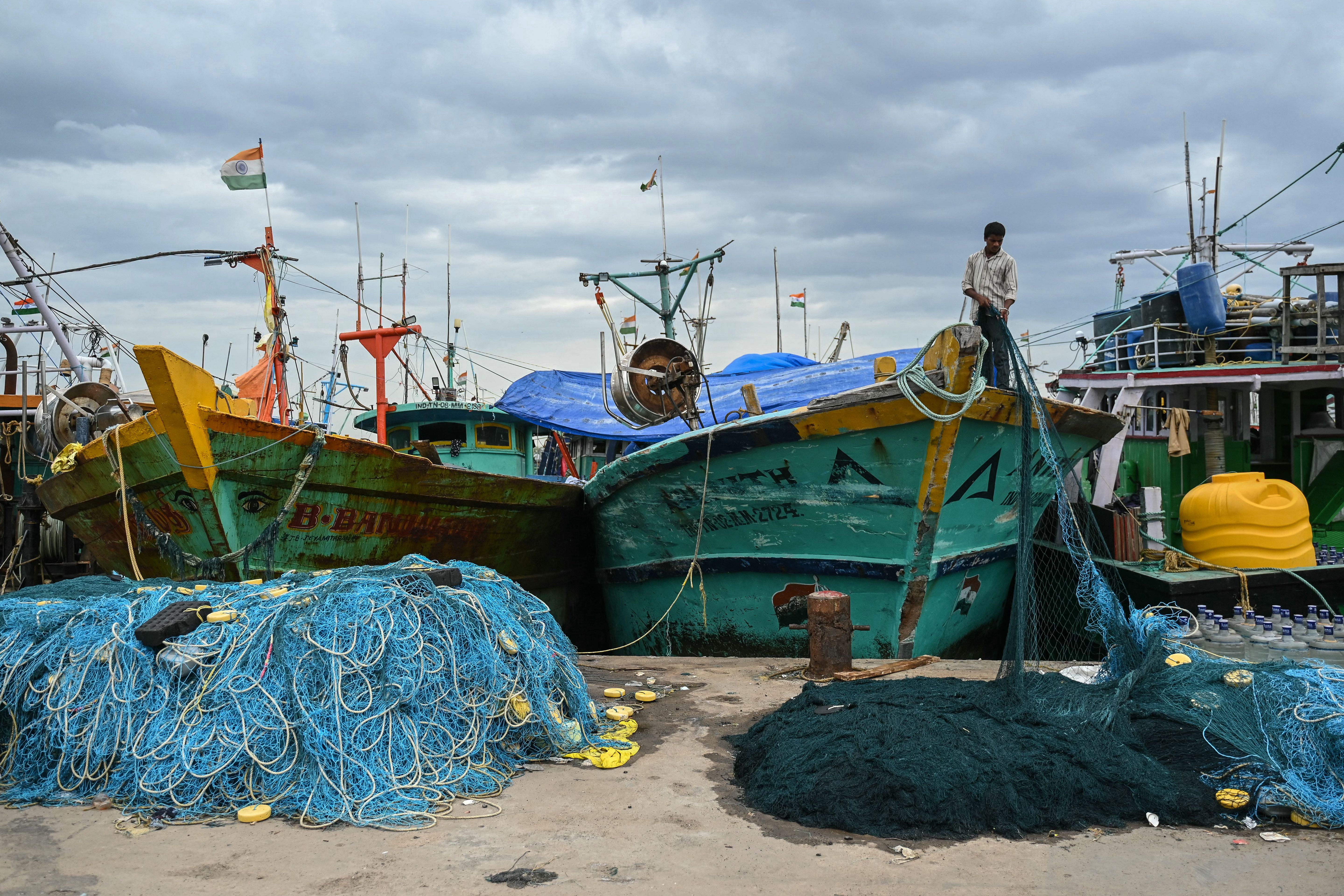
    Hidden Tides: IUU Fishing and Regional Security Dynamics for India

    This article examines the scale and impact of Chinese IUU fishing operations globally and identifies the nature of the challenge posed by IUU fishing in the Indian Ocean Region (IOR). It also investigates why existing maritime law and international frameworks have struggled to address this growing threat.

      Ajay Kumar, Charukeshi Bhatt

  • Research
    Views From Taipei: Essays by Young Indian Scholars on China

    This compendium brings together three essays by scholars who participated in Carnegie India's Security Studies Dialogue in 2024, each examining a different aspect of China’s policies. Drawing on their expertise and research, the authors offer fresh perspectives on key geopolitical challenges.

      • +1

      Vijay Gokhale, Suyash Desai, Amit Kumar, …

  • Source: iStock
    Commentary
    What’s Next for U.S. AI Policy?

    This commentary explores the likely actions of the Trump administration and driving forces on issues of deregulation, the United States’ leadership in AI, national security, and global engagements on AI safety.

      Shatakratu Sahu, Amlan Mohanty

  • Paper
    Negotiating the India-China Standoff: 2020–2024

    India and China have been engaged in a standoff at their border in eastern Ladakh since April–May 2020. Over 100,000 troops remain deployed on both sides, and rebuilding political trust will take time.

      Saheb Singh Chadha

Get more news and analysis from
Carnegie India
Carnegie India logo, white
Unit C-4, 5, 6, EdenparkShaheed Jeet Singh MargNew Delhi – 110016, IndiaPhone: 011-40078687
  • Research
  • About
  • Experts
  • Projects
  • Events
  • Contact
  • Careers
  • Privacy
  • For Media
Get more news and analysis from
Carnegie India
© 2026 Carnegie Endowment for International Peace. All rights reserved.