

Article
Pieter Bottelier
Source: Getty
The need to address pressing near-term challenges, such as inflation, may not conflict with China’s medium-term rebalancing goals. Even though the policy outlook is uncertain, several long-term dynamics make rebalancing likely.
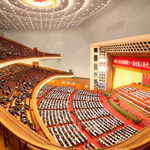
China launched its Twelfth Five Year Plan (FYP) in March. The new FYP aims to decrease China’s dependence on exports and investment, rebalancing the economy toward services and domestic consumption. But will the need to address pressing near-term challenges—namely, inflation and high housing prices in large cities—conflict with these medium-term goals? The answer is no, not necessarily. Even though the policy outlook is uncertain, several long-term dynamics make rebalancing likely.
China’s twelfth FYP aims to restructure the country’s growth path. It targets 7 percent GDP growth on average per year over the period, with an emphasis on consumption and services as drivers of growth. The FYP aims to increase the service sector’s share of GDP and the urbanization rate, which will both bolster consumption, by 4 percentage points each, raising them to 47 percent and 51.5 percent, respectively by 2015.
The FYP also aims to significantly improve the livelihood of China’s citizens. Specifically, it sets targets of 45 million new jobs in urban China, an unemployment rate below 5 percent (the official rate is 4.2 percent at present), and 36 million new affordable housing units.
In addition, by 2015, the plan aims to: increase R&D spending from about 1.7 percent to 2.2 percent of GDP; reduce energy intensity by 16 percent and carbon dioxide emissions by 17 percent per unit of GDP; increase renewables’ share of total energy use from 8.3 percent to 11.4 percent; and increase forestry cover by about 1 percentage point, to 21.7 percent.
Against this background of long-term, structural economic reforms, inflation remains a serious concern. Food price increases continue to lead the CPI and, as the chart below shows, each of the three major inflation indices crept up marginally in January and February. There is no clear indication that inflation will moderate in the coming months. In his annual Work Report to the National People’s Congress in March, Prime Minister Wen Jiabao stated that controlling inflation remains the government’s top near-term priority.

After almost a year of central government efforts to cool urban real estate speculation, prices for apartments in tier 1 cities finally moderated—and, in some cities, actually fell a little—in the first quarter of 2011. But, given the large monetary overhang still in the system, the increased land-lease revenues that local governments can earn by driving up property prices, and other distortions in China’s economy, Beijing’s struggle to control urban residential property prices is far from over.
Efforts to control inflation and urban real estate speculation, if well-designed, need not conflict with the structural reforms necessary for economic rebalancing. If there is a conflict, however, it will probably be in housing policy and related areas. Additional monetary tightening to combat inflation could raise the interest rate on the banks loans that local governments use to finance new affordable housing units, which could then hinder Beijing’s affordable housing goal. Whether this occurs remains to be seen, however.
The previous FYP (2006–2010) also noted the need to make China’s growth path more sustainable, but little if any progress was made toward rebalancing over the period. Consumption’s exceptionally low share of GDP—one of the main indicators of imbalance in China’s economy—continued to drop through 2010, falling from 53 percent in 2006 to an estimated 47 percent in 2010.1

The first half of 2009 offered hope that household consumption’s share of GDP would rise—given that household consumption’s growth outpaced GDP growth for two quarters—but the gradual withdrawal of stimulus-related subsidies and declining consumer confidence slowed consumption growth appreciably in mid-2009. Consequently, as shown below, household consumption’s share of GDP probably fell again in 2010 to a little below 35 percent.
The same factors—reduced or terminated subsidies and declining consumer confidence—were still at play in the first quarter of 2011, particularly as relatively high inflation led consumer confidence to decline.
China’s current account surplus as a percentage of GDP—another metric of imbalance—also points to the need for a more concerted effort by China’s policy makers. The surplus would likely have narrowed little if at all without the crisis-induced collapse in international trade. After the crisis, the ratio increased again, reaching 5.2 percent in 2010, as shown below.2

When making these arguments, however, it is important to emphasize that China’s exceptionally low consumption/GDP ratio is not due to slow consumption growth—consumption growth is actually much higher in China than in the United States and other large economies—but rather to China’s high, investment-driven GDP growth.3

In addition, China’s limited progress on rebalancing during the eleventh FYP was due, in part, to the global financial crisis. The crisis led Beijing to reverse some of its rebalancing policies to protect employment and restore growth momentum—a reversal that hopefully will not be required during this FYP period.
Continued financial repression and conflicts of interest between Beijing and local governments also stood in the way of implementing key aspects of the earlier rebalancing strategy. While these factors are still relevant today, Beijing seems more aware of their negative effects on rebalancing and more willing to address them.
In addition, several long-term dynamics will push for rebalancing in the years ahead, almost regardless of Beijing’s policy stance.
Already, services are seeing improvements relative to manufacturing: Employment and wages are growing faster in services than in manufacturing, a trend that is likely to intensify. In addition, services will get a boost from the expansion of health and home care help for the elderly as the population ages and China’s traditional, family-based system of care gives way to commercial services.
Meanwhile, a number of factors are likely to lead to greater consumption growth. First, wage growth: even in manufacturing, where education and income levels tend to be lower than in services, real wages grew faster than GDP in 2010. Second, the rapidly increasing availability of consumer finance—total consumer loans outstanding increased from less than 5 percent of household disposable income in 1999 to a still-modest 43 percent at the end of 2009—could lift consumption growth, as it did in Korea and other emerging economies.
Policy changes may also catalyze consumption. For instance, China plans to significantly reform its income tax system this year, with an eye to reducing social inequality and promoting private consumption. In addition, China plans to continue increasing the budget share of health and other social services, which has been shown to reduce the need for precautionary household savings.4 Decreased savings should raise consumption, particularly as some of the factors that led to an increase in savings over the past decade—such as the large wealth transfer from the state to urban households that occurred when urban housing was privatized—will not be repeated.
Furthermore, China’s extraordinarily high investment rate, almost 50 percent of GDP in 2010, will likely fall as monetary tightening in the near future increases the cost of capital.
RMB appreciation will also push structural economic change in the right direction. Notwithstanding Beijing’s still too-timid nominal exchange rate policy, the real RMB is now appreciating at a 10 percent annual clip against the dollar. China’s real effective exchange rate (REER) will likely follow suit. Given that domestic inflationary pressures are unlikely to subside soon, undervaluation of China’s real exchange rate could become a thing of the past in the next few years, aiding rebalancing efforts.
Finally, planned adjustments in the incentive framework for government officials will reward them more for achieving rebalancing than for raw GDP growth, as in the past. This reorientation, combined with the twelfth FYP’s reduced growth target—7 percent, compared to the official target of 7.5 percent for the eleventh FYP and realized growth of over 10 percent for that period—will give political cover to those who wish to emphasize social development and environmental protection over investment and GDP growth, which economic rebalancing requires.
China’s goal of rebalancing is wise and achievable. With economic factors already pushing for it, policy makers must now be careful not to obstruct the process.
Pieter Bottelier, former chief of the World Bank’s resident mission in Beijing, is a nonresident scholar in Carnegie’s International Economics Program and senior adjunct professor of China Studies at the School of Advanced International Studies (SAIS) at Johns Hopkins University.
1 These numbers refer to total consumption, i.e. household consumption plus government consumption. Household consumption accounted for about 85 percent of total consumption in 2007.
2 On January 31, 2011, SAFE, the agency responsible for recording China’s balance of payments, announced on its website a downward revision of the current account surplus for 2009, such that the 5.2 percent current account surplus/GDP ratio for 2010 represents an increase, not a decrease, over the original balance of payments for 2009. Final numbers are not yet available.
3 This observation has major implications for the design of China’s economic rebalancing strategy. While somewhat higher consumption growth should be achievable, the main adjustment has to come from reducing investment (and hence GDP) growth and changing the growth pattern from manufacturing and construction to greater reliance on the service sectors.
4 Recent research by Steven Barnett and Ray Brooks of the IMF shows that household consumption expenditures and government spending on social services, especially health services, are positively correlated (Chapter 7 in Rebalancing Growth in Asia. Economic Dimensions for China, edited by Vivek Arora and Robert Cardarelli, IMF, 2011.)

Former Nonresident Scholar, International Economics Program
Bottelier was a nonresident scholar in Carnegie’s International Economics Program and senior adjunct professor of China studies at the School of Advanced International Studies (SAIS), the Johns Hopkins University. His work currently focuses on China’s economic reform and development.
Recent Work
Pieter Bottelier
Pieter Bottelier
Carnegie India does not take institutional positions on public policy issues; the views represented herein are those of the author(s) and do not necessarily reflect the views of Carnegie, its staff, or its trustees.

On March 10, 2026, India’s Union Cabinet approved amendments to Press Note 3, a regulation that mandated government approval on all foreign direct investment (FDI) from countries sharing a land border with India. This amendment raises questions primarily about whether its stated benefits will materialize and if the risks have been adequately weighed. This piece will address the same.

Konark Bhandari

This piece examines India’s response to U.S. sanctions and tariffs, specifically assessing the immediate market consequences, such as alterations in import costs, and the broader strategic implications for India’s energy security and foreign policy orientation.

Vrinda Sahai

This paper examines the evolution of India-China economic ties from 2005 to 2025. It explores the impact of global events, bilateral political ties, and domestic policies on distinct spheres of the economic relationship.

Santosh Pai

This article examines the scale and impact of Chinese IUU fishing operations globally and identifies the nature of the challenge posed by IUU fishing in the Indian Ocean Region (IOR). It also investigates why existing maritime law and international frameworks have struggled to address this growing threat.


Ajay Kumar, Charukeshi Bhatt
The India-U.S. relationship currently appears buffeted between three “Ts”—TRUST, Tariffs, and Trump.

Arun K. Singh