

Research
- +6
Yasmine Farouk, Nathan J. Brown, Maysaa Shuja Al-Deen, …
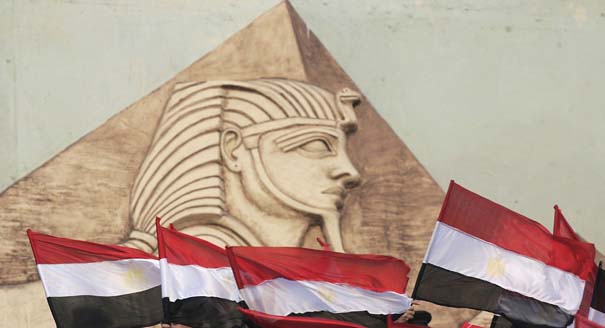
Source: Getty
Europe, as Egypt’s most important creditor and trading partner, can play a unique role in supporting Egypt’s transition to democracy and guiding it onto a sound economic path.
As Arab countries continue to churn, it is clear that one stands out from the rest: Egypt. In terms of population size (83 million, one of every four Arabs), historic role, and strategic location, Egypt is a heavyweight. The sleeping giant on the Nile has awoken since the revolution that began on January 25, and its success or failure in transitioning to a democratic government will have a profound impact on the rest of the Arab world. Simply put, Egypt is too big to fail.
At present, most of the focus inside Egypt is on political processes such as elections and constitutional amendments, as well as a continuing purge of Mubarak supporters, ruling party stalwarts, and security officials from appointed positions throughout the country. This revolution is still in motion and every week brings new developments, although so far the Supreme Council of the Armed Forces has resisted pressure to put off parliamentary and presidential elections, which are due to be held this autumn.
While the polity is enjoying a renaissance, however, the Egyptian economy presents a large and understudied vulnerability. The International Monetary Fund’s growth forecast for Egypt in 2011 has been revised downward from 5 to 1 percent, with tourism nearly suspended and industries throughout the country beset by worker strikes. In an effort to appease the population, the transitional government has increased the rolls of government workers from roughly six to seven million and is understandably reluctant to cut fuel and food subsidies. With a political process underway that will not see an elected government in place for another nine months or so, it is not clear how Egypt will pay its bills.
Aside from a possible short-term fiscal crisis, there is an even more serious potential problem in the medium term that Egypt will fail to get onto a sound path for economic growth and development. Economic grievances were not at the forefront of the January uprising but they formed the backdrop to it. Former President Hosni Mubarak’s government carried out significant structural reforms from 2004 on and succeeded in attracting foreign direct investment (FDI), but still Egypt was not generating enough jobs for the 700,000 entrants to the labor market each year. Furthermore, it was not educating young Egyptians to qualify them for the jobs that were created. And the benefits of growth, and especially of the privatization of state industries, were not equally available to all due to pervasive cronyism and other forms of corruption.
While the strong anti-corruption sentiment that came with the revolution is long overdue and the new social justice imperative entirely understandable, they bring with them the risk that the principle of making reforms needed to facilitate domestic investment and attract FDI will be lost or sidelined in a climate of economic populism. During a recent conversation in Cairo, an Islamist politician acknowledged that FDI would be required to generate jobs but that “from now on, foreign investments should be directed according to our national priorities, not according to the interests of the investors.” It might well take several years before it becomes clear that this sort of unrealistic thinking will not work; in the meantime Egyptians could well become disillusioned with their deteriorating economic situation and sour on the democratic experiment.
Europe, as Egypt’s most important creditor and trading partner, can play a unique role in supporting Egypt’s transition to democracy and guiding it onto a sound economic path. The European Commission, several member states, and European non-governmental organizations are already well established in Egypt and will certainly extend explicit democracy and governance assistance related to political processes; that is a given.
But Europe can and should do much more. Of Egypt’s total bilateral external debt of roughly $20 billion, half is owed to EU countries, with France and Germany in the lead (over $3 billion each, similar to Egypt’s debt to the United States) and the United Kingdom, Italy, Spain, and other countries holding smaller portions. While straightforward debt relief has disadvantages and is unpopular in these times of tight budgets, European creditors should begin looking at ideas such as debt swaps and packages of voluntary rescheduling of parts of the debt. Such steps could be timed to reward Egypt’s passing democratic milestones such as the holding of free parliamentary and presidential elections, reforming security institutions, and improving judicial independence.
Trade enhancements will be another important incentive to persuade Egyptians to pursue sound economic growth policies, and Europe is by far Egypt’s largest trade partner. European policymakers should think seriously about what the EU can offer beyond the current association agreement, understanding that it will be short of accession. The United States, for its part, should consider beginning negotiations for a free trade agreement, which were due to begin in early 2006 but abandoned due to U.S. objections to political repression under Mubarak.
In the course of working and negotiating with a broad range of Egyptians about debt relief, other forms of assistance, and trade liberalization, European policymakers will have the opportunity to think with Egyptian leaders about where to take their economy and how to avoid costly mistakes that others have made during political transitions. Ultimately it will be up to Egyptians to decide the balance of free market and social welfare principles that will work for them, but they surely can benefit from the many models and lessons learned that Europe has to offer.
Egyptians will be far more open to European advice if it comes packaged with a clear commitment—expressed in tangible assistance and incentives—to the success of their democratic transition. This would be a wise investment on Europe’s part, based on the calculation that it would be better to have a large, influential southern Mediterranean neighbor that turns out to resemble Turkey more than Somalia or Iran.

Former Nonresident Scholar, Middle East Program
Michele Dunne was a nonresident scholar in Carnegie’s Middle East Program, where her research focuses on political and economic change in Arab countries, particularly Egypt, as well as U.S. policy in the Middle East.
Recent Work



Yasmine Farouk, Nathan J. Brown, Maysaa Shuja Al-Deen, …
Robert Springborg, Emile Hokayem, Becca Wasser, …
Carnegie India does not take institutional positions on public policy issues; the views represented herein are those of the author(s) and do not necessarily reflect the views of Carnegie, its staff, or its trustees.

This piece argues that India’s central challenge is not managing a single flashpoint but resolving the underlying tension between expansion and institutional coherency of the BRICS grouping.

Vrinda Sahai
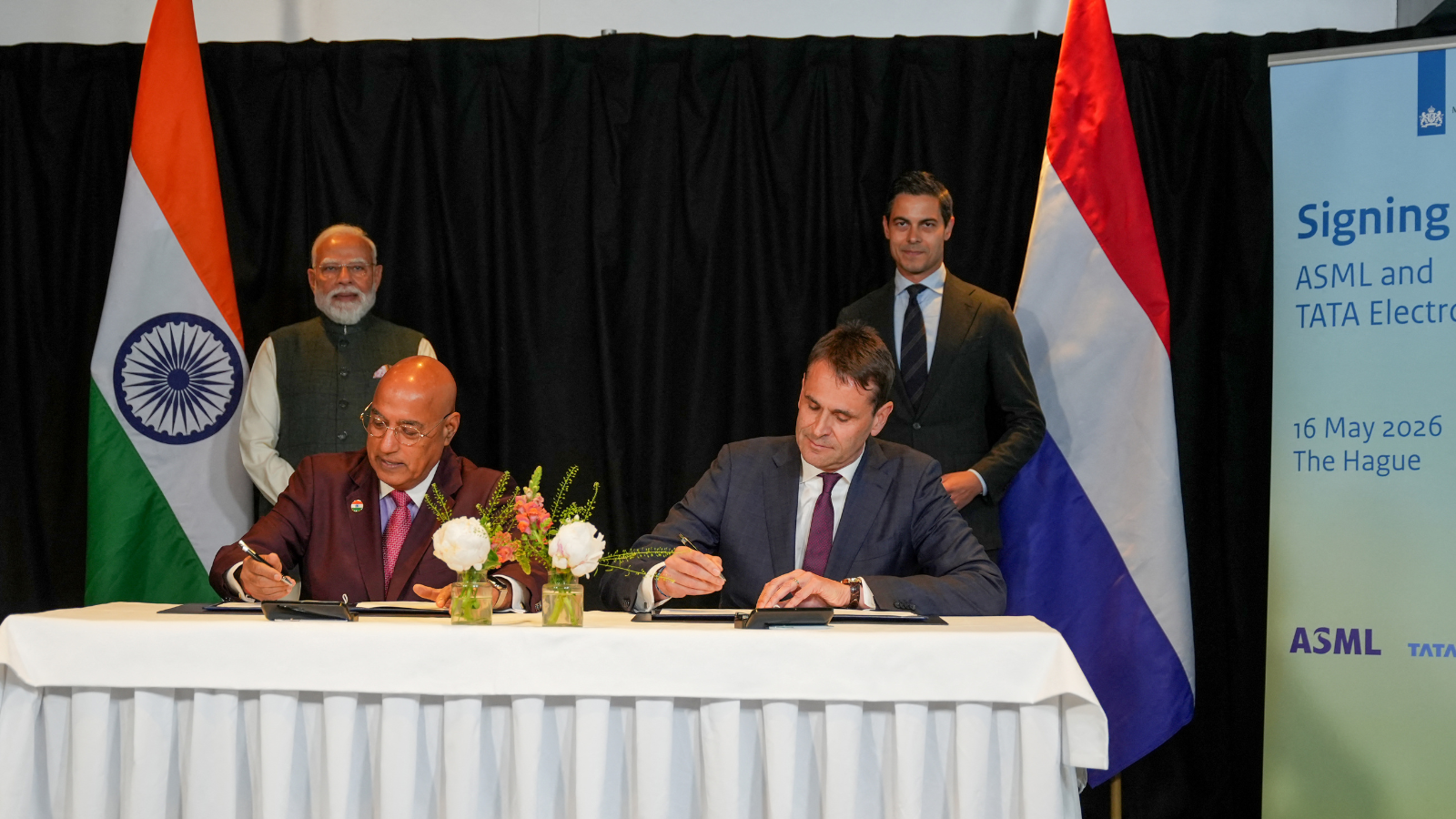
The ASML MoU with Tata Electronics is an indicator of how far the Indian semiconductor ecosystem has come. This ecosystem has been years in the making and represents real commercial logic.

Konark Bhandari

A partnership between India, a country of subcontinental size, and Africa, a continent of fifty-four countries, may seem asymmetric until one notes that both are home to nearly the same number of people—1.4 billion. This essay spells out the existing challenges to the partnership, its optimal potential, and the possible pathways to realize it over the next quarter-century.

Rajiv Bhatia

The India–EU Free Trade Agreement (FTA) is shaping up to be one of the most consequential trade negotiations, both economically and strategically. But, what’s in the agreement, what’s missing, and what will determine its success in the years ahead
Vrinda Sahai, Nicolas Köhler-Suzuki

Trump 2.0 has unsettled India’s external environment—but has not overturned its foreign policy strategy, which continues to rely on diversification, hedging, and calibrated partnerships across a fractured order.



Milan Vaishnav, ed., Sameer Lalwani, Tanvi Madan, …