• Research
  • About
  • Experts
Carnegie India logoCarnegie lettermark logo
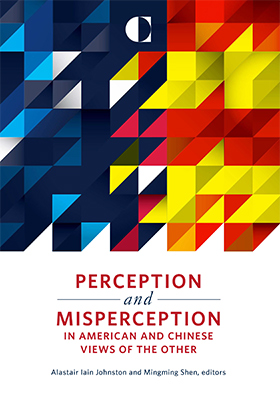
Perception and Misperception in American and Chinese Views of the Other
Report

Perception and Misperception in American and Chinese Views of the Other

The underlying beliefs that people in the United States and China hold toward each other in the security realm are likely to influence, directly or indirectly, each side’s foreign policy with regard to the bilateral relationship.

Link Copied
Published on Sep 22, 2015

Additional Links

BriefFull Text

The underlying beliefs that people in the United States and China hold toward each other in the security realm are likely to influence, directly or indirectly, each side’s foreign policy with regard to the bilateral relationship. In-depth analyses of elite and public opinion survey data from the United States and China on a wide range of security issues provide nuanced and far-reaching insights into the potential effects of these attitudes on the U.S.-China relationship.

Key Findings

  • There are substantial gaps in American and Chinese perceptions of the basic traits and characteristics that each side exhibits. However, at the individual level, strong in-group exceptionalism does not necessarily predict out-group denigration.
     
  • A considerable part of the Chinese population appears to believe that China should not take on a world leadership role, or if it does, it should jointly lead the world with the United States. These attitudes are associated both with older respondents and with those in their thirties and early forties.
     
  • In general, mistrust of the external world on the Chinese side stems from educational socialization and media messaging.
     
  • Tea Party supporters in the United States demonstrate very low levels of trust toward China and, as a result, advocate much tougher economic and military policies. However, the Tea Party is less interested in interfering in the internal affairs of China than other elements of the population.

Analyzing the Results

  • Credible reassurance signals from the United States may be well received if aimed at individuals in the Chinese government, even if said individuals espouse a strong belief in Chinese exceptionalism.
     
  • The younger cohort of Chinese citizens has yet to influence Chinese politics and policy, and there may be some basis for expecting that this group could be more accepting of a continued, dominant U.S. role in international politics.
     
  • Efforts to affect Chinese beliefs about the United States may be limited by the powerful socializing effects of the Chinese government–controlled education and propaganda systems.
     
  • If the U.S. Congress and the next president are beholden to the Tea Party for electoral success, then there might be more conflict in the security and economic realms but somewhat less support for the United States’ cost-imposing policies on China’s internal affairs.
Read Full Text
North AmericaUnited StatesEast AsiaChinaForeign Policy

Carnegie India does not take institutional positions on public policy issues; the views represented herein are those of the author(s) and do not necessarily reflect the views of Carnegie, its staff, or its trustees.

More Work from Carnegie India

  • Commentary
    India Signs the Pax Silica—A Counter to Pax Sinica?

    On the last day of the India AI Impact Summit, India signed Pax Silica, a U.S.-led declaration seemingly focused on semiconductors. While India’s accession to the same was not entirely unforeseen, becoming a signatory nation this quickly was not on the cards either.

      Konark Bhandari

  • Commentary
    The Impact of U.S. Sanctions and Tariffs on India’s Russian Oil Imports

    This piece examines India’s response to U.S. sanctions and tariffs, specifically assessing the immediate market consequences, such as alterations in import costs, and the broader strategic implications for India’s energy security and foreign policy orientation.

      Vrinda Sahai

  • Paper
    India-China Economic Ties: Determinants and Possibilities

    This paper examines the evolution of India-China economic ties from 2005 to 2025. It explores the impact of global events, bilateral political ties, and domestic policies on distinct spheres of the economic relationship.

      Santosh Pai

  • Commentary
    NISAR Soars While India-U.S. Tariff Tensions Simmer

    On July 30, 2025, the United States announced 25 percent tariffs on Indian goods. While diplomatic tensions simmered on the trade front, a cosmic calm prevailed at the Sriharikota launch range. Officials from NASA and ISRO were preparing to launch an engineering marvel into space—the NASA-ISRO Synthetic Aperture Radar (NISAR), marking a significant milestone in the India-U.S. bilateral partnership.

      Tejas Bharadwaj

  • Article
    Hidden Tides: IUU Fishing and Regional Security Dynamics for India

    This article examines the scale and impact of Chinese IUU fishing operations globally and identifies the nature of the challenge posed by IUU fishing in the Indian Ocean Region (IOR). It also investigates why existing maritime law and international frameworks have struggled to address this growing threat.

      Ajay Kumar, Charukeshi Bhatt

Get more news and analysis from
Carnegie India
Carnegie India logo, white
Unit C-4, 5, 6, EdenparkShaheed Jeet Singh MargNew Delhi – 110016, IndiaPhone: 011-40078687
  • Research
  • About
  • Experts
  • Projects
  • Events
  • Contact
  • Careers
  • Privacy
  • For Media
Get more news and analysis from
Carnegie India
© 2026 Carnegie Endowment for International Peace. All rights reserved.