

Article
This piece argues that India’s central challenge is not managing a single flashpoint but resolving the underlying tension between expansion and institutional coherency of the BRICS grouping.
Vrinda Sahai
Source: Getty
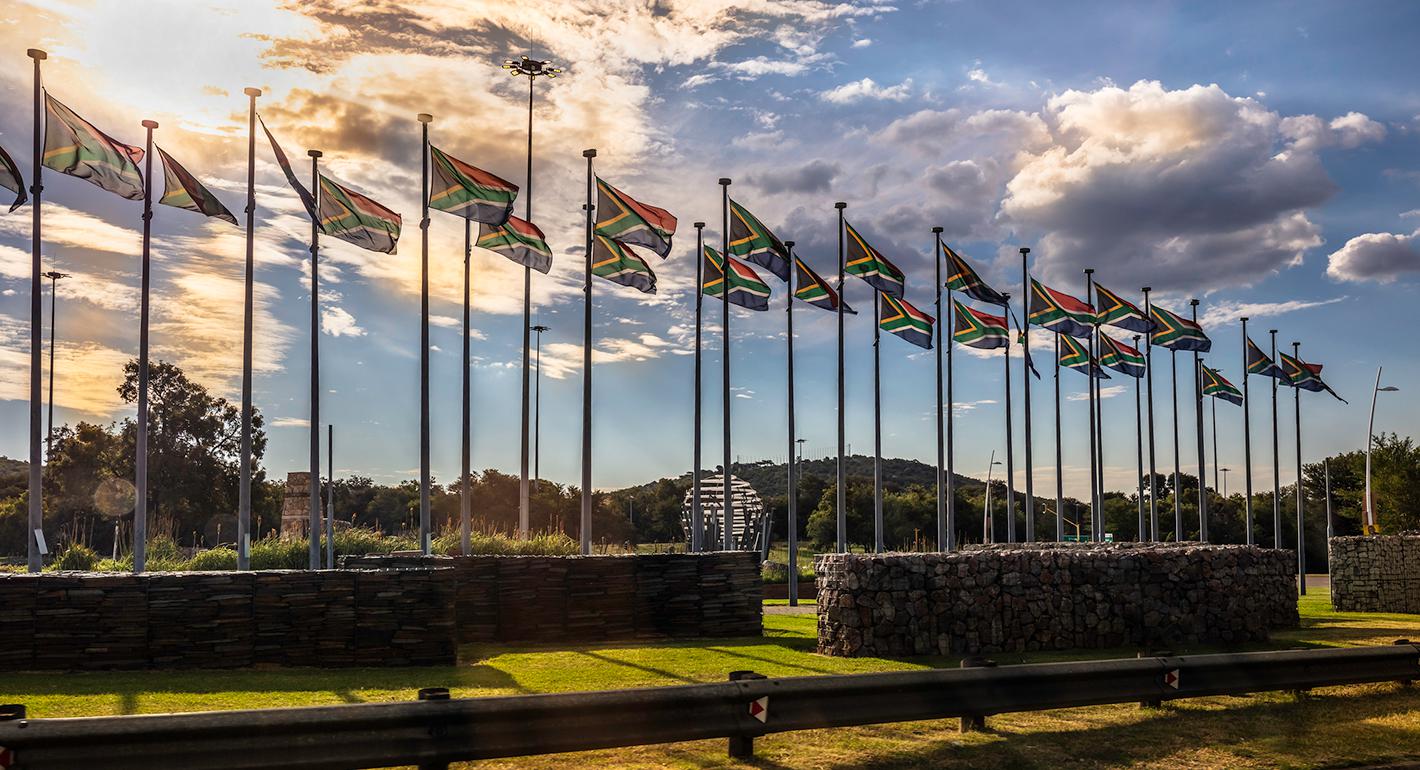
South Africa wants a more multipolar world order where developing countries have more influence. It therefore views counterweights to U.S. power, including China and Russia, as friends rather than enemies.
This article, which examines South Africa’s approach to Ukraine and China, is part of an ongoing series on U.S. statecraft and the Global South developed by the Carnegie Endowment’s American Statecraft Program. For other articles in the series, click here.

With Africa’s most industrialized economy, natural resource endowments, investments in other African countries, and diplomatic clout, South Africa is a clear leader on the continent. Its triumph over apartheid gives Pretoria moral authority and leads it to advocate for an international order in which developing countries can be more clearly heard. It thus values the rise of BRICS and other possible alternatives to Western power, including Beijing and Moscow. This has caused tensions with the United States over Ukraine and featured an open row over South Africa’s alleged support for Russia’s war machine in 2023. Pretoria is steadfast in staying at least nominally non-aligned with any great power, even as BRICS, which is increasingly seen as a challenger to the West, remains a cornerstone of its foreign policy.

In May 2023, the United States and South Africa weathered a diplomatic storm when U.S. Ambassador Reuben Brigety accused Pretoria of supplying weapons to Moscow.1 The White House was reportedly displeased that Brigety had made the accusation public, risking long-term damage to the U.S.–South Africa relationship over an uncertain judgment.2 South Africa launched an independent inquiry and found no evidence of the weapons transfer.3 Washington and Pretoria appear to have moved past the crisis, but a deep division over Ukraine remains.
The ambassador’s accusation came on the heels of the one-year anniversary of Ukraine’s invasion, during which South Africa hosted the Russian and Chinese navies to perform drills off of its east coast.4 When pressed about the military exercises, Foreign Minister Naledi Pandor said that “all countries conduct military exercises with friends worldwide.”5 But U.S. officials pointed out that on the eve of the war’s one-year anniversary, the image of Russian warships in South African waters bearing the symbols “V” and “Z” was bad optics for Pretoria.6
South African officials do not see the war in Ukraine in the same light as their Western counterparts. Pretoria has described its stance on the war as “actively non-aligned,”7 has refused to join the Western coalition against Russia and has abstained on every Ukraine-related resolution adopted by the UN General Assembly. South Africa’s President Cyril Ramaphosa said that although his country could not “condone the use of force and violation of international law,” it would not take “a very adversarial stance against Russia.”8 This makes South Africa more friendly to Russia than most other emerging powers, including Brazil, Indonesia, and Nigeria, all of which have condemned the invasion at the UN in some way.
South Africa’s ruling party, the African National Congress (ANC), has historical ties to Moscow, which date back to the Cold War when the Soviet Union supported its anti-apartheid struggle. These ties underpin the ANC’s good relations with Russia to this day. Pretoria remembers that during the Cold War, Washington not only designated the ANC as a terrorist organization but also refused to impose sanctions against the apartheid government until 1986—much later than many other important states.9 Beyond respect for its historical ties to Russia, South Africa’s membership in BRICS also encourages friendly relations with the Kremlin.
Despite its positive relationship with Moscow, South Africa has recently tried to change the perception that it has taken Russia’s side in the war.10 Pretoria may in fact be growing more skeptical of Russia’s claims that it is the victim of NATO aggression. In June 2023, South Africa led a seven-nation African peace delegation to Ukraine and Russia—a trip that, although unsuccessful, marked the first time African leaders proposed a peace mission beyond their continent.11 After the trip, Ramaphosa said that any postwar settlement had to protect both sides’ territorial integrity—a clear shift from South Africa’s earlier refusal to call for a Russian withdrawal from Ukraine.12

In July 2023, Ramaphosa unveiled a new Huawei Innovation Center in Johannesburg, which he said would help Africa “leapfrog into the Fourth Industrial Revolution.”13 Ramaphosa’s enthusiasm for Huawei follows his outspoken critique of the U.S. efforts to destroy the Chinese tech giant’s global footprint during Trump administration.14 Unsurprisingly, South Africa has refused to move in lockstep with the United States on China and is likely to resist pressure to do so.
When South Africa emerged from apartheid and formed a democracy in 1994, it committed to a foreign policy that would eschew great power rivalries and elevate the interests of the Global South.15 South Africa’s economic ties to both China and the United States also dissuade it from choosing a side. South Africa trades more with China than with any other country in the world. Trade with China makes up roughly 24 percent of its total trade in goods.16 Even so, it sends a sizable amount of its exports—around 11 percent—to the United States, where it has duty access for a wide range of sectors through the African Growth and Opportunity Act (AGOA).17
Facing rolling blackouts and an aging power grid, South Africa wants to reduce its heavy reliance on fossil fuels. Pretoria seeks both American and Chinese investment for those development needs. It is wary of antagonizing either China or the United States, given that both powers offer tangible economic benefits. The BRICS New Development Bank and the China Development Bank have provided substantial loans to South Africa's state power company Eskom.18 The United States has also pledged to help Pretoria accelerate its decarbonization, particularly in its power sector. For example, with the Just Energy Transition Partnership, the United States is working with France, Germany, the United Kingdom, and the EU to mobilize grants, loans, and investments for South Africa’s energy transition, starting with an initial commitment of $8.5 billion.19 Pretoria is wary of antagonizing either China or the United States, given that both powers offer tangible economic benefits.
South Africa’s BRICS membership is also a key factor in its approach to U.S.-China competition. Since its accession to BRICS in 2010 (by China's invitation), Pretoria has viewed its collaboration with China and other BRICS members as a means of promoting a more multipolar world order.20 As the smallest BRICS member—by economic size and population—it values having a seat at the table with larger powers. It can represent African interests this way.21 South African officials tout the group’s potential to build greater representation for developing nations in international forums and a fairer, more inclusive financial system.22 They have embraced the prospect of alternatives to the U.S. dollar, which they say could not only offset the pressure of Western sanctions but also provide “alternative financial arrangements" for developing countries.23 Because of the wide range of opportunities that South Africa sees in BRICS, it values its partnership with China and China’s role in the world order more generally.
Pretoria’s broader views on international order also affect its approach to geopolitical competition. For South Africans, an ideal world order would not be a return to the bipolarity of the Cold War, nor the unipolarity of the post–Cold War era, when they saw NATO sidestep the African Union and intervene in Libya in 2011 against their wishes.24 Instead, they would like to see multiple centers of power emerge in a system that offers more agency for less powerful, developing countries.25
Still, South Africa has insisted that it does not see BRICS as an anti-Western grouping,26 and the Biden administration has tried to avoid the appearance of pressuring Pretoria to join its rivalry against China. In August 2022, for example, during a trip to garner support for Ukraine, Secretary of State Antony Blinken promised that Washington will not dictate African states’ choices when it comes to great power competition.27
South Africa thus sees Russia and China as friends, rather than enemies, and it pursues cooperation with them on its own terms. It remains to be seen whether the U.S.-South Africa relationship will stand the test in spite of the two countries’ divergent visions for the future of the international order.
1 Nahal Toosi, “A U.S. Envoy’s Tongue-Lashing of South Africa Infuriates Foggy Bottom,” Politico, June 1, 2023, https://www.politico.com/news/2023/06/01/u-s-south-africa-ambassador-russia-00099604.
2 Ibid.
3 Olivia Kumwenda-mtambo, “South Africa Says Inquiry Found No Evidence of Arms Shipment to Russia,” Reuters, September 4, 2023, https://www.reuters.com/world/s-africa-says-inquiry-found-no-evidence-arms-shipment-russia-2023-09-03/.
5 Carien du Plessis, “South Africa Defends Planned Military Drills with Russia and China,” Reuters, January 23, 2023, https://www.reuters.com/world/africa/russias-lavrov-visits-ally-south-africa-amid-western-rivalry-2023-01-23/#:~:text=South%20Africa%20defends%20planned%20military%20drills%20with%20Russia%20and%20China,-By%20Carien%20du&text=PRETORIA%2C%20Jan%2023%20(Reuters),%22natural%20course%20of%20relations.%22.
6 Sarah Carter, “Russia, China and South Africa Start Military Drills Amid Ukraine War, but Russia Says No Hypersonic Missile Test,” CBS News, February 22, 2023, https://www.cbsnews.com/news/russia-china-south-africa-military-exercise-during-ukraine-war-no-hypersonic-missile-test/.
7 “South Africa is ‘Actively Non-Aligned’ on Ukraine War, Says Government,” Reuters, May 13, 2023, https://www.reuters.com/world/africa/south-africa-is-actively-non-aligned-ukraine-war-says-government-2023-05-13/.
8 Tim Cocks, “South Africa’s Ramaphosa Blames NATO for Russia’s War in Ukraine,” Reuters, March 18, 2022, https://www.reuters.com/world/africa/safricas-ramaphosa-blames-nato-russias-war-ukraine-2022-03-17/.
9 “The United Nations – Partner in the Struggle Against Apartheid,” United Nations, https://www.un.org/en/events/mandeladay/un_against_apartheid.shtml#:~:text=The%20Security%20Council%20adopts%20Resolution,mandatory%20on%204%20November%201977.
10 S’thembile Cele, “South Africa Shuns Pressure to Choose Sides in Ukraine,” Bloomberg, July 18, 2023, https://www.bloomberg.com/news/articles/2023-07-18/south-africa-shuns-pressure-to-take-sides-in-russia-ukraine-war?sref=QmOxnLFz.
11 Mayeni Jones, “Africa’s Ukraine-Russia Peace Mission: What Was Achieved?,” BBC News, June 19, 2023, https://www.bbc.com/news/world-africa-65951350.
12 Peter Fabricius, “’Simplistic and Infantile’ to Demand Russia’s Withdrawal From Ukraine, Says Pandor After Meeting Lavrov,” Daily Maverick, January 23, 2023, https://www.dailymaverick.co.za/article/2023-01-23-simplistic-and-infantile-to-demand-russias-withdrawal-from-ukraine-says-pandor-after-meeting-lavrov/ ; The Presidency, Republic of South Africa, "From the Desk of the President - Monday, 19 June 2023," https://www.thepresidency.gov.za/from-the-desk-of-the-president/desk-president-monday%2C-19-june-2023.
13 Kate Bartlett, “China’s Huawei Launches Innovation Center in South Africa,” Voice of America, July 13, 2023, https://www.voanews.com/a/china-s-huawei-launches-innovation-center-in-south-africa/7179836.html.
14 Jan Croje, “Ramaphosa Says US ‘Clearly Jealous’ of Huawei,” News24, July 5, 2019, https://www.news24.com/fin24/ramaphosa-says-us-clearly-jealous-of-huawei-20190705.
15 African National Congress, “Foreign Policy in a New Democratic South Africa: Discussion Paper,” https://www.africa.upenn.edu/Govern_Political/Anc_const_news.html.
16 UN Comtrade Database, https://comtradeplus.un.org/.
17 World Bank, https://wits.worldbank.org/CountrySnapshot/en/ZAF.
18 “Project Finance Facility for Eskom,” New Development Bank, https://www.ndb.int/project/project-finance-facility-for-eskom/#tabbed-standard.
19 “The United States and the Republic of South Africa,” Department of State, Office of the Spokesperson, August 8, 2022, https://www.state.gov/the-united-states-and-the-republic-of-south-africa/#:~:text=Bilateral%20Economic%20Relations,Africa%20as%20a%20regional%20headquarters.
20 Cynthia Roberts, Leslie Elliot Armijo, and Saori N. Katada, The BRICS and Collective Financial Statecraft, 158; Elliot Smith, "Russia, South Africa and a 'Redesigned Global Order': The Kremlin's Hearts and Minds Machine is Steaming Ahead," CNBC, January 26, 2023, https://www.cnbc.com/2023/01/26/russia-south-africa-and-a-redesigned-global-order.html.
21 Oliver Stuenkel, The BRICS and the Future of Global Order, second ed. (Lanham: Lexington Books, 2020), 67.
22 Laura Zhou, “South Africa Courts Chinese Investment Ahead of BRICS Summit,” South China Morning Post, July 13, 2023, https://www.scmp.com/news/china/diplomacy/article/3227579/south-africa-courts-chinese-investment-ahead-brics-summit.
23 Ibid.
24 Alex de Waal, “African Roles in the Libyan Conflict of 2011,” International Affairs 89, no. 2 (March 2013), https://www.jstor.org/stable/23473541?seq=14.
25 Thabiso Goba, “Brics Growth Evidence of ‘Multipolarity’ of the Times, Says Ramaphosa,” Eyewitness News, August 20, 2023, https://ewn.co.za/2023/08/20/president-ramaphosa-trumps-sa-as-epicentre-of-multi-polo-era.
26 S’thembile Cele, “BRICS Expansion Isn’t Aimed at Countering the West, South African Official Says,” Bloomberg, August 7, 2023, https://www.bloomberg.com/news/articles/2023-08-07/brics-expansion-isn-t-aimed-at-countering-the-west-south-african-official-says?sref=QmOxnLFz.
27 David Brunnstrom and Tim Cocks, “U.S Will not Dictate Africa’s Choices, Blinken Says,” Reuters, August 8, 2022, https://www.reuters.com/world/us-africa-strategy-stresses-china-russia-threats-2022-08-08/ ; “Blinken in South Africa to Seek Support over Russia-Ukraine War,” Politico, August 7, 2022, https://www.politico.com/news/2022/08/07/blinken-south-africa-apartheid-russia-00050231.
Senior Fellow and Director, American Statecraft Program
Christopher S. Chivvis is the director of the American Statecraft Program at the Carnegie Endowment for International Peace.
Former Director, Africa Program
Zainab Usman was a senior fellow and the inaugural director of the Africa Program at the Carnegie Endowment for International Peace.

Beatrix Geaghan‑Breiner
Former Research Analyst, American Statecraft Program
Beatrix Geaghan-Breiner was a research analyst with the American Statecraft Program at Carnegie.
Carnegie India does not take institutional positions on public policy issues; the views represented herein are those of the author(s) and do not necessarily reflect the views of Carnegie, its staff, or its trustees.

This piece argues that India’s central challenge is not managing a single flashpoint but resolving the underlying tension between expansion and institutional coherency of the BRICS grouping.

Vrinda Sahai

A partnership between India, a country of subcontinental size, and Africa, a continent of fifty-four countries, may seem asymmetric until one notes that both are home to nearly the same number of people—1.4 billion. This essay spells out the existing challenges to the partnership, its optimal potential, and the possible pathways to realize it over the next quarter-century.

Rajiv Bhatia

The U.S.–India semiconductor cooperation story is well-stocked with top-level strategic intent. What remains unresolved, however, are some underlying challenges that will determine whether the cooperation actually functions. Three such friction points stand out.

Shruti Mittal

The India–EU Free Trade Agreement (FTA) is shaping up to be one of the most consequential trade negotiations, both economically and strategically. But, what’s in the agreement, what’s missing, and what will determine its success in the years ahead
Vrinda Sahai, Nicolas Köhler-Suzuki

Trump 2.0 has unsettled India’s external environment—but has not overturned its foreign policy strategy, which continues to rely on diversification, hedging, and calibrated partnerships across a fractured order.



Milan Vaishnav, ed., Sameer Lalwani, Tanvi Madan, …