Japan’s security posture is intensively debated inside the country—and its security policy is, therefore, dynamic and evolving. This series of essays seeks to appreciate these dynamics from a Japanese perspective, harnessing in English the insights of leading Japanese scholars.
Introduction
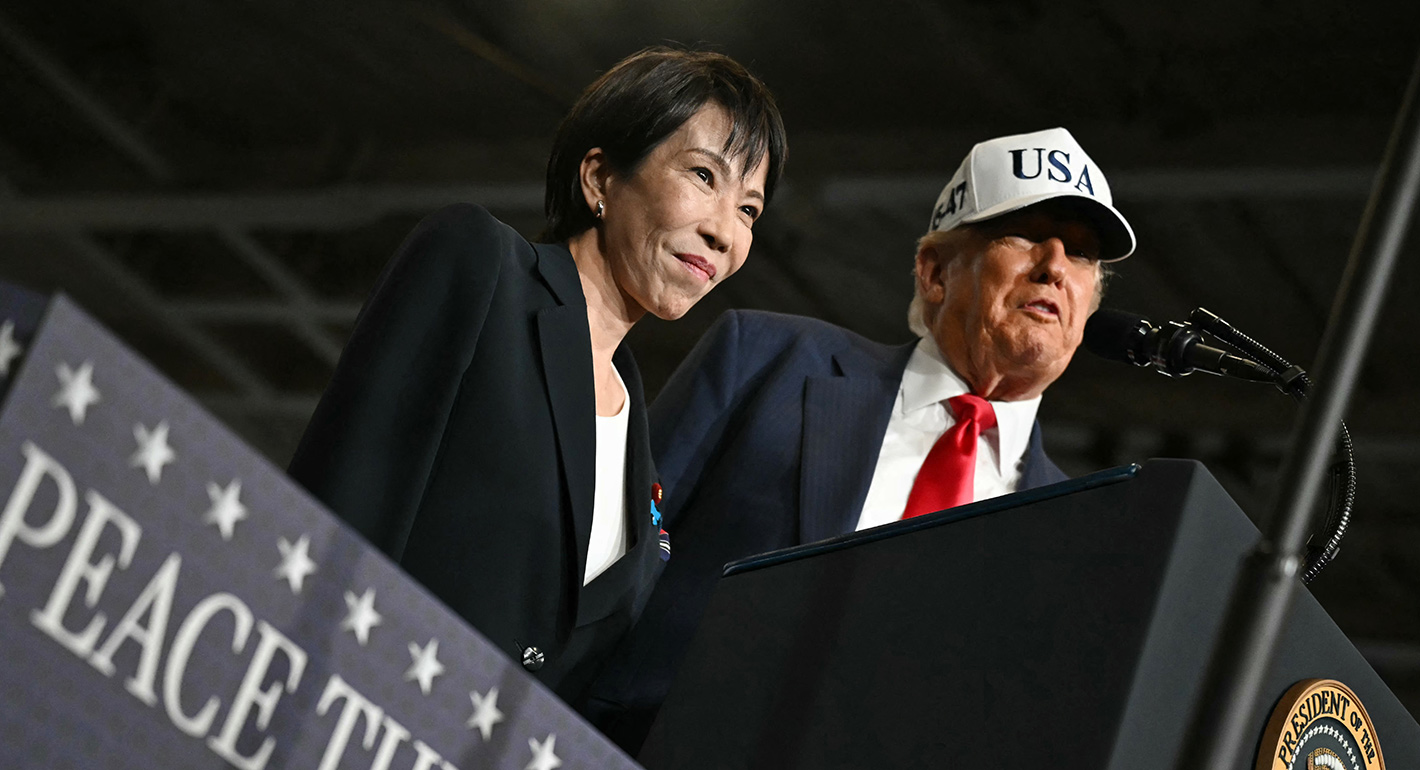
After the LDP’s landslide victory in the February 2026 election, Prime Minister Takaichi Sanae has gained strong political capital to advance a revised grand strategy for Japan’s security doctrine. She is likely to deepen the Free and Open Indo-Pacific strategy, expand Japan’s defense capabilities, and revise long-standing constraints such as the Three Non-Nuclear Principles and limits on arms exports. Yet the central challenge will not be political opposition. It will be Japan’s severe fiscal constraints, which may limit sustained defense expansion as the country has huge, long-term debts. While Takaichi is likely to pursue both quantitative and qualitative revisions to Japan’s security policy to strengthen the country in the medium and long terms, how she responds to U.S. President Donald Trump’s request to send naval assets to reopen the Strait of Hormuz will also be a major agenda for her security policy.
Takaichi’s Expanded Political Capital
In the general election held on February 8, 2026, the Liberal Democratic Party (LDP) won 316 seats, marking a historic landslide victory. Its coalition partner, the Japan Innovation Party (Ishin), secured thirty-six seats. Takaichi’s message—stimulating domestic investment and achieving economic growth through “responsible proactive fiscal policy”—received strong support from Japanese voters. The ruling coalition now holds 352 of the 465 seats in the House of Representatives, giving it a decisive advantage over the opposition.
The election result also altered the political balance surrounding security policy. Parties that were reluctant to revise Japan’s security posture held 202 seats in the House of Representatives prior to the election; that number has now fallen to fifty-nine. As a result, debates over Japan’s grand strategy and security policy in the National Diet of Japan (Diet) are likely to be advantageous for Takaichi.
Takaichi is expected to “strategically evolve” the Free and Open Indo-Pacific (FOIP). While maintaining close security and economic cooperation with the United States as the central pillar of Japan’s strategy, she is likely to expand cooperation with other partners in three areas. First, she is likely to deepen collaboration among like-minded countries in the Indo-Pacific and beyond to strengthen economic security. Second, she is expected to promote economic cooperation, including infrastructure development and the expansion of free trade. Third, she is likely to expand regional security cooperation through mechanisms such as Official Security Assistance, a new program introduced in 2023 to provide “equipment and supplies” to enhance the security capabilities of like-minded countries.
With a strong political mandate, Takaichi may further advance Japan’s postwar security policy both qualitatively and quantitatively. In particular, she may loosen several long-standing constraints on Japan’s security posture, including the Three Non-Nuclear Principles and the operational guidelines governing the transfer of defense equipment and technology among other countries. Yet amid a deteriorating international environment, the key question is whether Japan can overcome the fiscal constraints that limit further expansion of defense spending.
Japan’s Traditionally Restrained Security Posture
Takaichi on the campaign trail made fundamentally strengthening Japan’s security policy a core policy goal; but to revise Japan’s security policy, Takaichi will have to navigate historical precedents that have been obstacles to prior administrations.
For much of the postwar era, successive Japanese governments were reluctant to have Japan play an active role in international security. Article 9 of the Japanese Constitution states that “land, sea, and air forces, as well as other war potential, will never be maintained.” For a long time, administrations interpreted this provision to mean that the Japan Self-Defense Forces (SDF) could only be mobilized when Japan itself came under direct attack. As a result, the SDF was rarely deployed abroad.
Public opinion largely supported this restrained approach. Midcentury, many Japanese citizens had painful memories of World War II and remained wary of an expanded military role in both domestic and international politics. Japanese administrations therefore adopted cautious positions on related issues, including nuclear weapons and arms exports. In 1967, then prime minister Sato Eisaku announced the Three Non-Nuclear Principles, committing Japan to “not possessing, not producing, and not permitting the introduction of nuclear weapons.” In 1976, Miki Takeo’s administration further confirmed that Japan would refrain from exporting arms in principle and constrained the government for more than twenty years.
Over time, however, successive administrations gradually revised this restrained security posture. For example, in 1983, Nakasone Yasuhiro’s administration permitted the transfer of certain defense technologies to the United States as an exception to the rule on exporting arms set by the Miki administration. After the end of the Cold War, administrations further expanded the circumstances under which the SDF could be deployed abroad. In 1992, Japan dispatched the SDF for United Nations peacekeeping operations for the first time. In 1999, Obuchi Keizō’s administration enacted legislation allowing the SDF to provide rear-area support to U.S. forces during contingencies in areas surrounding Japan. In 2001, Koizumi Junichiro’s administration deployed the SDF to the Indian Ocean to provide logistical support for multinational operations engaged in the War on Terror.
China’s Rise and the Changing Strategic Environment
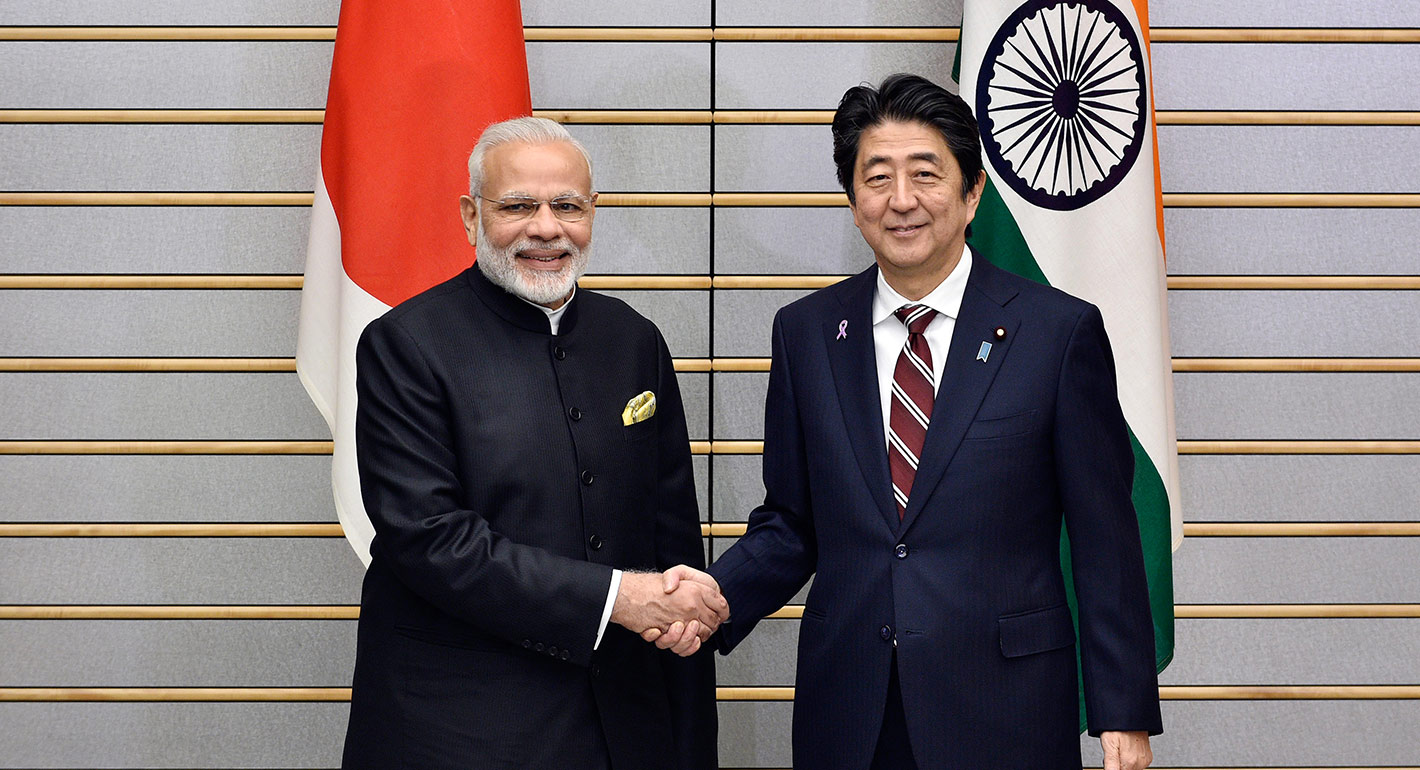
Abe Shinzo’s second administration, which came to power in 2012, formulated an even more proactive security posture while launching the Free and Open Indo-Pacific as a grand strategy combining security policies and economic policies. Japan’s launch of a grand strategy and shift in security policy has been driven largely by changes in the regional strategic environment over the past two decades.
The most significant development has been China’s rapid rise, both economically and militarily. With its growing economic power, China launched the Belt and Road Initiative (BRI) in 2013 to deepen economic and strategic ties across the globe. At the same time, China’s expanding military capabilities have enabled it to project power across East Asia.
In the South China Sea, China has expanded its presence around the Spratly Islands since the 1980s. Since the 2010s, it has reclaimed reefs, built artificial islands, constructed runways, and deployed fighter aircraft, effectively militarizing several outposts.
China has also increased pressure on Japan around the Senkaku Islands. The Japanese government transferred ownership of the islands from private owners to the state in 2012, and the Chinese government has regularly sailed vessels within the contiguous zone and repeatedly entering Japan’s territorial waters.
Pressure on Taiwan has also intensified. China’s 2005 Anti-Secession Law states that the government may employ “non-peaceful means” if peaceful reunification becomes impossible. Tensions escalated in August 2022, when China conducted large-scale military exercises around Taiwan following the visit of then U.S. speaker of the house Nancy Pelosi. These exercises simulated blockade operations and strikes on ground and air targets. China continued to carry out similar exercises through December 2025. Subsequently, in his report to the Communist Party Congress in 2022, Chinese President Xi Jinping reiterated that China would seek peaceful reunification but would “reserve the option of taking all measures necessary.” His report to the 2017 Party Congress did not explicitly refer to the use of force, making the 2022 language a notable escalation.
The Launch of the Free and Open Indo-Pacific
China’s rise has changed the strategic environment in East Asia and necessitated Japan’s development of a broader grand strategy centered on FOIP. Abe introduced FOIP in 2016 as a strategic framework linking economic collaboration and security cooperation across the Indo-Pacific region.
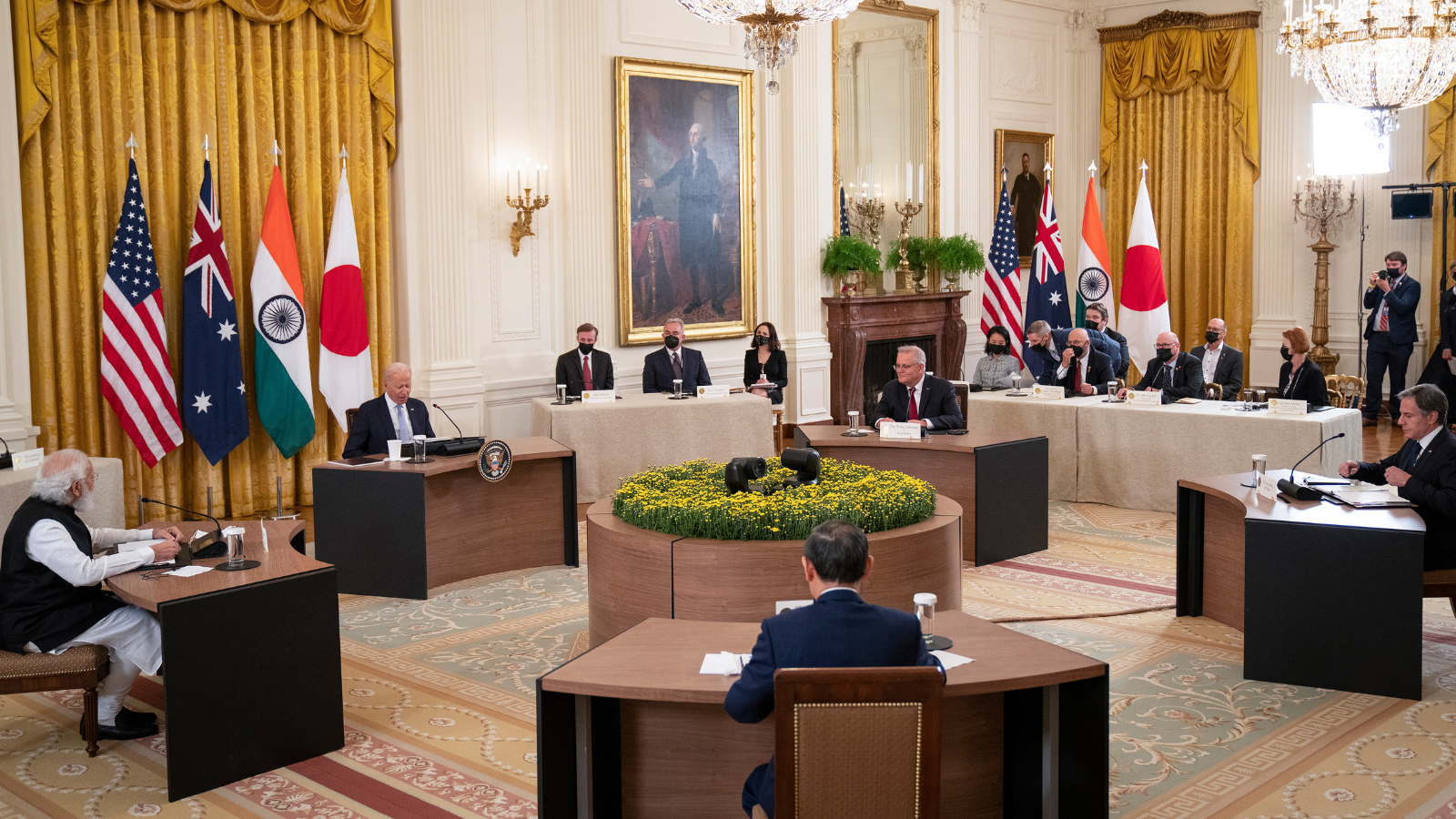
Economic cooperation under FOIP has focused on two pillars: expanding free trade and supporting infrastructure development. Security cooperation has also evolved along two lines. One involves expanding cooperation between Japan’s SDF and the militaries of countries such as Australia, India, along with the United States. The other involves strengthening cooperation between the Japan Coast Guard and the coast guards of Southeast and South Asian countries.
Changes in the strategic environment also prompted Japan to revise long-standing legal constraints. After revising the constitutional interpretation on the right of collective defense in 2014, in 2015, the Abe administration enacted a package of security legislation enabling Japan, under certain conditions, to exercise the right of collective self-defense and allowing the SDF to protect the militaries of the United States and other partners.
Expanding Defense Capabilities
Kishida Fumio’s administration further expanded Japan’s defense policy. In December 2022, the administration adopted three key security documents: the National Security Strategy, the National Defense Strategy, and the Defense Buildup Program.
These documents introduced both qualitative and quantitative changes. Qualitatively, the administration declared that Japan would acquire counterstrike capabilities to respond to armed attacks. This included plans to deploy the enhanced Type-12 surface-to-ship missile and acquire Tomahawk cruise missiles by fiscal year 2027.
Quantitatively, the administration committed to increasing security-related spending from roughly 1 percent of GDP to 2 percent of GDP. Defense spending was projected to rise from 5.2 trillion Japanese Yen (¥) in fiscal year 2022 to ¥8.9 trillion by fiscal year 2027.
Kishida and his successor Ishiba Shigeru continued this expansion. In January 2024, Japan signed a contract with the United States to purchase up to 400 Tomahawk missiles. In May 2025, the Ishiba administration later announced the deployment of enhanced Type-12 missiles with a range of roughly 1,000 kilometers during fiscal year 2025.
A Prime Minister–Dominant Governance Style
After the general election, Takaichi is likely to consolidate a “prime minister–dominant” governance model. Institutional reforms since the 1990s have strengthened the authority of the prime minister in Japanese policymaking. The electoral reform of 1994 increased the prime minister’s influence by allowing the prime minister to overrule party backbenchers while creating combined single-member districts and proportional representation. Administrative reforms in 2001 further strengthened the prime minister’s authority within the government by revising the Cabinet Law to provide the prime minister with the legal authority to initiate policies under his or her direct supervision. And the creation of the National Security Council in 2013 also centralized the prime minister’s ability to direct security policy.
At the same time, factional politics within the LDP have weakened significantly. Factions historically constrained the prime minister’s policymaking authority, but most have dissolved in 2024 following political scandals. Taken together, the landslide electoral victory, decline of factional influence, and gradual strengthening of the authority of the prime minister give Takaichi greater autonomy to maneuver the ruling party.
Expansion of the Defense Budget
Takaichi is likely to advance FOIP as Japan’s grand strategy. Over the past two decades, Japanese administrations have expanded security cooperation with countries such as Australia and India, and these partnerships have become a key component of FOIP. Ties with the Philippines have also deepened in recent years. While the Japanese government has never officially acknowledged it, one major objective of this expanded cooperation has been to counterbalance China’s rise. Takaichi is likely to follow this approach.
Along with pursuing FOIP, Takaichi is also likely to revise Japan’s security policies. Shortly after taking office, she committed herself to fundamentally changing Japan’s security policy. The 2022 National Security Strategy envisaged a revision in about a decade; nevertheless, she announced a plan to revise the three security documents—including the National Security Strategy—in 2026, which suggests that she considers 2022 National Security Strategy to be outdated to cope with changing international environment.
Achieving a fundamental strengthening involves both quantitative and qualitative challenges. Quantitatively, the prime minister is likely to continue expanding defense spending. The defense budget in the initial FY2026 budget is about ¥9 trillion, which is above the goal set by the Defense Buildup Program of 2022. How far it will be increased, however, remains a key question. In January this year, the United States issued its own National Defense Strategy that urges allies to raise security-related spending to 5 percent of GDP and “core” military spending to 3.5 percent of GDP. If, taking U.S. expectations into account, Takaichi were to aim—ten years from now, in the FY2036 budget—for “core” defense spending equal to 3.5 percent of GDP, then with Japan’s nominal GDP in 2025 at roughly ¥630 trillion, 3.5 percent would amount to about ¥22 trillion. The expansion of Japan’s defense budget will be an important issue in the upcoming US-Japan summit meeting.
The Three Non-Nuclear Principles
In addition to the expansion of the defense budget, qualitatively, there are three major issues around possible revisions to Japan’s security policy by Takaichi. The first concerns the Three Non-Nuclear Principles. Since former prime minister Sato Eisaku stated to the Diet in December 1967 that Japan would “not possess, not produce, and not permit the introduction of nuclear weapons,” successive administrations have upheld these principles. However, Takaichi has long argued that the “no introduction” principle should be reconsidered. In March 2022, she expressed doubts on a television program, asking whether Japan can truly be protected if, in a crisis threatening public safety, it would neither allow port calls nor refueling by U.S. vessels carrying nuclear weapons—and would even prohibit passage through territorial waters. In a book she edited and published in 2024, she more specifically criticized the idea that Japan can still maintain the “no introduction” principle as “not realistic” while relying on U.S. extended deterrence. During the election campaign, when asked whether she would consider revising the Three Non-Nuclear Principles, she replied that she could not answer as the work was underway, stopping short of clearly committing to maintaining the principles. It is therefore possible that the prime minister will adopt a policy that permits the introduction of nuclear weapons.
Next Generation Propulsion
The second issue is the acquisition of submarines powered by “next-generation propulsion.” Here, the coalition agreement between the LDP and the Japan Innovation Party is particularly noteworthy. When the LDP and the Japan Innovation Party agreed last October to form a coalition cabinet, the policy document accompanying that agreement included a commitment to promote policies related to “acquiring vertical launch system (VLS)-equipped submarines utilizing next-generation propulsion.” Nuclear power is naturally implied as a candidate for such propulsion, and Defense Minister Shinjiro Koizumi has already mentioned the need to debate the acquisition of nuclear-powered submarines. In an interview published in December 2025 by Yomiuri Shimbun, when asked whether she would consider introducing nuclear-powered submarines, the prime minister replied that it had not been decided what “next-generation propulsion” would be and stated only that she would not rule out any options but would consider measures necessary to improve deterrence and response capabilities. Given strong public antipathy toward nuclear weapons in Japan, even the introduction of nuclear propulsion—short of weaponization—is likely to encounter significant domestic political resistance.
Defense Equipment Transfer
The third issue concerns revising the constraints imposed by the so-called “five categories” governing defense equipment transfers—that is, arms exports. Japan has long maintained various restrictions on arms exports since the Miki administration has imposed the strict restrictions as described earlier. In 2014, the Abe administration established the Three Principles on the Transfer of Defense Equipment and Technology and their implementation guidelines. Under these guidelines, exports to countries with security cooperation relationships have been allowed only for defense equipment intended for the five categories of purposes—search and rescue, transportation, warning, surveillance, and minesweeping. In other words, Japan has not permitted the export of weapons with offensive characteristics or lethal capabilities. In the general election, the LDP pledged to “abolish the five-category restriction” in the implementation guidelines. It is very probable that the LDP seeks the removal of this restriction for two main reasons. First, it hampers the growth of Japan’s defense industry by preventing firms from exporting equipment with offensive capabilities to global markets. Second, it constrains Japan’s ability to deepen security ties with like-minded partners.
Political Opportunity and Fiscal Constraints
If Takaichi moves forward on these issues, Japan’s postwar security framework could change significantly. She enjoys a strong power base in the House of Representatives. While the ruling LDP coalition does not hold a majority in the House of Councilors, the upper house, none of these policy changes necessarily requires new legislation.
As a result, the political barriers to revising long-standing policy constraints appears relatively low. The more difficult challenge lies in sustaining a large expansion of defense spending. As mentioned earlier, if Japan were to the increase defense budget from ¥9 trillion to possible ¥22 trillion in ten years, it would require a long-term financial commitment.
Yet Japan’s fiscal position is extremely strained. Public debt stands at roughly 230 percent of GDP, the highest among the G7 countries. In the fiscal year 2025 budget, approximately one-quarter of government spending is financed through government bonds.
Under these circumstances, securing stable fiscal resources for sustained defense expansion will be extremely difficult. While higher taxation may ultimately be unavoidable, it would be politically challenging. Furthermore, the prime minister is eager to reduce the consumption tax rate on food to zero percent, which would likely reduce government revenue by roughly ¥5 trillion yen.
Conclusion
Japan now stands at a potential turning point in its postwar security policy. Takaichi’s landslide electoral victory has given her unusual political capital and reduced domestic resistance to revising long-standing constraints on Japan’s security posture. At the same time, China’s growing military capabilities and the increasingly uncertain regional environment justifies a more proactive security doctrine.
Yet the decisive constraint is likely to be fiscal rather than political. Expanding Japan’s defense capabilities to the levels previously mentioned would require sustained increases in defense spending over many years. Whether Japan can establish a stable fiscal foundation for such expansion will ultimately determine how far the government can translate strategic ambition into military capability.
In that sense, Japan’s fiscal condition is no longer merely an economic concern—it has become a national security issue.
While Takaichi is likely to pursue both quantitative and qualitative revisions to Japan’s security policy to strengthen the country’s medium- and long-term security, she has suddenly been confronted with a serious challenge following the outbreak of the Iran war in early February. On March 14, President Donald Trump called on Japan, along with other U.S. allies and even China, to send vessels to the Strait of Hormuz. As Iran currently blockades the strait, in essence Trump is asking Japan and others to deploy naval assets in coordination with the United States to reopen it. Takaichi has so far shown reluctance to dispatch Japanese vessels to the area. Nevertheless, it is almost certain that any potential deployment of SDF assets will become a key issue at the impending U.S.-Japan summit. How Japan responds to this request is likely to be a major security issue in the months ahead.