

Commentary
Michael Young
{
  "authors": [
    "Michael Young"
  ],
  "type": "commentary",
  "blog": "Diwan",
  "centerAffiliationAll": "",
  "centers": [
    "Carnegie Endowment for International Peace",
    "Malcolm H. Kerr Carnegie Middle East Center"
  ],
  "englishNewsletterAll": "",
  "nonEnglishNewsletterAll": "",
  "primaryCenter": "Malcolm H. Kerr Carnegie Middle East Center",
  "programAffiliation": "",
  "regions": [
    "United States"
  ]
}
Source: Getty
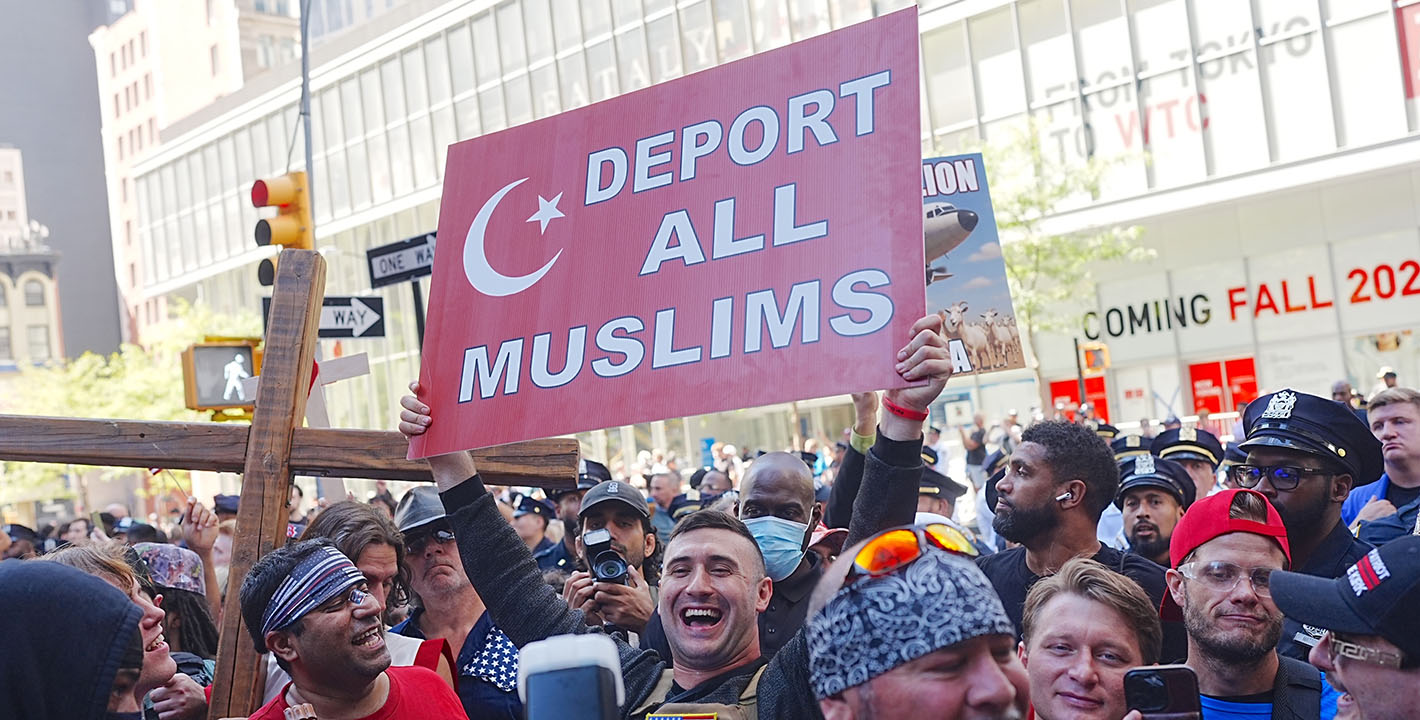
In an interview, Rozina Ali discusses her new book on the rise and manifestations of Islamophobia in the United States.
Rozina Ali is a journalist and contributing writer at the New York Times Magazine, and a fellow at Type Media Center. She is a past fellow at New America and the Cullman Center for Scholars and Writers. She was previously a senior editor at the Cairo Review of Global Affairs. She is author of the recently published Seasons of Fury: Four Families and the Rise of Islamophobia (Penguin Random House, 2026), which was longlisted for the 2026 National Book Award. Diwan interviewed Ali in early October to discuss her new book.
Michael Young: How widespread is Islamophobia in the United States? You conclude your book by writing, “The truth is that it is here,” before adding that it is one story of America. However, you also say there is another story. Can you elaborate?
Rozina Ali: First, I should explain that I wrote this book in part to prove that anti-Muslim discrimination exists in the United States—many Americans do not recognize it to be the case or they believe it to be a fabricated charge. The fact of anti-Muslim prejudice is necessary to establish alongside explaining how and why it has grown worse over the past decades, which is why I concluded with the line “the truth is that it is here.” It’s also true that Islamophobia is worse than in the past. The vitriol directed against Muslims and Islam by senior policymakers (including from the president) and commentators is at a level I’ve never witnessed before.
That said, the United States is a vast place, physically and politically. In New York, for example, the anti-Muslim messaging that was lobbed against Zohran Mamdani failed to scare voters. Though such bigotry continues, he maintains impressive levels of popularity. In Michigan, too, we are seeing that similar anti-Muslim rhetoric has not captured the attention of a wide base of American voters as it did in the past. This is not just because of a Mamdani effect, but a result of an amalgam of shifts over the past several decades: Muslims rising in political and public spheres; growing disillusionment among the American public with their policymakers; and a willingness among Americans to be critical, and hear criticism, of U.S. foreign policy. As I argue in my book, widespread Islamophobia has mutated and is a result of decisions we’ve made along the way. This also means it does not have to be a perennial problem in American society.
MY: How do your personal experiences as a Muslim American feed into your book?
RA: A reader of my book may notice that I hardly show up in the narrative—I make an appearance only a few times through its pages, because I tried to approach the reporting of this book as an investigative journalist. But I also would have done a disservice to my readers by ignoring my background. It was important to establish at the beginning that being Muslim American has informed my political understanding of the United States and my place in it, and why I ultimately embarked on this project. Still, the entire book is shaped by my knowledge that Muslim Americans have different ways of practicing religion, and also that faith informs their political interpretation of the world in wildly varying ways. This fluency allowed me to challenge American assumptions about Muslims as I interrogated the U.S. counterterrorism surveillance apparatus, the ways in which terrorism cases were litigated in the courtroom, or how policymakers and the public discussed Islam.
MY: You open the book with a discussion of Abdeen Jabara, one of the early representatives of the Arab American community, and his surveillance by the government. Do you make a distinction between Islamophobia and what we can call Arabophobia? In other words, did official suspicion morph over time from one directed against Arabs, largely for political reasons, into suspicion of Muslims, because of a conviction, no matter how fallacious, that it is the Muslim religion itself that made them a risk?
RA: There’s a tendency in the United States to categorize discrimination into groups, which is probably reinforced by how we collect and measure hate crime data. The reality is more complex. Islamophobia and Arabophobia can be distinct, but they also intersect, and certainly do so in the minds of people who see Arabs and Muslims as related. Most Americans, I garner, still do not know that many Arabs are not Muslims; and that most Muslims are not Arabs. That was true of many in law enforcement as well.
That said, the through-line between official discrimination against Arabs and that against Muslims is that both groups were viewed as a national security threat, with ties to foreign militant groups. Official suspicion expanded from a targeted monitoring of Arabs in the 1970s and 1980s, to Muslims more broadly in the 1990s, for various reasons, including that more non-Arab Muslims were moving to the United States, political Islam was on the rise in parts of the world, and the U.S. government began to view Islamic terrorism as its prime enemy after the fall of the Soviet Union. By September 2001, suspicion and monitoring of Muslim communities in the United States had already been underway for years.
MY: Can you describe the period after 9/11 and how the government dealt with Muslims in the United States? What are the main takeaways from this period, and has the situation since then changed substantially?
RA: Most people recall that George W. Bush showed public support for Muslims in the days after 9/11, visiting a mosque and stating that “Islam is peace.” But even as he said so, the government was targeting the Muslim population in dramatic ways. Perhaps one of the most effective tools they used was instituting immigration policies to detain and deport thousands of Muslims. There were many in the government who sought to work with Muslim communities and bring them into the fold in the fight against terrorism. At the urging of several officials, the Department of Justice established a hotline to help Muslim Americans who were facing harassment and assault. But for the most part, the government treated Muslim communities as pockets of suspicion, for example observing mosques and Islamic centers and restaurants, and also surveilling phone and email conversations of not just immigrant Muslims, but also those who were citizens or working with the government.
What we’ve seen is that some of the crude tactics used in the initial period after 9/11—such as mass surveillance or the creation of a national registry of “non-immigrant aliens”—have been phased out, in part because of litigation against such monitoring in recent years, or because such methods are no longer necessary. Today, the government’s surveillance network is more sophisticated than after 9/11. However, what is also chilling is that it’s not just the government doing the monitoring, but more groups and private citizens doing the same.
The flip side to this is that there appears to be a small appetite among the broader public for mass policies directed against Muslims, especially as distrust in the federal government deepens and more voices call for an end to the Immigration and Customs Enforcement agency. As Islamophobic voices grow louder, so do those of people opposed to the government’s heavy hand when it comes to immigration and national security measures.
MY: As we look around, we can see that attitudes toward Israel are shifting in the United States. Do you anticipate that this development will simultaneously have an impact on how the American public views Muslims in the country?
RA: The shift in attitude toward Israel is absolutely significant. This is coupled with a broader willingness to critique U.S. foreign policy and its greater war on terror. I think it has become harder to sell the narrative that a Muslim militant who attacks the United States does so simply because he or she is evil. That Mamdani won while critiquing Israel so strongly and regularly is significant. But translating this change to broader public perceptions of Islam and Muslims will be gradual. Muslims are a remarkably small percentage of the American population–about 1.5 percent or so–and most Americans have become accustomed to a certain narrative of Islam and Muslims that has been repeated for thirty years.
MY: One of the themes you examine through your portraits of individual Muslims is the fact that some of them sought to build mosques in their localities. Yet this frequently generated pushback from local communities. In a country in which freedom of religion is regarded as a bedrock principle, why was there a Muslim exception in this regard, and what were the consequences of this?
RA: It’s difficult here not to think of Edward Said’s Orientalism. What I found in my reporting is that there has been an underlying notion in government and among the public that Muslims are too foreign to be American, and that they will bring with them nefarious foreign influence, both in terms of money and ideology. One of the long-term suspicions of Islamic institutions in the United States has been the fear of foreign funding—specifically Arab money. Critics are not entirely wrong: Saudi Arabia, Qatar, the United Arab Emirates and others were funding mosques in the United States before 9/11. The irony, of course, is that Gulf money now is invested in so many different parts of American life, from banks to universities to agriculture. Additionally, much of the government’s counterterrorism work during the 1990s—and which was ramped up after 2001—was focused on identifying financing for terrorist networks, and law enforcement often times targeted Islamic institutions. Much of the pushback against mosque proposals that we saw at the local level borrowed from both older and newer theories of possible Islamic terrorism threats, such as financing, radicalizing ideology, and secret intentions of Muslims. The main theme of the accusations was that Muslims would somehow corrupt the moral and cultural fabric of the United States—which both misunderstands how the religion is practiced and, also, how society works.
Of course, there were efforts in courts to challenge rejections of mosque proposals, but such efforts were piecemeal: One might win a case in one city, but lose in another. The result is that on the whole, we’ve not come to a cultural and political consensus as a country about whether Islam belongs in America. Just look at efforts to ban visible expressions of Islam in Texas.
MY: Another theme you address in describing the fate of one of your main characters is what I would call the Minority Report phenomenon, where Muslims were arrested not for crimes they had committed, but for crimes they might possibly have committed. How did the U.S. legal system justify such anticipatory behavior, which poses major legal problems?
RA: By chipping away at civil and constitutional rights under the banner of national security. Many of the laws and strategies that were used after 9/11 were already in place in the 1980s and 1990s, and 9/11 offered the opportunity to use them with full force. But perhaps most significantly, we were also operating under a new paradigm after September 11, 2001, namely that of prevention. There was an incredible amount of fear and uncertainty at that time, and law enforcement, government officials, prosecutors, courts, and the prison system were driven by a well-intentioned mission to prevent another attack. Government agencies were propped up and funded for the purpose of counterterrorism. They had to prove they were catching bad guys before they carried out an attack, while courts gave a lot of leeway to law enforcement and the executive branch to surveil and monitor communities who had no criminal ties. The result was that there were hundreds of cases of likely, if not outright, entrapment. Ultimately, we saw an erosion of checks and balances in the years after 9/11, and the effects have been lasting.
MY: Finally, what do you anticipate is necessary for Islamophobia to follow in the footsteps of another form of discrimination, namely antisemitism, and become a phenomenon widely condemned in the United States? After all, you have mainstream U.S. politicians and public figures regularly making abhorrent comments about Muslims.
RA: First, it has to be recognized as a form of discrimination that is prevalent. Many voices who are disparaging of Islam or Muslims insist it is a “rational” stance to take. Second, anti-Muslim rhetoric and assaults have to be condemned by more politicians. Too often, such bigotry goes ignored. Third, there has to be a conscientious effort to disentangle Muslims from the label of “terrorism,” which has become a charged word that is losing meaning. One of the arguments I tried to impart in my book is that Muslims can be victims of hate and violence, and quintessential “Americans” can also be perpetrators of violence. No religious group has a monopoly on brutality; no group is uniquely evil.

Editor, Diwan, Senior Editor, Malcolm H. Kerr Carnegie Middle East Center
Michael Young is the editor of Diwan and a senior editor at the Malcolm H. Kerr Carnegie Middle East Center.
Recent Work
Michael Young
Michael Young
Carnegie does not take institutional positions on public policy issues; the views represented herein are those of the author(s) and do not necessarily reflect the views of Carnegie, its staff, or its trustees.

In an interview, Ian Lustick and Eli Clifton discuss their new book on why a prominent ally has so much influence in America.
Michael Young

As the U.S. stumbles in its war with Iran, we are likely to see an acceleration of its disengagement from the region.
Michael Young

Middle Eastern states should welcome an accelerated U.S. disengagement from their region.
Michael Young

In an interview, former ambassador Charles Freeman assesses the Trump administration’s war against Iran.
Michael Young

By failing to address Palestinian representation, the current process is bound to lead to just another temporary arrangement.

Nathan J. Brown