

Q&A
- +2
Judy Dempsey, Alexander Gabuev, Rose Gottemoeller, …
{
  "authors": [
    "Rose Gottemoeller"
  ],
  "type": "legacyinthemedia",
  "centerAffiliationAll": "dc",
  "centers": [
    "Carnegie Endowment for International Peace"
  ],
  "collections": [],
  "englishNewsletterAll": "ctw",
  "nonEnglishNewsletterAll": "",
  "primaryCenter": "Carnegie Endowment for International Peace",
  "programAffiliation": "russia",
  "programs": [
    "Russia and Eurasia",
    "Nuclear Policy"
  ],
  "projects": [],
  "regions": [],
  "topics": [
    "Nuclear Policy"
  ]
}
REQUIRED IMAGE
Source: Carnegie
From the outset of his administration, President George W. Bush has used two principles to change dramatically the United States' conduct of its arms control policy: first, emphasize unilateral action, conducted-if possible, but not necessarily-in concert with former U.S. adversaries at the negotiating table; and second, be willing to discard arms control mechanisms that might be considered outdated or harmful to U.S. interests.
By the end of 2001, the administration had implemented both principles in U.S. policy. The president announced reductions in U.S. strategic offensive forces to a level of 1,700-2,200 deployed warheads. A short time later, Russian President Vladimir Putin announced that Russia would reduce its strategic offensive forces to 1,500-2,200 deployed warheads. Then, on December 13, 2001, Bush declared the U.S. intent to withdraw from the 1972 Anti-Ballistic Missile (ABM) Treaty within six months, stressing that the treaty is a relic of the Cold War and hampers the ability of the United States to defend itself. These cataclysmic events took place in a policy arena that has remained fairly stable during the past 30 years.
“Arms control” throughout this period has usually meant carefully negotiated agreements, whether bilateral or multilateral, with legally binding measures to implement them. To discard that approach, and the treaties themselves, in favor of more informal, unilateral arms control measures gives rise to several questions. Will the change be good for the United States, and does it help the country achieve its strategic goals? Or will pitfalls and problems undo many of the advances that have been achieved in arms reduction and control? Will the policy shift prevent the emergence of a new and more positive relationship with Russia?
Download the full article from Washington Quarterly, in Adobe Acrobat [.pdf] format.

Nonresident Senior Fellow, Nuclear Policy Program
Rose Gottemoeller is a nonresident senior fellow in Carnegie’s Nuclear Policy Program. She also serves as lecturer at Stanford University’s Freeman Spogli Institute for International Studies and is a research fellow at the Hoover Institution. Ambassador Gottemoeller served as the deputy secretary general of NATO from 2016 to 2019.
Recent Work


Judy Dempsey, Alexander Gabuev, Rose Gottemoeller, …
Carnegie does not take institutional positions on public policy issues; the views represented herein are those of the author(s) and do not necessarily reflect the views of Carnegie, its staff, or its trustees.

In an interview, Marc Lynch discusses his new book decrying the post-1990 U.S.-dominated order in the Middle East.

Michael Young

Both events also could force Washington to rethink or revive its Middle East partnerships.

Karim Sadjadpour
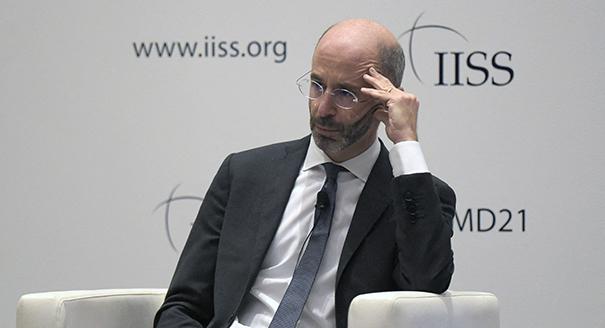
Disagreement between the United States and Iran over a revived nuclear accord may anchor volatile competition.

George Perkovich
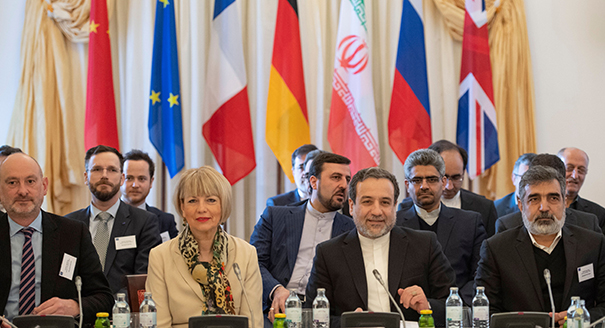
A regular survey of experts on matters relating to Middle Eastern and North African politics and security.
Michael Young

The British, French, and German foreign ministers have formally accused Iran of breaking the terms of the 2015 Iran nuclear deal, a step that could lead to sanctions. Are the Europeans preparing to pull the plug?

Jarrett Blanc