

Commentary
Uri Dadush
{
  "authors": [
    "Uri Dadush"
  ],
  "type": "legacyinthemedia",
  "centerAffiliationAll": "",
  "centers": [
    "Carnegie Endowment for International Peace"
  ],
  "collections": [],
  "englishNewsletterAll": "",
  "nonEnglishNewsletterAll": "",
  "primaryCenter": "Carnegie Endowment for International Peace",
  "programAffiliation": "",
  "programs": [],
  "projects": [],
  "regions": [
    "Western Europe",
    "North America"
  ],
  "topics": [
    "Economy",
    "Trade"
  ]
}
Source: Getty
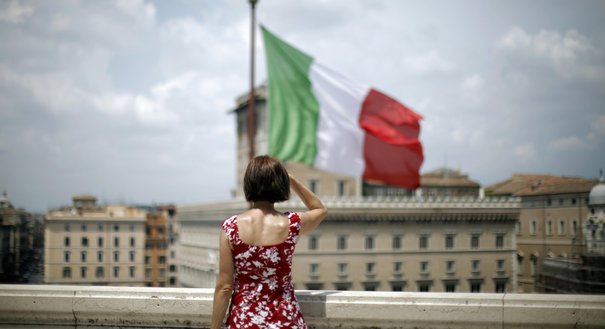
Reforms undertaken in Italy have done little to redress its competitiveness and growth problems. In the coming elections, Italians should elect those most likely to commit to more vigorous reforms over a long period.
Source: L'Espresso

In some ways, the Italian economy remains an extraordinary success story. From a position of agricultural dependence, widespread illiteracy and severe underdevelopment when my grandfather was young, it has achieved one of the world's highest living standards, and membership of the elite G7 club of the largest and richest economies. Italian families are, on average, among the world's wealthiest and have relatively low debt. They are protected by the solidarity of their families and by an extensive government safety net both of which many others, for example, ordinary Americans, would envy.
Moreover, the country's illustrious tradition in literature, the arts, and the great business innovations it once pioneered such as accounting, banking and insurance find their modern version today in innumerable small innovative enterprises that form the backbone of the world's fifth largest manufacturing sector. There is clearly no shortage of brilliant Italian scientists, economists, literary scholars, musicians, architects, designers, and even international civil servants.
But the Italian economy is above all today a striking example of the failure to adapt to two great twenty-first century transformations, namely globalization and the European common currency. The symptoms of its disease are the slowest growth among countries of any significant size and the high interest rates its government pays relative to those of other rich countries. From this perspective, the coming elections can be seen as a referendum on whether Italians want to embrace the two transformations, or to resist them with all the means at their disposal, as too many of them have done so far, and without success.
The main consequences of globalization - surging international trade and investment and the rise of China and dozens of other developing countries - are opportunity and competition. Judging by Italy's trade performance, again among the weakest in the world since the turn of the century, the opportunity to penetrate foreign markets is not being grasped, and nor is international competition being met. This is in no way surprising: Italy ranks near the bottom of advanced countries in ease of doing business according to the World Bank, and the efficiency of Italian labor markets is 126 out of 134 countries according to the World Economic Forum. Countries that have such ranking may be able to attract investment and grow if they pay the same taxes and wages as in Bangladesh, but not as in Germany.
Which takes us to the other big transformation - the Euro. The Euro was designed to reduce transaction costs, spur economic convergence and solidify Europe politically. But, by design, a big consequence of the Euro is the loss of economic policy space. Italy can no longer resort to devaluation to offset eroding competitiveness : yet based on unit labor costs, Italian labor is about 30 per cent more expensive relative to German labor than when the Euro was adopted. Nor can Italy just print Lira to finance its government deficit or refinance its maturing debt. Reflecting their lack of policy space and inability to respond to shocks, states within a monetary union typically have very low debt levels. States within the United States typically carry a debt level of less than 10 per cent of GDP, for example, and the German Lander have debt levels typically less than 30 per cent of their GDP. There is a major question as to whether states that cannot print money or devalue can carry government debt levels of 120-130 per cent of GDP, as in Italy, without being continually at the mercy of events, markets, and the goodwill of their neighbors. I believe the answer is no.
The extraordinary efforts of the Monti government have taken Italy close to a balanced budget, adjusted for the business cycle, and the ECB's promise to intervene to buy government bonds have, for the time being, partially reassured markets. Spreads remain high but have come down to bearable levels. But government debt levels are still rising and reforms have so far done very little to redress Italy's competitiveness and growth problem. Italy's industrial production is now about 25 per cent below its 2007 level while its unemployment has increased by over 1 million, and recession is projected to stretch into 2013.
The truth is that the reforms needed to reestablish growth - liberalization and competition in domestic markets, smaller and more efficient government, deregulation, lower government debt, and investments to improve education and infrastructure - have only just begun. Completing them will take at least a decade, probably two.
Italians should vote for those most likely to undertake such reforms vigorously over a long period. Conversely, they should absolutely reject those who by their words or actions fail to grasp the gravity of their economic crisis.
This article was originally published in L'Espresso.

Former Senior Associate, International Economics Program
Dadush was a senior associate at the Carnegie Endowment for International Peace. He focuses on trends in the global economy and is currently tracking developments in the eurozone crisis.
Recent Work
Uri Dadush
Uri Dadush
Carnegie does not take institutional positions on public policy issues; the views represented herein are those of the author(s) and do not necessarily reflect the views of Carnegie, its staff, or its trustees.

The armed forces champion a form of capitalism that is generating revenue, but its reliance on rent faces diminishing returns, leaving the country with massive sunk costs and deferred returns, deepening dependency on external borrowing.

Yezid Sayigh

Morocco and Algeria, each in its own way, are having to navigate the global economic fallout of the U.S.-Israeli military campaign against Iran.

Yasmine Zarhloule
In an interview, Ishac Diwan looks at the merits and flaws in the draft legislation distributing losses from the financial collapse.

Michael Young
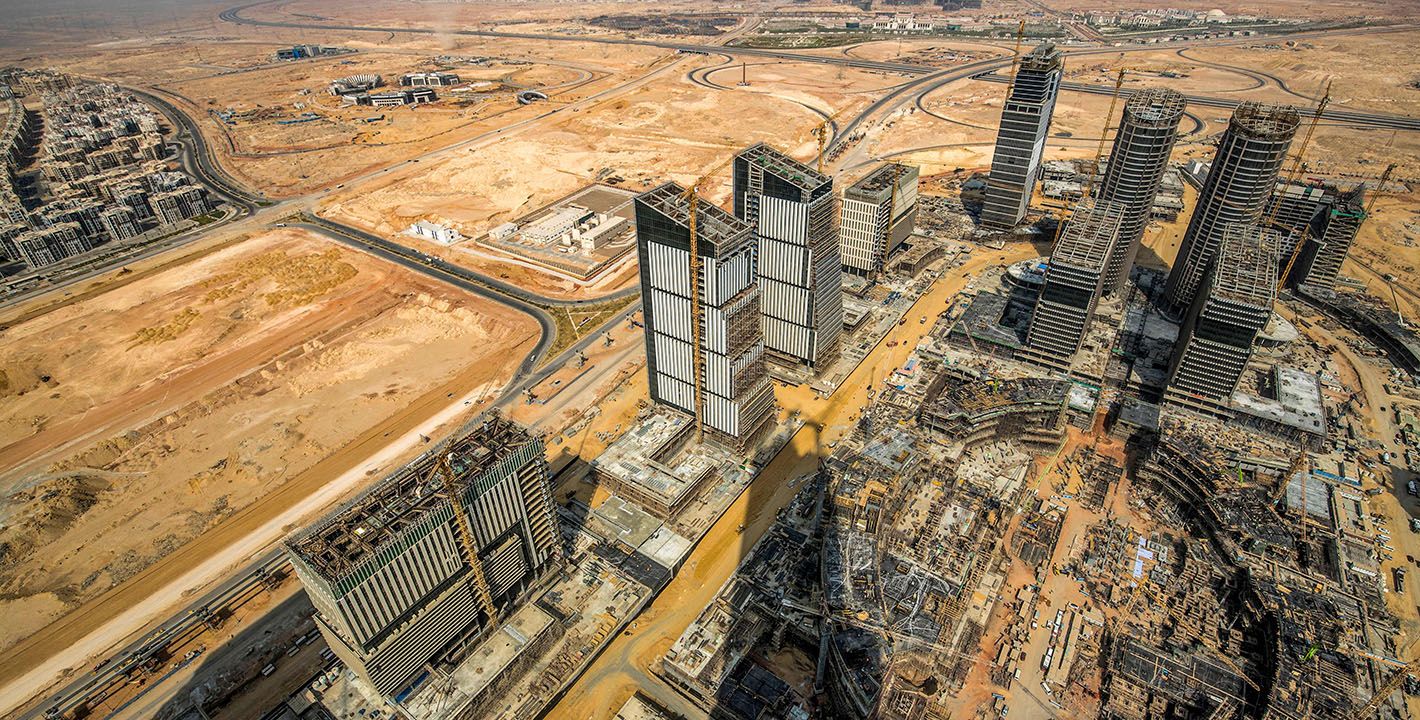
Mustaqbal Misr has expanded its portfolio with remarkable speed, but a lack of transparency remains.
Yezid Sayigh
Arab diaspora business communities in Egypt often mirror the same systemic challenges facing Egyptian businesses.

Nur Arafeh, Yezid Sayigh, Qaboul al-Absi, …